
Water underfloor heating keeps radiators off the walls and spreads warmth through the floor. A boiler or heat pump circulates warm water through pipes beneath the floor covering. Before choosing it, check the insulation, floor build-up and heat source: these affect how well the system works and what alterations may be needed.
It can suit a range of finishes and gives you more freedom with furniture placement, while room-by-room controls let you adjust different areas. The trade-off is that the system needs careful planning, and changes to the floor can be disruptive. Ask your installer how the pipes will fit within the floor, whether your heat source is suitable, and how the controls will work.
Key Takeaways
Water underfloor heating spreads warmth across the floor, which usually means fewer cold spots and less difference between the temperature at floor level and near the ceiling. The pipework sits out of sight, freeing wall space for furniture and keeping architectural details and open-plan rooms clear.
The system can run at lower water temperatures than some conventional heating, which may suit a modern boiler or heat pump. Ask the installer to explain how the heat source and controls will work together; smart controls can help manage energy use, but they cannot make up for poor system design.
Tile and stone transfer heat well, but the floor build-up needs planning. Check the insulation, finished floor height, chosen covering and expected warm-up time before work starts. Installation is generally simpler in a new build or major renovation than in an occupied home, where lifting floors and adjusting doors or thresholds may add work.
Get an itemised quote covering the pipework, manifolds, controls, floor finishes and any heat-source upgrades. Confirm who is responsible for checking the design against the room’s heat loss, and ask your local building department about applicable permits and requirements.
How Water Underfloor Heating Works
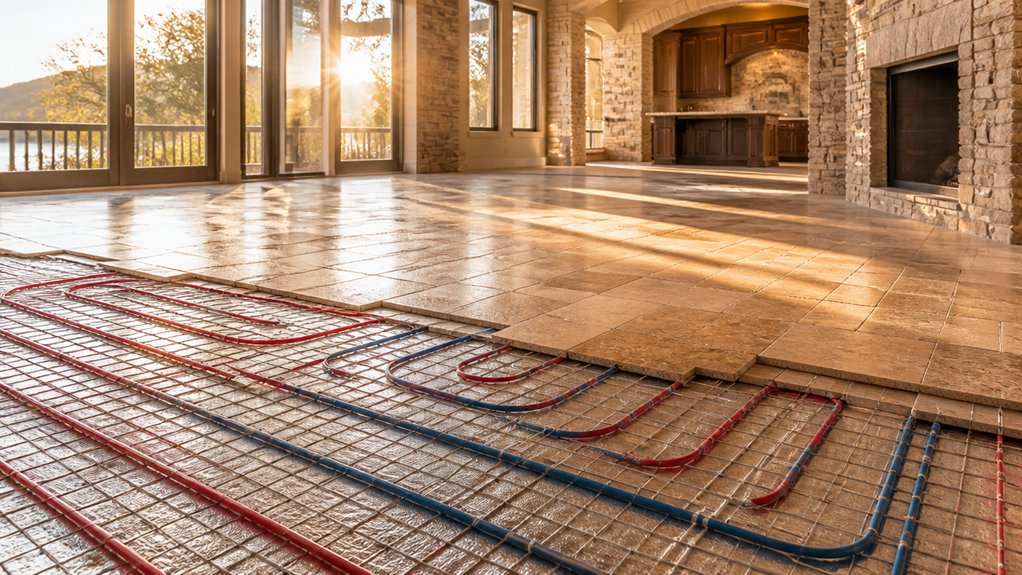
Water underfloor heating sends warm water through pipes beneath the floor, making the floor itself a broad, gentle heat source. A boiler or heat pump heats the water, and a manifold directs it through separate circuits. Each circuit needs to suit the room layout, floor build-up and heating demand, so have the design checked before installation.
A thermostat calls for heat when a room needs it, and the warmed floor releases heat into the space. There are no radiators taking up wall space, but the system needs careful planning around floor height and the type of floor covering. Ask how the circuits will be zoned and controlled, and whether the heat source can run efficiently at the temperatures required. Good controls help manage energy use and keep the system working reliably.
Why It Creates More Even, Comfortable Heat
Underfloor heating spreads warmth across the floor instead of concentrating it around radiators. That can mean fewer cold spots and less difference in temperature between the floor and ceiling. Before choosing it, check that the floor build-up and insulation suit the system; poor insulation can waste heat below the room.
Water-based systems generally run at lower temperatures than many conventional heating systems and provide steady warmth rather than short bursts of hot air. You may notice less air movement, though the result depends on the system and how the home is insulated. Ask your installer how the system will be controlled in each room, and weigh the even comfort against the slower response when you change the temperature.
How Underfloor Heating Frees Up Design Space
Water underfloor heating keeps its pipework below the floor, so radiators don’t dictate where furniture goes or break up the walls. That can make a difference in open-plan rooms, small bathrooms and spaces with built-in cupboards or shelves. You can place sofas, wardrobes and artwork to suit the room, rather than leaving clear wall space for radiators.
With fewer visible fittings, windows and architectural details can stand out. Before choosing the system, check the floor build-up, insulation and controls with your heating installer; these affect how the system fits the house and performs. Underfloor heating can also be coordinated with ceiling cooling, but that adds services to plan and may affect the layout and cost.
Why Water Underfloor Heating Can Lower Energy Use
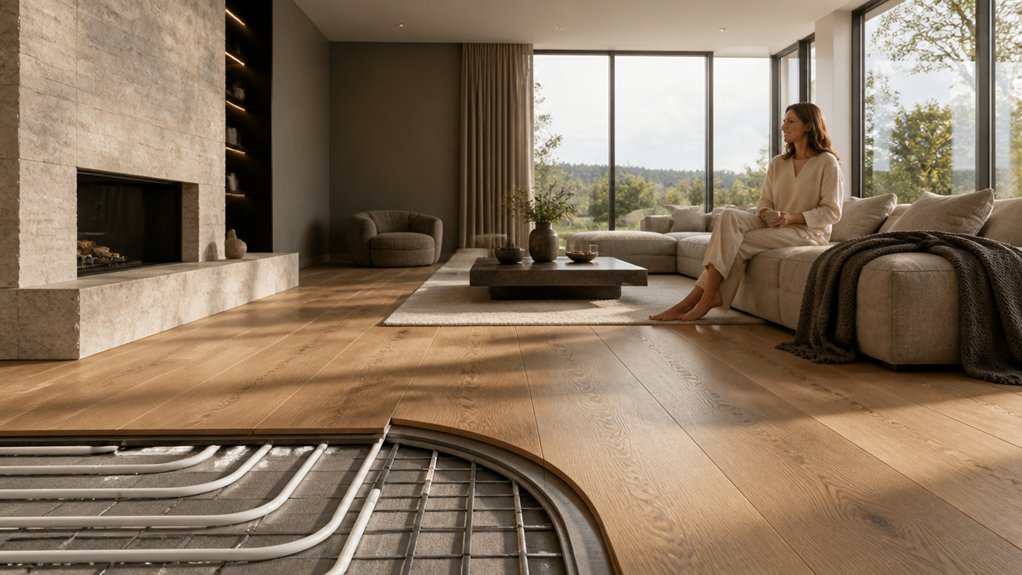
Water underfloor heating can use less energy because it spreads warmth across the floor rather than relying on hot air from radiators. The even radiant heat may let you keep the thermostat lower while still feeling comfortable, though results depend on the room, insulation and how the system is set up.
It also runs with cooler water than many radiator systems, which can help a modern boiler or heat pump work efficiently. Ask your installer what water temperature the system needs and whether your heat source is suited to it. Good controls and sensible schedules help avoid heating rooms when they’re empty, but underfloor heating can take longer to warm up than radiators, so plan timings around how you use the home.
Which Floors and Homes Suit the System Best
Water underfloor heating is worth considering when the floor build-up, insulation and heat source can support its low-temperature operation. Stone, tile and other dense flooring materials conduct and hold heat well, giving steady warmth across open-plan rooms, but check that the floor can take the added build-up without causing problems at doors, stairs or adjoining rooms.
It’s usually easier to plan pipework, insulation and finished floor levels together in a new build or major renovation. In an older home, first check the floor structure and whether you can improve insulation; otherwise, heat loss may make the system less effective. Your local climate also affects how much heat the home needs and when, so ask your heating installer whether your heat source and controls are suitable. With the right setup, the system can work in different layouts without limiting your choice of interior finishes.
What Installation and Running Costs to Expect
The cost depends on the house and the work involved. Water underfloor heating usually costs more to fit than radiators, especially in an existing home, where floors may need lifting, insulation adding and floor levels adjusting. In a new build or major renovation, fitting it alongside other work can reduce disruption and make better use of the budget.
Compare the full scope, not just the heating pipework. Ask for an itemised quote covering controls, manifolds, floor finishes and any boiler or heat-pump upgrades; room layout and insulation affect the final cost. Installation time also depends on the size of the property and how the floors are built, so coordinate the trades early to avoid delaying your move-in.
Once fitted, the system can run efficiently at lower flow temperatures, particularly with a heat pump. Zoning allows you to heat only the rooms you use, which can help control running costs while keeping the rooms you need comfortable.
Frequently Asked Questions
Can Water Underfloor Heating Be Controlled Remotely?
Yes, water underfloor heating can be controlled remotely if it’s fitted with a compatible smart thermostat or home automation system. From an app, you can adjust room temperatures, set schedules and control separate heating zones while you’re away.
Check that the controls are compatible with your boiler or heat source and the existing heating system, and ask whether each room can be managed separately. Remote monitoring can help you spot a fault sooner, but it won’t fix one; if a zone stops heating, you may still need a heating engineer to check the controls or pipework. Heating rooms only when needed can improve comfort and may reduce energy use, though the savings depend on your home, settings and energy costs.
How Long Does a Water Underfloor Heating System Take to Warm Up?
A water underfloor heating system usually takes an hour or more to make a room feel warmer, and a thick floor can take several hours to reach the set temperature.
That slow response is normal: the floor needs time to absorb and release heat.
Use a programmable thermostat to keep the temperature steady rather than switching the system on only when you need warmth; it may take longer to heat up, but steady operation can help reduce energy use and keep the room comfortable.
Does Underfloor Heating Require Regular Maintenance?
Underfloor heating needs little routine attention, but it’s worth arranging periodic checks. Water-based systems can last 25 years or more, and sensible upkeep helps protect that investment. Ask a qualified heating engineer to inspect the boiler, manifold, controls and system pressure every few years.
Keep an eye out for uneven warmth, pressure changes or signs of a leak, and report problems early. Repairs can be harder once a fault is hidden beneath the floor, so ask the engineer what they’ve checked and whether anything needs watching.
Can Water Underfloor Heating Be Used With Smart Home Systems?
Water underfloor heating can work with a smart home system, provided the thermostat and heating controls are compatible. Look for room-by-room scheduling and, if you want to track energy use, check whether the system includes monitoring or can connect to a separate monitor.
Compatible controls can let you adjust the heating through an app when you’re away.
Before choosing, ask your installer which parts are included and whether the system will work with your existing smart home equipment; extra controls can add cost and may need professional setup.
What Happens if a Pipe Leaks Beneath the Floor?
A leaking pipe beneath the floor can soak insulation and damage the flooring before you see any water. Look for damp patches, a musty smell, or a heating system that keeps losing pressure, works poorly or shuts down.
Turn off the heating system and close its water supply if you can do so safely. Contact a qualified heating specialist to find and repair the leak, then check how far moisture has spread. Acting promptly can limit damage, though the amount of floor that needs lifting or replacing depends on the leak and how long it has gone unnoticed.