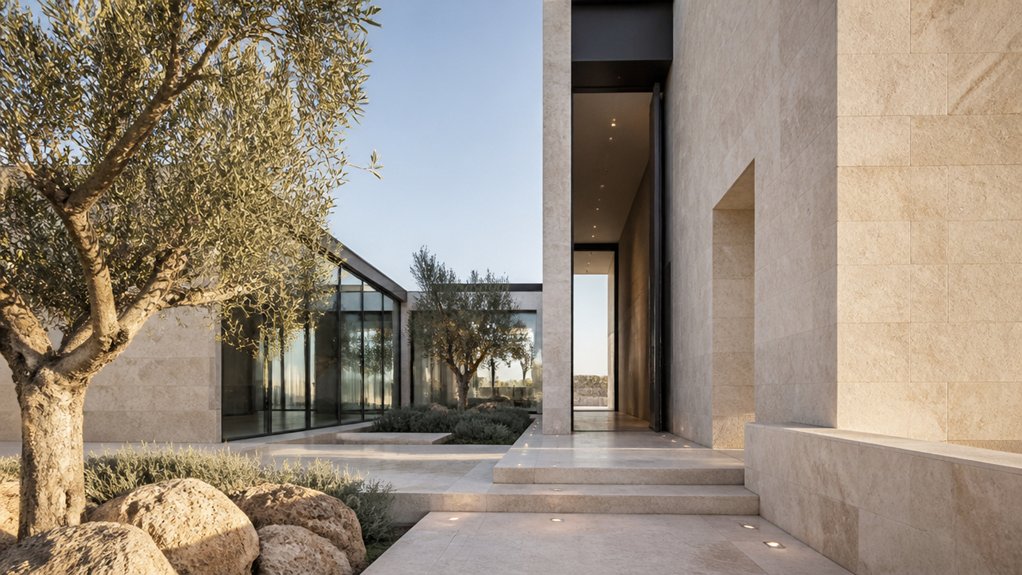
Natural stone remains the premium choice because you get genuine geological depth, distinctive veining, and color no manufactured surface can replicate. Choose marble for statement-making walls or vanities, and dense granite or quartzite for demanding countertops and floors. With the right finish, detailing, and site-specific selection, stone balances visual impact with lasting performance. Its character evolves with light and weather, while proper sealing and maintenance protect your investment. The sections ahead show how to choose and care for it.
Key Takeaways
- Natural stone’s geological veining, mineral inclusions, and color variations make every slab unique, lending high-end spaces depth and authenticity.
- Its range of colors, textures, and finishes helps architects create visual continuity, contrast, and tactile richness across interiors and exteriors.
- Durable stones such as granite and quartzite withstand heavy use, while carefully selected stone can suit specific indoor and outdoor conditions.
- Stone ages naturally, developing a distinctive patina that adds character and reinforces its connection to place and time.
- With appropriate installation, sealing, and maintenance, natural stone preserves architectural integrity and long-term value.
What Makes Natural Stone Feel Premium?
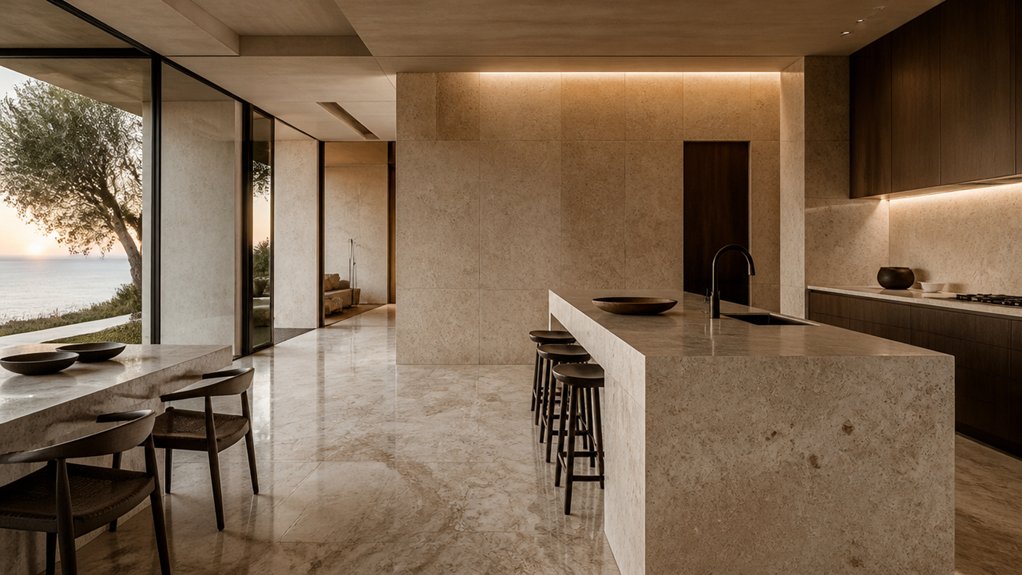
Natural stone feels premium because its depth, texture, and veining come from geological processes rather than a printed surface. When you specify it, you give a space visual variation that manufactured finishes can’t fully reproduce. Mineral inclusions, fossil traces, and shifts in color make each slab distinct, while careful finishing preserves its character.
That individuality strengthens luxury appeal, but premium perception also depends on execution. You’ll see the difference in tight seams, consistent edge details, and lighting that reveals the stone’s natural movement.
A honed surface diffuses reflections; a polished one amplifies color and contrast. Both can deliver tactile richness, inviting touch as well as attention.
Natural stone also signals permanence. Its weight, density, and authentic composition communicate material value immediately, helping your design feel considered rather than merely expensive.
Done well, it rewards close inspection and creates a lasting impression.
Which Natural Stone Fits Each Application?
Choosing the right stone starts with matching its performance to the demands of each surface.
For statement floors, walls, and vanity tops, marble elegance delivers distinctive veining and a refined finish. You’ll need to specify a suitable grade and finish, then plan for sealing and prompt cleanup to manage etching and staining.
In busy kitchens, granite durability makes it a dependable choice for counters exposed to heat, abrasion, and daily use. Select a dense slab with consistent quality, and confirm its finish meets your maintenance expectations.
For exterior paving or cladding, choose stones rated for local freeze-thaw cycles, moisture, and slip resistance; sandstone and certain granites can perform well when properly detailed.
For wet areas, prioritize low porosity and traction. Match each selection to fabrication limits, upkeep, and budget before approval.
How Does Natural Stone Shape Interiors and Exteriors?
Across interiors and exteriors, stone does more than finish a surface: it sets the project’s visual rhythm and connects spaces through color, texture, and scale. You can use a continuous palette to create visual flow, then adjust finishes to give each room or façade its own character.
Mineral composition shapes a stone’s veining, hue, and translucency, helping you coordinate slabs with wood, metal, glass, and lighting. Textural variation adds depth: honed surfaces feel restrained, while polished faces amplify light and movement.
On exterior elevations, coursing, joint width, and panel scale influence how a building reads from a distance. Inside, book-matched slabs or carefully aligned patterns can turn walls and counters into focal points.
Where Does Natural Stone Perform Best?
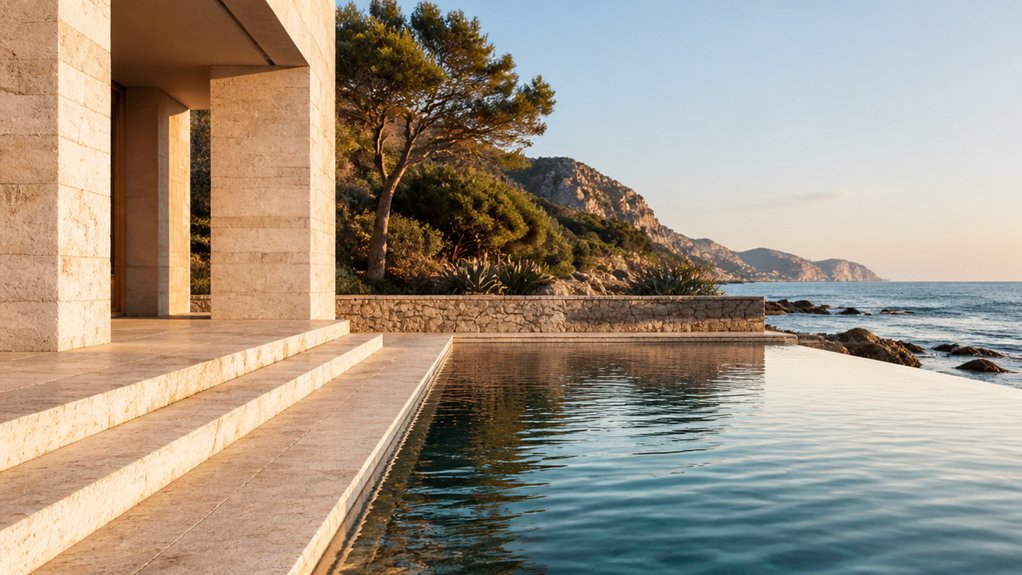
The right application depends on a stone’s properties as much as its appearance. For floors and countertops, choose dense, low-porosity options such as granite or quartzite; they handle heavy use and resist staining when properly sealed.
In bathrooms, marble can deliver luxury textures, but you’ll need suitable finishes and regular sealing to manage moisture and etching.
For façades and outdoor paving, select stone rated for local freeze-thaw cycles, heat, and rainfall. Limestone suits sheltered cladding, while granite often performs well in demanding exterior settings.
Match finish to function: honed or textured surfaces can improve traction, while polished stone suits low-traffic feature walls.
Unique patterns help you create a focal point, but review full slabs and samples before specifying.
Your best result comes from pairing design intent with site conditions, installation expertise, and maintenance expectations.
How Does Natural Stone Age Over Time?
As your stone façade weathers, its surface develops a patina shaped by exposure, finish, and maintenance.
You may also see color shift as minerals react to light, moisture, and air.
With suitable stone selection and detailing, you can preserve structural strength while the material gains character.
Weathering and Patina
How does natural stone age without losing its appeal? It develops a patina as wind, rain, sunlight, and daily use gradually shape its surface. You’ll see this weathering as softened edges, subtle texture, and a finish that reflects a building’s exposure and history—not as a flaw.
Your stone’s performance depends on its mineral composition, porosity, installation, and maintenance. Dense granite typically resists abrasion and moisture, while limestone may weather more readily and benefit from careful detailing. Specify suitable stone, drainage, joint design, and protective treatments where appropriate to manage water ingress and freeze-thaw stress.
Routine inspections help you address deposits or surface wear before they compromise performance.
This gradual evolution supports Lifespan durability and gives each project a distinctive character. With thoughtful selection and Artistic craftsmanship, you can make weathering an intentional design asset that deepens architectural presence over time.
Color Changes Over Time
Over time, natural stone can shift in color as sunlight, moisture, minerals, and surface treatments interact with its composition. These changes aren’t defects; they reflect the stone’s natural character and the conditions around it.
In sunlit rooms, ultraviolet exposure may soften or deepen certain tones, while moisture can temporarily darken porous surfaces. Iron-bearing minerals may oxidize, introducing warmer hues; salts and environmental deposits can also alter appearance.
This Color evolution gives each installation a distinct visual history. Your stone’s finish, porosity, and location influence the pace and pattern of change, so select samples with long-term exposure in mind.
A honed limestone façade, for example, may develop a subtle Surface patina, while polished marble can show shifting reflectivity. Discuss sealers and maintenance with your fabricator to guide appearance without masking natural variation.
Lasting Structural Strength
With proper detailing and maintenance, natural stone can retain its structural strength for generations. You’ll get the best performance when your design accounts for stone type, load, climate, and installation.
Dense granite, for example, resists abrasion and weathering, while porous limestone needs suitable finishes and careful moisture management. Specify compatible anchors, joints, and drainage to limit stress from movement, water, and freeze-thaw cycles.
Regular inspections help you spot cracks, loose fixings, or deteriorating sealants before repairs become costly. Unlike materials that rely on coatings or layers, stone’s strength runs through the material itself, so surface wear rarely compromises its core.
That material durability supports long-term value and preserves the luxury appeal discerning buyers expect. With informed specification and upkeep, you can make stone a dependable architectural investment, not just a striking finish.
How Do You Source and Care for Natural Stone?
Sourcing natural stone starts with more than choosing a color: verify the quarry’s origin, request samples from the actual lot, and confirm thickness, finish, and fabrication tolerances with your supplier. Ask how quarry sustainability is measured, including water reuse, waste management, and responsible extraction.
Review stone craftsmanship in mock-ups, edge details, and seam placement before approving production. These checks help you align visual expectations with performance and budget.
For care, match products to the stone’s mineral composition and installation environment. Use a pH-neutral cleaner, avoid abrasive pads and acidic solutions, and follow your fabricator’s guidance on sealing; sealers reduce staining risk but don’t make stone stain-proof.
Wipe spills promptly, especially oils and acids, and use mats in high-traffic zones. Schedule periodic inspections to address loose joints or surface wear early.
With informed sourcing and routine maintenance, you’ll protect the stone’s finish and long-term value.
Frequently Asked Questions
Does Natural Stone Increase a Property’s Resale Value?
Yes, natural stone can increase your property’s resale value, though no marble crystal ball guarantees a return. Buyers often recognize its luxury appeal and lasting quality, especially in kitchens, baths, and entryways.
You may strengthen perceived value through thoughtful installation, suitable stone selection, and professional maintenance.
Its aesthetic durability can help a home stand out, but local demand, overall condition, and renovation costs determine whether buyers will pay more for it.
Is Natural Stone More Sustainable Than Manufactured Alternatives?
Natural stone can be more sustainable than manufactured alternatives, but you’ll need to compare sourcing, processing, and lifespan.
Its durability can reduce replacement, while minimal chemical additives may lower impacts.
However, quarrying and long-distance shipping affect Environmental impact, so examine the Supply chain and choose locally sourced stone with verified practices.
Manufactured products may use recycled content, yet often require energy-intensive production.
Compare lifecycle assessments, not just upfront claims, to make an informed choice.
Can Natural Stone Be Recycled or Reused During Renovations?
Yes, you can recycle or reuse natural stone during renovations. First, assess each piece for cracks, finish, and dimensions; then plan reuse strategies, such as reinstalling slabs as flooring, cladding, or countertops.
If reuse isn’t practical, specialized recycling processes can crush stone into aggregate for landscaping, road base, or new construction products.
Coordinate removal and sorting with your contractor to limit breakage, reduce disposal costs, and preserve material value for your next project.
Does Installing Natural Stone Require Specialized Contractors?
Yes, you’ll usually want specialized contractors for natural stone installation. Its weight, variable thickness, and natural veining create installation challenges that demand careful handling, precise substrate preparation, and accurate cutting.
Contractor expertise helps you select suitable adhesives, plan joints, manage moisture, and achieve consistent alignment. For large slabs, intricate patterns, or exterior applications, experienced stone installers can reduce breakage and costly rework.
Verify their project references, technical knowledge, and familiarity with your specific stone before hiring.
Are There Building Codes or Certifications for Natural Stone?
Yes, natural stone projects must meet applicable building codes, and you should verify local requirements before specifying or installing materials. Building code compliance may cover structural loads, anchorage, fire performance, slip resistance, and exterior cladding.
Certification standards vary by product and jurisdiction; ask suppliers for test reports, environmental documentation, and relevant certifications.
You’ll also want qualified professionals to confirm that stone selection, fabrication, and installation satisfy project specifications and inspection requirements.