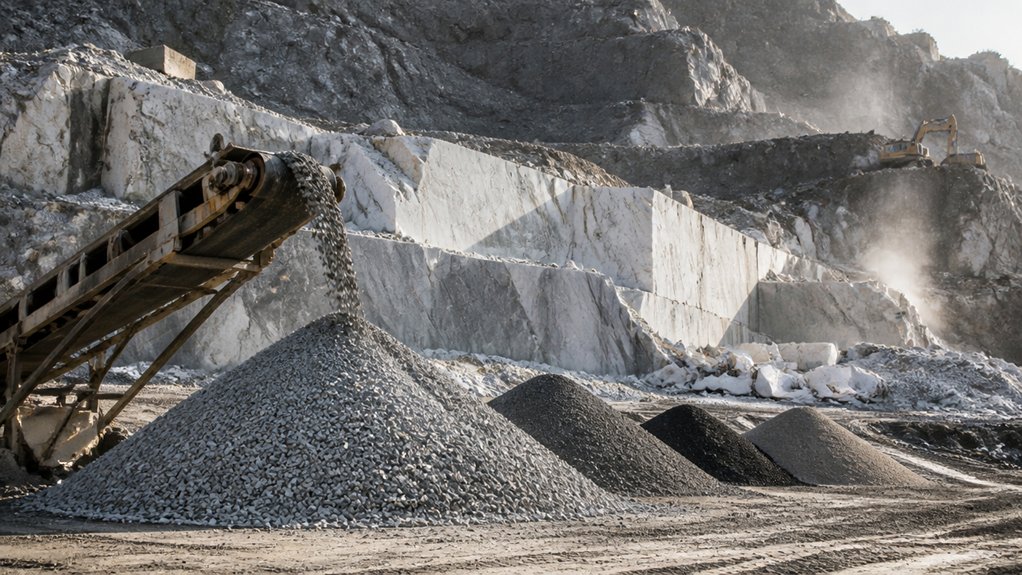
You can turn clean marble and slate offcuts into valuable aggregate by separating stone types, removing soil and debris, then crushing and screening material to meet local specifications. Test grading, strength, absorption, and contaminants so buyers can trust each batch. Target nearby uses such as road sub-bases, drainage, paving, and landscaping to reduce transport costs and improve returns. Before investing, compare processing, testing, storage, and delivery expenses with local demand—the steps ahead can help you spot opportunities and avoid costly missteps.
Key Takeaways
- Sort marble and slate waste at the source, removing soil, metals, organic debris, and unsuitable material.
- Test each batch for grading, moisture, absorption, strength, abrasion resistance, and contaminants to verify quality.
- Crush and screen material with calibrated equipment to produce consistent sizes that meet local specifications.
- Match aggregate grades to suitable markets, including road sub-bases, drainage, paving, landscaping, and approved nonstructural concrete.
- Maximize returns by targeting nearby buyers and ensuring product value exceeds processing, testing, storage, and delivery costs.
Which Marble and Slate Waste Can Become Aggregate?
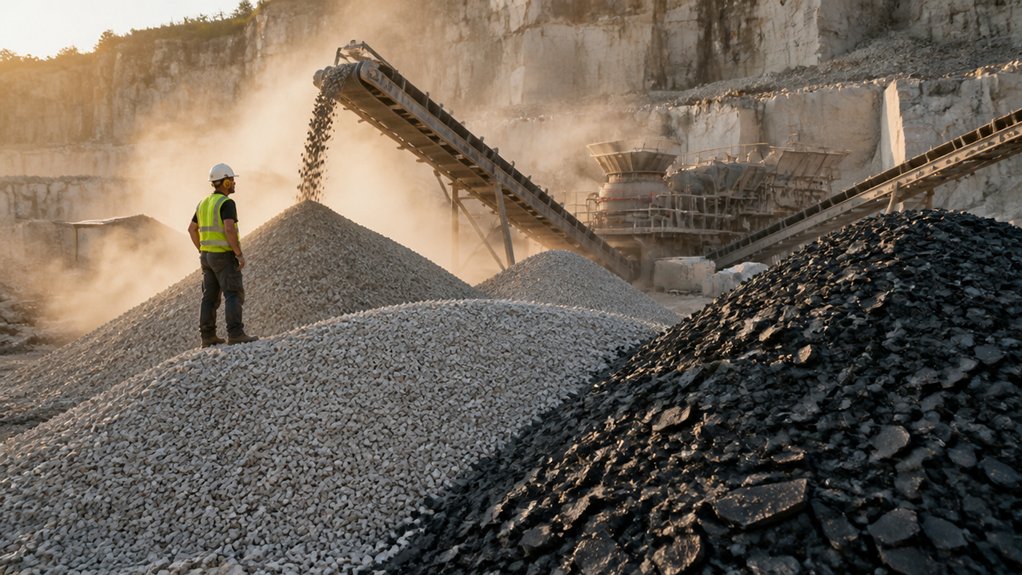
Marble and slate waste can become construction aggregate when it’s clean, durable, and processed to meet the project’s grading and performance requirements. For your property, suitable material includes sound offcuts, broken slabs, and oversize fragments that can serve as road base, drainage stone, or concrete aggregate.
Slate chips offer a strong, angular option for pathways, landscaping, and pavement layers, while larger pieces can support fill and erosion control. Marble dust may suit cement blends, manufactured stone, or fine grading applications when its composition and performance meet specifications.
The commercial value depends on matching each byproduct to a buyer’s needs—not treating every residue as interchangeable. Check that candidate material resists weathering and won’t compromise strength, appearance, or drainage.
With the right end use, quarry leftovers can become saleable products and reduce disposal costs.
How to Sort Quarry Waste for Reuse
To turn quarry waste into a saleable resource, separate marble, slate, and other materials to match project specifications.
Remove soil, metal, and other contaminants to protect aggregate quality and buyer confidence.
Then grade the clean material by size so you can target the right construction markets and capture more value.
Separate By Material
When you sort quarry waste by material, you turn mixed leftovers into usable, marketable resources. Separate marble, slate, and other stone at the source, then keep each stream distinct in clearly marked stockpiles. This simple discipline preserves each material’s color, strength, and texture—qualities buyers value in paving, landscaping, and architectural applications.
Match grades and sizes to likely markets. Consistent marble chips may suit decorative aggregate, while slate fragments can serve pathways or drainage layers. Track volumes and characteristics so you can price each stockpile accurately, plan production, and demonstrate dependable supply.
Material-specific sorting can also reduce Environmental impact by directing suitable stone back into productive use rather than disposal. Check local specifications early; meeting them supports regulatory compliance and helps protect your operation from costly rework.
With organized streams, you’ll improve yield, strengthen buyer confidence, and capture more value from every extraction cycle.
Remove Contaminants
Remove contaminants before grading quarry waste for reuse; soil, clay, metal, and organic debris can compromise aggregate quality and limit its market value. Clean stone gives buyers confidence in consistent performance and helps you protect the value of marble and slate by-products.
Use screens, magnets, air separation, and hand sorting to remove unwanted material efficiently. Inspect incoming loads and target contamination at the source, where separation costs less and recovery rates improve. Keep clean stone apart from rejected debris throughout handling to prevent recontamination.
Effective contaminant removal also supports responsible site management. Capture and contain fines, manage runoff, and dispose of unsuitable waste through approved channels. These steps reduce environmental impact while helping you meet project requirements and avoid costly delays.
A documented, clean stream is easier to market, transport, and sell, strengthening your quarry’s reputation and return from material once considered waste.
Grade By Size
Once quarry waste is clean, how you grade it by size can determine its next use and market value. Match each fraction to a buyer’s specifications: fine screenings can support bedding or manufactured products, while consistent coarse stone may suit road base, drainage, or concrete applications.
Use screens or crushers with adjustable settings to separate sizes and limit unwanted fines. Test gradation regularly, then label and store each stockpile separately to protect quality and simplify sales.
Accurate sizing helps you price material confidently, reduce handling, and turn more waste into saleable inventory. It can also improve environmental impact by replacing virgin aggregate and reducing disposal.
Confirm local regulatory compliance, including product standards and permitted uses, before marketing each grade. Clear specifications build buyer confidence and strengthen your quarry’s returns.
How to Crush and Grade Quarry Waste
Choose crushing equipment that matches your quarry waste and project demand to protect site value and control costs.
Set particle size to meet buyer specifications and reduce material loss.
Grade the finished aggregate consistently, so you can market more of your output with confidence.
Select Crushing Equipment
How can you turn quarry waste into a saleable asset? Start by matching crushing equipment to your site, stone, and target buyers. Mobile crushers can process marble and slate near the extraction face, cutting haulage costs and freeing valuable yard space. Choose a machine that handles your feed reliably, fits access routes, and can move as quarry operations change.
Compare total ownership costs, not just purchase price. Fuel use, wear parts, maintenance access, and operator requirements all affect your margin. If demand varies, flexible equipment helps you respond without tying up capital in unused capacity. Pair the crusher with Automated sorting to separate recoverable material and reduce manual handling.
Before committing, confirm throughput against realistic operating conditions and assess service support. The right setup turns overlooked waste into dependable inventory buyers will value.
Control Particle Size
To make quarry waste saleable, crush and grade it to match the particle sizes buyers specify. Your marble and slate fines, chips, and oversize pieces each hold value when you control reduction precisely.
Set crusher gaps and feed rates to produce consistent output without generating excess dust or wasting energy. Check Particle size distribution throughout the run; shifts can signal wear, uneven feed, or changing rock conditions.
Regular Equipment calibration keeps settings aligned with target sizes and protects product consistency. Use representative samples to verify results before adjusting the process.
Careful control helps you recover more usable material from each load, limit costly reprocessing, and meet specifications for paving, drainage, or concrete applications. That reliability strengthens buyer confidence and supports stronger pricing for your quarry’s recovered aggregate.
Grade Finished Aggregate
Once crushing meets your target sizes, grade the aggregate into clean, consistent product classes buyers can specify with confidence. Use vibrating screens to separate marble and slate by size, then return oversize pieces for further crushing. Remove fines when a project requires coarser material, or market them separately for bedding and fill.
Check each grade for particle shape, durability, and contamination. Clear specifications help you match products to concrete, road base, drainage, or landscaping applications—and support stronger pricing. Keep batches separate, label stockpiles clearly, and document test results so customers can verify performance before purchase.
Manage dust and runoff during screening to reduce Environmental impact. Track permits, testing, and handling practices to maintain regulatory compliance. Consistent grading turns quarry waste into dependable inventory, improves buyer confidence, and captures more value from every ton you extract.
How to Test Recycled Aggregate Quality
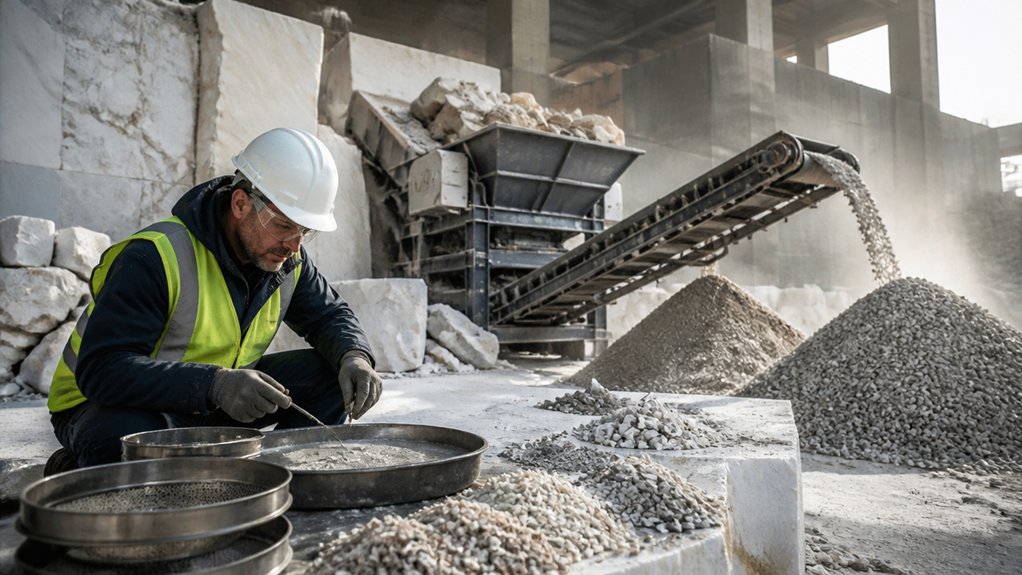
Reliable recycled aggregate starts with testing that confirms it’s clean, strong, and suited to the job. Begin with visual inspection: check for clay, organic matter, excess fines, and inconsistent particle sizes. Then measure grading, moisture content, density, and water absorption; these properties affect handling, mix design, and finished performance.
Test abrasion resistance and particle strength to see whether marble or slate fragments can withstand processing and service loads. Screen for contaminants, including sulfates and other harmful substances, and document each result by batch.
Your quality data helps you meet specifications, control variability, and demonstrate value to buyers. It also supports claims about Environmental impact, while evidence of consistent performance can strengthen your position as Market demand grows for reliable recycled materials.
Retest whenever feedstock or processing conditions change.
Where Quarry-Waste Aggregate Can Be Used
When testing confirms its grading, strength, and cleanliness, quarry-waste aggregate can serve in road sub-bases, drainage layers, paving products, and nonstructural concrete.
You can match marble fines or crushed slate to applications that value dependable performance, attractive texture, or distinctive color.
In landscaping, screened stone can create durable paths, borders, and decorative surfaces; in drainage systems, suitable sizes help move water while resisting breakdown.
Your specifications should guide every choice: confirm particle size, absorption, durability, and compatibility with binders before approving a use.
Innovative recycling lets you turn material once treated as overburden into a consistent product for local projects.
By replacing suitable virgin stone, you can reduce transport demand and environmental impact while offering builders a practical, locally sourced option.
Clear product data helps you win confidence across markets.
Is Turning Quarry Waste Into Aggregate Profitable?
Turning quarry waste into aggregate can be profitable when the sale value exceeds the cost of processing, testing, storage, and delivery. Your property’s returns depend on consistent feedstock, efficient crushing, and nearby buyers.
Marble and slate waste may command attractive prices when it meets local specifications for road base, drainage, landscaping, or concrete applications.
Assess Market demand before investing in equipment. Confirm buyer volumes, required grading, transport distances, and prevailing prices; a dependable local contract can protect margins from market swings.
Then calculate the full cost per saleable tonne, including permits, maintenance, labor, and rejected material.
Your Environmental impact case can strengthen the business: diverting waste from disposal may reduce hauling costs and support sustainability goals.
Start with a pilot batch, verify quality, and scale only when proven demand supports a clear profit.
Frequently Asked Questions
What Environmental Benefits Come From Reusing Marble and Slate Quarry Waste?
When you reuse marble and slate quarry waste, you cut landfill demand, conserve natural stone, and reduce the emissions tied to extracting and transporting virgin materials.
These Eco friendly practices can also lower project costs and strengthen your property’s sustainability appeal.
By turning discarded stone into useful aggregate, you support waste reduction while creating durable surfaces and construction materials.
You’ll make a practical, market-savvy choice that benefits your site and the environment.
Which Permits Are Required to Process Quarry Waste Into Aggregate?
You’ll typically need a waste-processing permit, air-quality approval, and stormwater authorization; some sites also require zoning consent and construction permits.
A clean, unused quarry byproduct may qualify for simpler rules than discarded material, but regulators decide.
Start Permit procedures with your environmental agency and local planning office.
Strong Regulatory compliance protects your property, prevents costly delays, and helps you sell aggregate confidently.
Requirements vary by location, material, and processing method, so verify before investing in equipment or accepting feedstock.
How Can Nearby Communities Be Affected by Aggregate Processing?
Aggregate processing can affect your community through dust, vibration, water runoff, Community noise, and Traffic congestion from heavy trucks. These impacts may disrupt daily routines, reduce nearby property appeal, and concern prospective buyers.
You can protect neighborhood value by requiring effective dust controls, operating-hour limits, truck-route planning, and regular monitoring. When operators manage impacts transparently, you’ll help preserve residents’ quality of life while supporting responsible development and maintaining confidence in the local property market.
What Worker-Safety Measures Are Needed at a Quarry-Waste Processing Site?
To keep your quarry-waste processing site safe, cover all bases: train workers, enforce clear procedures, and inspect hazards daily.
Require Personal protective equipment, including hard hats, eye and hearing protection, gloves, and high-visibility clothing.
Prioritize machinery safety with guards, emergency stops, lockout procedures, and authorized operators.
Control dust, noise, traffic, and unstable stockpiles.
Provide first aid, emergency drills, and incident reporting.
These measures protect people, reduce downtime, and safeguard your property’s value.
How Should Recycled Aggregate Be Transported and Stored?
Transport recycled aggregate in covered, clearly labeled trucks, and schedule deliveries to match your project’s pace. Strong Transportation logistics protect material quality, reduce dust and spillage, and keep site access clear.
Store each grade in separate, well-drained Storage facilities on firm, clean surfaces; use covers where weather or contamination threatens consistency. These simple controls preserve performance, support reliable specifications, and help you protect property value while avoiding costly rehandling, delays, and rejected loads.