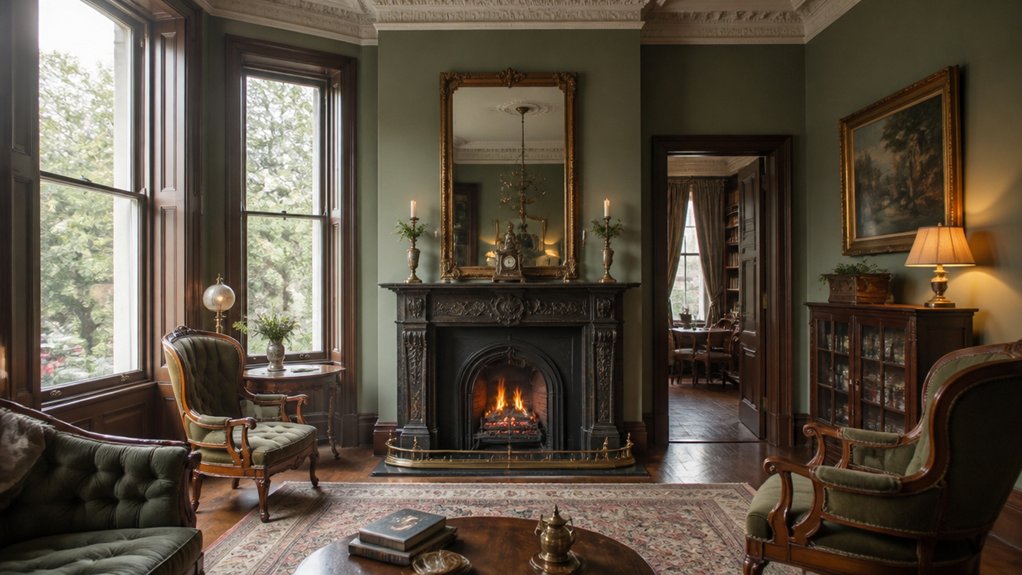
A Victorian fireplace can suit a period home well, provided its size, materials and details work with the room. Check the cast-iron insert, marble surround and patterned tiles for cracks, loose sections, rust or signs of poor repairs before deciding what to keep.
Original features can sit comfortably with modern furnishings. Keep the mantel visible and the surrounding décor simple; restoring more of the original detail preserves character, while replacing damaged parts may be more practical. Before using the fireplace, have its condition and flue checked by a suitable professional, and ask your local building department about any applicable safety rules.
Key Takeaways
A Victorian fireplace is recognised by its balanced proportions, careful workmanship and decorative details, not simply by its age. Look closely for cast-iron inserts, carved mantels, marble surrounds and patterned tiles. Keep original features where they’re sound; replacing them can lose character, while damaged parts may need careful repair.
Choose materials and finishes to suit the fireplace’s size, the home’s period and the room’s natural light. Strong colours or bulky accessories can overwhelm a small surround, while pale finishes may show soot and wear more readily. To pair heritage details with a modern interior, use restrained colours, clean lines and only a few well-chosen accessories.
Before restoring or lighting the fireplace, check the condition of the surround and insert, measure the opening and confirm the flue and ventilation are suitable. A decorative fireplace may not be safe to use. Ask a qualified specialist to assess uncertain parts, and check with your local building department about applicable requirements.
What Makes a Fireplace Victorian?
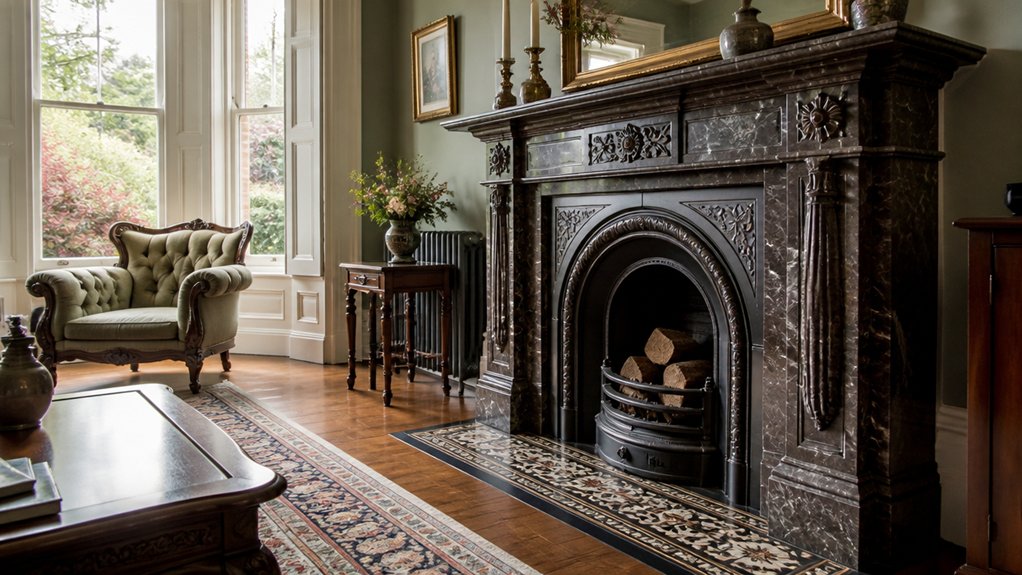
A Victorian fireplace is recognised by its proportions, craftsmanship and decorative detail, not just its age. Look for a strong architectural shape and carefully finished features; Victorian makers also used newer manufacturing methods, which brought more designs within reach. Check that the surround, opening and hearth sit comfortably together rather than relying on ornament alone.
Compare the fireplace with the house’s date and other surviving details, such as the original opening, nearby woodwork and room proportions. These clues can help you judge whether it belongs to the building or is a later addition. If you’re restoring it, decide which original features to retain and whether changes for modern use will affect its character. A coherent fit with the room matters more than preserving every part untouched.
Explore Victorian Fireplace Styles and Materials
Victorian fireplaces often have cast-iron inserts, marble surrounds or patterned tilework. Cast iron can carry fine detail, while marble gives a smoother finish and tiles add colour; check each part for cracks, loose fittings and signs of past repairs.
Before choosing a style, consider the condition of the fireplace and how it will fit the room. Ask whether the surround, insert and hearth are original, and whether any repairs or changes could affect safe use.
Cast-Iron Designs
Cast-iron fireplaces were common in Victorian homes because they combine detailed workmanship with a durable, heat-retaining body. The iron can hold and radiate warmth, but the fireplace still needs to suit the room and be installed correctly.
Look at the pattern as well as the proportions: arches, floral details and scrollwork range from restrained to highly ornate. Measure the opening in inches and check the surround and hearth dimensions before choosing a unit; a fireplace that’s too large or too small can look out of place and may not fit safely. Ask an installer to check the condition of the iron, the flue and the supporting structure, and to explain what maintenance the design will need. Check local requirements with your building department, and arrange professional installation. With regular care, a cast-iron fireplace can remain a practical feature for many years.
Marble Surrounds
Marble works well with cast iron, but the surround needs to suit the fireplace opening and the room. Check the width and height of the jambs and mantel, and make sure the proportions leave enough clearance around the opening. Victorian surrounds often have carved jambs, broad mantels and balanced profiles; these can give a room a strong period focal point, but may look out of scale in a compact space.
Pale marble can make a small room feel brighter, while pronounced veining adds visual weight and character. Polished stone has a noticeable sheen; honed and quarry finishes are less reflective and show the stone differently. Before choosing, compare samples in the room’s light and check how the colour sits with the woodwork and furnishings. Ask how the surround will be fixed and whether its condition and dimensions suit your fireplace.
Decorative Tilework
Decorative tiles add colour, pattern and period character to a Victorian fireplace. Choose a design that suits the room: geometric patterns tend to look crisp, while floral borders and coloured panels add more detail. Check the tile size against the opening and surround, and make sure the pattern won’t crowd the mantel or compete with other features.
Victorian fireplaces may use ceramic or encaustic tiles. With encaustic tiles, the pattern runs through the clay rather than being printed on the surface, so wear is less likely to remove the colour. Patterned tiles can be balanced with a plain mantel, or their colours echoed in nearby furnishings. Before fitting, check each tile for damage and confirm its dimensions; ask your installer which grout will suit the tiles and the period finish. A poor fit or unsuitable grout can spoil the appearance, so take time to plan the layout.
Choose a Victorian Fireplace for Your Period Home
Choosing a Victorian Fireplace for Your Period Home
Measure the fireplace opening and the wall around it before choosing a surround. Note the ceiling height and the room’s size, too: a tall, ornate design can suit a large reception room, but may crowd a small parlour. Check how the surround will sit with existing features, especially original tiles, so one doesn’t overwhelm the other.
Measure the opening, wall and room before choosing a surround, and make sure its scale complements the home’s original features.
Decide whether you want a working fire or a decorative feature. A working fire needs suitable ventilation and a sound flue, and its efficiency and running costs depend on the fuel and the condition of the fireplace. Ask what inspection or work may be needed before it can be used; check with your local building department about applicable requirements. A decorative fireplace avoids the demands of a live fire, but still needs to be well proportioned and in keeping with the house.
Look for sound materials and a supplier who can explain how the fireplace should be fitted and maintained. Poor measurements or an unsuitable surround can leave gaps, look out of scale or clash with the room’s period details.
Restore an Original Victorian Fireplace Safely
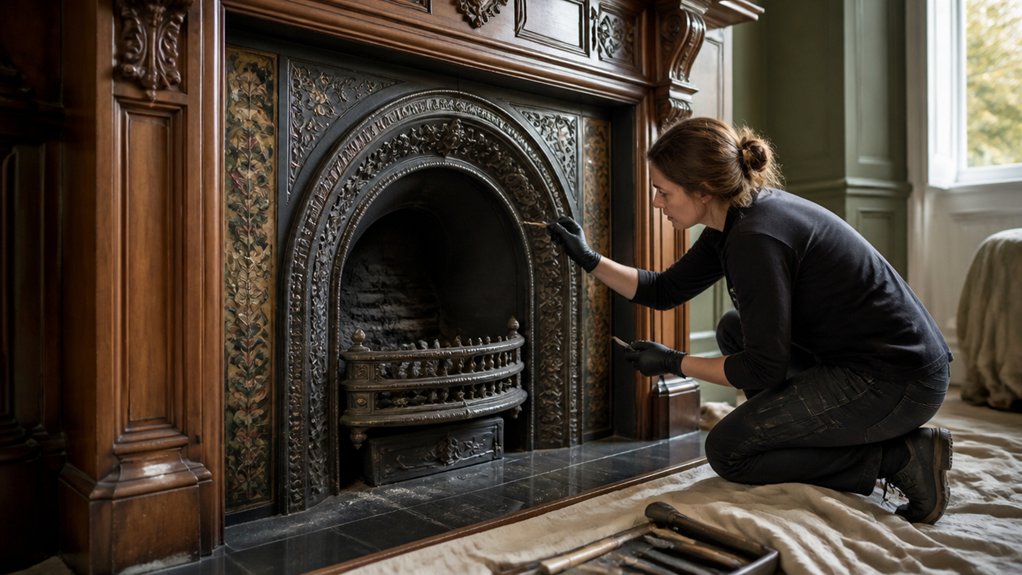
Before you start, check the fireplace carefully and work out which parts are original. Look for loose masonry, cracked tiles, corrosion and signs of earlier alterations. Take photographs before removing or repairing anything; if the fireplace is listed or historically significant, speak to a conservation specialist first. Repairing sound original features usually preserves more of the fireplace’s character than replacing them, though badly damaged parts may need specialist repair or replacement.
If you intend to use the fireplace, have a qualified professional inspect the chimney, flue and firebox. Ask them to check for blockages, poor draught and unsafe combustion, and what repairs are needed before use. Don’t light a fire until the system has passed inspection and any required work meets local rules; check with your building department about applicable requirements. Avoid abrasive cleaners and unsuitable repair materials, as they can damage delicate surfaces or hide defects. Careful assessment and appropriate repairs help protect the original fabric and make the fireplace safer to use.
Pair Your Victorian Fireplace With the Right Surround and Hearth
Pair the surround and hearth to the fireplace’s original proportions and detailing. An ornate cast-iron insert usually works best with a simpler timber or marble surround; a plain opening can take a more decorative mantel. Check that the surround doesn’t crowd the insert or hide its details, and compare the finish with the room’s existing woodwork and stone.
Choose the hearth for both appearance and practical use. Slate and other stone are durable traditional options, marble has a more refined finish but may need careful maintenance, and tile can suit Victorian patterns. Before deciding, consider heat tolerance, cleaning, the floor it will meet, and how the material will look beside the surround. Confirm the hearth’s required size and projection with your local building department, as safety rules can vary.
Style a Victorian Fireplace for Modern Living
Balance the carved stone and other ornate details of a Victorian fireplace with clean-lined furniture. This keeps the room from feeling crowded while preserving the fireplace as a feature. Choose a few modern touches, such as a sculptural object or contemporary artwork, and leave enough space around them so they don’t compete with the mantel.
Balance Old and New
A Victorian fireplace can sit comfortably in a modern room if you preserve its character and give it room around it. Keep details such as a carved timber mantel, decorative tiles and a cast-iron insert visible rather than covering them up. If you’re repairing or replacing the surround, check the original proportions and match the timber framing to the house’s period. A restrained finish usually lets the craftsmanship show; an overly ornate one can make the fireplace feel heavy.
Build contrast elsewhere with simple architectural lines, clear surfaces and a calm, consistent colour palette. You don’t need to copy a Victorian interior; a few considered period details will feel more natural. Check the scale and position of the furniture, too, so it complements the mantel without crowding it. The trade-off is straightforward: more decoration can strengthen the period look, while simpler furnishings keep the room feeling current.
Add Modern Accessories
Modern accessories can make a Victorian fireplace more useful day to day, but they shouldn’t hide its original details. Choose items that suit the mantel’s size and the room: a table lamp, a clock or a short stack of books can add function without crowding the surround.
For contrast, try clean-lined ceramics, brushed metal or a restrained contemporary artwork against dark ironwork or carved timber. Check the scale before you buy. Large pieces can overwhelm delicate mouldings, while small ones may get lost against an ornate surround.
You don’t need to fill the mantel. A few well-chosen pieces, arranged asymmetrically, leave the fireplace room to breathe and give it a relaxed, considered look. Keep the firebox clear unless you’re using an insert made for that purpose and suitable for your fireplace.
Frequently Asked Questions
Do Victorian Fireplaces Increase a Period Property’s Resale Value?
A sound, well-kept Victorian fireplace can help a period property appeal to buyers, but it won’t guarantee a higher sale price. The effect depends on local demand, the fireplace’s condition and what buyers in your area value.
Check for loose or cracked masonry, damaged tiles and signs of past repairs. Keep original details where possible, and use repairs that suit the existing materials; replacing them with modern finishes may weaken the fireplace’s character. Before presenting it as usable, have its safety and function checked by an appropriate professional.
Are Victorian Fireplaces Suitable for Homes Without a Working Chimney?
Yes, a Victorian fireplace can work in a home without a usable chimney, but the type of fire matters. An electric model needs no flue and is generally the simpler option; a bioethanol model also avoids a chimney, but still needs suitable ventilation and careful attention to the manufacturer’s instructions.
Before choosing, have a qualified professional check clearances, ventilation and the electrical supply or fuel requirements. Ask what work is needed to install the fire safely, and check with your local building department about applicable rules. You can keep the period character, but the trade-off is choosing a modern heat source rather than using the fireplace as a conventional wood-burning hearth.
What Fuel Types Can Victorian Fireplaces Use?
Victorian fireplaces can burn wood or coal, or use a gas or electric appliance, but the right choice depends on the fireplace and its condition. Before choosing, check whether the flue is suitable, what ventilation the appliance needs, and how much maintenance you’re prepared to handle.
Wood and coal give a traditional flame but need a suitable flue and regular upkeep.
Gas is more convenient, but still needs proper ventilation.
An electric insert can work where there’s no chimney and is generally simpler to install, though it won’t give the same kind of flame as a solid-fuel fire.
Ask an installer to confirm that the appliance suits your fireplace, and check local requirements with your building department.
Do I Need Planning Permission to Install a Victorian Fireplace?
In most cases, you don’t need planning permission to install a Victorian fireplace inside your home. If the property is listed or in a conservation area, speak to your local planning authority before removing or changing original features; extra consent may be needed.
Planning permission and building regulations are separate. Check with your local building department about requirements for the chimney, hearth, ventilation and flue, and have the existing chimney inspected before you use it. A professional can help spot problems early and advise whether the original features can be kept safely or need careful alteration.
How Often Should a Victorian Fireplace Be Professionally Inspected?
Have a Victorian fireplace and chimney inspected by a qualified professional at least once a year if you use it regularly. Arrange an inspection before using it for the first time, after a chimney fire, or if you notice smoke coming into the room, crumbling masonry or a weak draught.
Ask the inspector to check for blockages, damage and an unlined chimney. These can raise the risk of fire or carbon monoxide entering the home. If repairs aren’t practical, discuss safer heating alternatives with a qualified professional.