
Plan the gym around how you train, not just how you want it to look. Choose a room that’s easy to reach and has enough floor space, then mark out areas for strength work, cardio, stretching and recovery. Check the clearance needed to use each piece of equipment safely, and ask whether the floor can handle its weight and movement.
Choose hard-wearing finishes and lighting that suits both exercise and recovery. Built-in or discreet storage keeps equipment out of walkways, while spa-style comforts can make the room more pleasant to use. These choices involve trade-offs in space and cost, so settle the layout and equipment list before finishing the room. Check with your local building department about any permits or requirements that may apply.
Key Takeaways
Plan the gym around the training you actually do, not equipment you might use one day. Choose a spot that is easy to reach but offers enough privacy and separation from bedrooms or living areas to limit noise; check how sound and vibration carry through the floor and walls.
Allow separate areas for strength work, cardio, mobility and recovery, with clear walkways and enough room to use equipment safely. Choose durable, quiet equipment that suits your routine and the room’s floor capacity. A smaller, well-planned selection is often more practical than filling the space.
Use adjustable, layered lighting so the room works for different activities, and choose finishes that can handle moisture and are straightforward to clean. Flooring should suit the equipment and complement the home, but check that it can protect the subfloor and provide a stable surface. Add organised storage and any recovery amenities you’ll use, then keep up with cleaning and equipment inspections.
Plan a Luxury Home Gym Around Your Routine
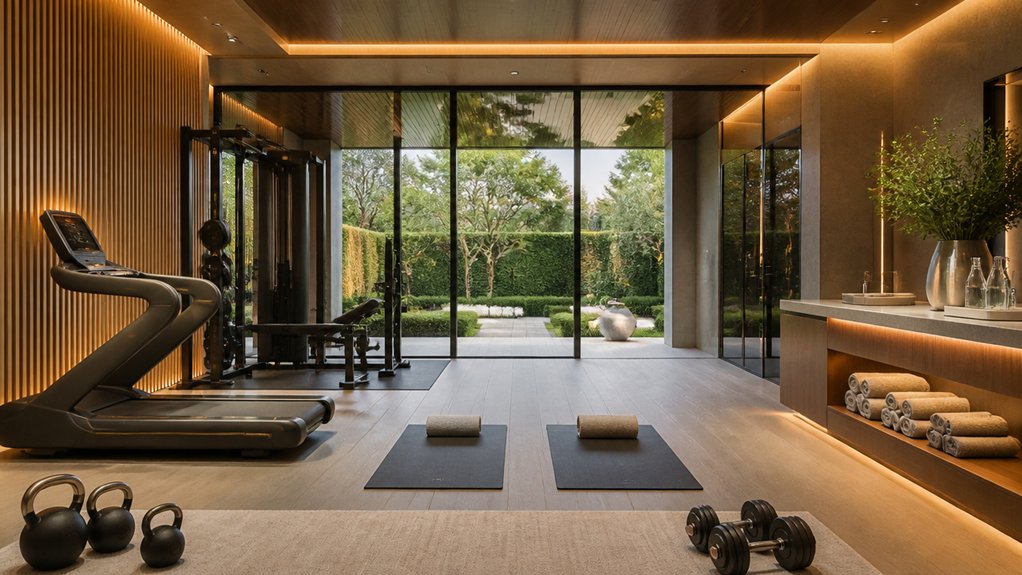
Plan the gym around the way you train, not just how it will look. Before choosing a room, write down when you exercise, how long your sessions last, and whether you want privacy or company. A spare room near the main bedroom can make early workouts easier; a room at garden level may keep noise and activity away from work and family areas. The trade-off is convenience against separation, so consider how you’ll reach the gym at the times you plan to use it.
Allow room for recovery as well as exercise. A clear corner for stretching, lighting you can adjust for evening sessions and easy access to a shower can all help the room work better. Check the floor, ventilation and route to the room before settling on a layout; equipment and regular use can put demands on a space that a spare bedroom may not be ready for. If the work involves structural changes or new services, ask your local building department what rules and permits apply.
Choose Equipment for Strength and Cardio
Choose equipment to suit your training and the usable floor area, not just the room’s overall size. For strength work, adjustable dumbbells, a compact cable station and a bench cover a good range without filling the room. Check the equipment’s dimensions, including the space needed to move safely around it, and make sure the floor can take the load. Durable finishes and quiet operation matter if the gym is near bedrooms or living areas.
For cardio, choose a treadmill, indoor cycle or rower you’ll use regularly. Compare each model’s footprint, noise, maintenance needs and warranty, and ask how much clearance it needs for safe use. A premium machine is only worthwhile if it performs reliably and suits the room; too much equipment can make the gym cramped and harder to keep tidy. Aim for a practical selection that fits the home.
Make the Most of Your Gym’s Layout
A sensible gym layout starts with separate areas for strength training, cardio and recovery. Leave clear paths between equipment so people can move safely and you can get to doors and storage without squeezing past machines. Before setting everything in place, check the equipment dimensions and allow enough room to use it; tighter spacing saves floor area but can make the gym awkward to use.
Plan Functional Zones
Plan the gym around how you train, with separate areas for strength work, cardio, stretching and recovery.
Measure the room first, then check that each activity has enough clear floor space and that doors, windows and walkways stay accessible.
Put heavy machines where the floor can support their weight, and use a bright corner for yoga or mobility work.
Rugs or different flooring can mark out zones without taking up space, while lighting can help distinguish areas.
Before choosing equipment or flooring, consider how each will affect the room’s layout, upkeep and overall feel.
A clear plan helps prevent a crowded gym and makes better use of the space.
Preserve Open Pathways
Keep a clear route between machines, doors and exits so you can move safely without cutting through someone else’s workout. Put larger equipment against the walls where practical, but leave enough room to use it properly. Check the space around benches, weights and cardio machines before settling on a layout; tight gaps make equipment harder to use and can block access.
Plan activity zones before buying or installing equipment. Allow room to carry weights, move between stations and reach storage without crossing another person’s exercise area. If the room has windows or a view, avoid blocking the sightlines. Compact, versatile equipment can help in a smaller gym, but filling every corner often leaves too little room to move. Measure the floor area and check the equipment’s clearance requirements so you can balance usable space with the number of stations you want.
Create a Five-Star Feel With Lighting and Finishes
A home gym feels more considered when the lighting and finishes are planned together. Recessed ceiling lights provide general light, while adjustable task lights can brighten a workout area. Put the lights on dimmers if you want to switch between a bright session and a softer evening setting; check that the controls are easy to reach and don’t add clutter.
Choose fittings and materials that suit the rest of the house. Warm metal, natural wood and textured wall finishes add character, but they need to stand up to use and be straightforward to clean. Durable flooring matters around heavy equipment; ask how well each option handles weight, impact and sweat, and weigh that against comfort and maintenance. Keep the colours consistent with nearby rooms so the gym feels part of the home rather than an afterthought.
Good materials and careful installation make the room feel intentional and can support its appeal to future buyers, though they don’t guarantee a higher sale price. Plan the lighting and finishes before work begins, and check with your local building department if the project involves electrical or building work that may require approval.
Add Spa-Inspired Comfort and Recovery Features

Once the lighting and finishes are sorted, plan for comfort and recovery as well as training. Dimmable lights let you switch from bright, focused lighting to a softer setting, but keep enough light for safe movement and cleaning.
A compact sauna or infrared cabin needs suitable space, ventilation and electrical provision, so check the installation requirements before choosing a model.
Set aside a clear area for stretching and post-workout mobility. If you want hydrotherapy taps near a shower or bath, ask a plumber about water supply, drainage and waterproofing; adding plumbing later can mean more disruption.
Use durable, moisture-resistant finishes, and coordinate the fixtures with the rest of the home so they feel like part of the room rather than an afterthought. Check with your local building department about any applicable requirements before work begins.
Keep Your Home Gym Clutter-Free and Easy to Maintain
Store weights, bands and smaller kit on sturdy shelves or in closed cupboards so they don’t crowd the floor.
Keep clear zones around larger equipment; it makes workouts easier and reduces the chance of tripping.
Choose finishes that can handle scuffs and are easy to wipe down, then stick to a simple cleaning routine.
Open shelving is easier to reach, while cupboards hide clutter but need enough room for doors to swing clear.
Smart Storage Solutions
Plan storage around the equipment you own and the floor space available. Built-in cabinetry can match nearby finishes and hide smaller items, but check its depth and layout before ordering; fixed cupboards are harder to adapt if your equipment changes. Compare dimensions, materials and configurations in a storage catalogue, and ask how shelves and drawers are fitted. Adjustable shelves allow for different equipment, while drawers keep bands, towels and recovery tools organised.
Use modular bins for items you reach for often, and label them discreetly to make tidying straightforward. Wall-mounted racks keep mats and resistance bands off the floor, but make sure they’re fixed securely to suitable backing. For heavier weights, choose sturdy cabinets made for the load, with doors that close securely. Matching the hardware and finish to nearby millwork helps the storage sit comfortably in the room; allow for the extra work involved in built-in units. Well-planned storage protects equipment, makes cleaning easier and keeps the gym orderly.
Clear Workout Zones
Give each piece of equipment a set place, then divide the room into cardio, strength and stretching areas. Leave enough clear floor space to move safely, and keep the routes between zones open. Put the kit you use most within easy reach; otherwise, you may end up shifting furniture or equipment mid-workout.
Work with the room’s layout rather than against it. Check that the floor is suitable for heavier machines, and use screens or partitions to mark out areas without cutting off natural light. If the gym is near bedrooms or living spaces, consider where noise will carry before you position machines. A clear layout makes the room easier to use and maintain, while keeping it from feeling crowded.
Simple Cleaning Routines
A simple cleaning routine keeps a home gym in good order and helps protect its finishes and equipment. After each workout, wipe down the surfaces you touch, put weights back on their racks, and clear towels and bottles from the floor. Leaving equipment scattered can scuff the flooring and wear upholstery.
Set a weekly routine for vacuuming, mopping, checking equipment and cleaning mirrors. Use a cleaner suited to each surface: harsh products can dull wood, damage rubber or leave residue on screens. Store supplies in a cabinet or drawer so they’re close at hand without adding clutter.
Once a month, check for loose fittings, worn mats and ventilation problems. Catching these early can help prevent damage and keep the room comfortable. Follow the care instructions for your equipment and finishes, and replace anything that can’t be cleaned or repaired properly.
Frequently Asked Questions
Do I Need Planning Permission to Build a Luxury Home Gym?
You may not need planning permission to build a luxury home gym, but it depends on your property and what you plan to build. Converting an existing room often avoids planning permission, while an extension or detached garden studio may need approval. Before starting, check local rules on size, height and location, and ask whether listed-building or conservation-area restrictions apply. Contact your local planning authority about permission and your local building department about building codes; overlooking either can delay the work or force changes later.
How Much Does a Luxury Home Gym Typically Cost?
A luxury home gym can cost anywhere from a modest fit-out to a major conversion, depending on the room’s condition, structural work, finishes and equipment. Before setting a budget, check whether the floor can take the equipment’s weight and whether the room has suitable ventilation, lighting and power. Ask contractors to spell out what their estimates include, as building work and gym equipment may be priced separately.
Plan the layout before choosing finishes or buying machines. It helps prevent costly changes and makes better use of the available floor space; premium features may also make the gym more pleasant to use and appeal to future buyers, but only if they suit the home.
Can a Home Gym Increase My Property’s Resale Value?
A well-planned home gym may help your property appeal to buyers, but it won’t guarantee a higher resale price. Buyers may value a ready-to-use exercise room, though the result depends on your local market, the cost of the work and how easily the room can serve another purpose.
Keep the layout flexible. Use clear zones for equipment and storage, and choose fittings that can be removed without leaving major repairs. Good ventilation and lighting matter; make sure the finishes suit the rest of the house rather than making the room feel like a permanent, specialised gym.
What Ventilation Standards Should a Home Gym Meet?
A home gym needs enough ventilation to manage heat, humidity and odours. Check local building requirements with your building department, then ask an HVAC professional what airflow suits the room’s size, how many people will use it and the equipment inside.
Mechanical ventilation gives you more control, while windows can help when the weather allows; each option has limits. Poor airflow can leave the room hot and damp, which may affect finishes. Keep records of the system’s capacity and maintenance, as buyers may ask about the home’s ventilation and indoor air quality.
Is It Worth Hiring a Specialist Home Gym Designer?
A specialist home gym designer can be worth hiring if the room needs major work or you want the gym to sit well with the rest of the property. They can check whether the space is suitable, plan equipment positions, ventilation, lighting, sound control and storage, and help prevent expensive changes later.
Ask how the layout will allow safe movement around equipment and whether the floor, access and ventilation need attention. You’ll also need to weigh up durable, practical finishes against options that better match the house. For a complex conversion or a high-end property, good planning can protect your investment and make the gym more appealing to future buyers.