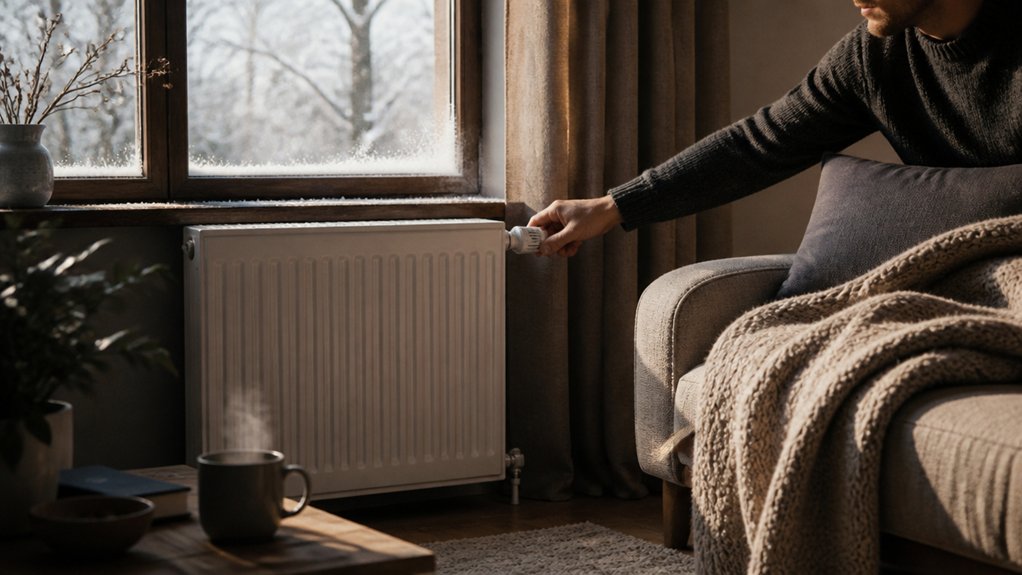
People often forget to consider radiator efficiency, despite increasing fuel bills in the winter months. Check how quickly each room warms and whether each radiator heats evenly from top to bottom. If one is cool at the top, bleed it, then check the boiler pressure and follow the manufacturer’s instructions for topping it up if needed.
Keep furniture and curtains clear of radiators, seal draughts, and adjust radiator valves gradually to balance room temperatures. If a radiator stays cold, leaks or makes unusual noises, don’t force a repair; contact a qualified heating engineer. These checks can help you find the cause and keep warmth where you need it.
Key Takeaways
Check how long each radiator takes to warm up, whether heat reaches the whole panel, and whether you can see leaks or corrosion. A radiator that heats slowly or unevenly, or seems to use more energy than before, may need attention.
If a radiator is cool at the top, air may be trapped inside. Switch off the heating, let the radiator cool, then open the bleed valve slowly and close it once water starts to come out.
Keep furniture and curtains clear of radiators so warm air can circulate. Seal draughts, and weigh up reflective panels or better insulation; panels are usually simpler to fit, while insulation can address heat loss more broadly.
Adjust each room’s thermostatic valve a little at a time, and balance the radiators to help distribute heat evenly. If cold spots, leaks or unusual noises persist, ask a qualified heating engineer to check for sludge or another fault. Ask what the inspection shows before agreeing to a power flush, as it is not suitable for every system.
How to Check Your Radiator’s Efficiency
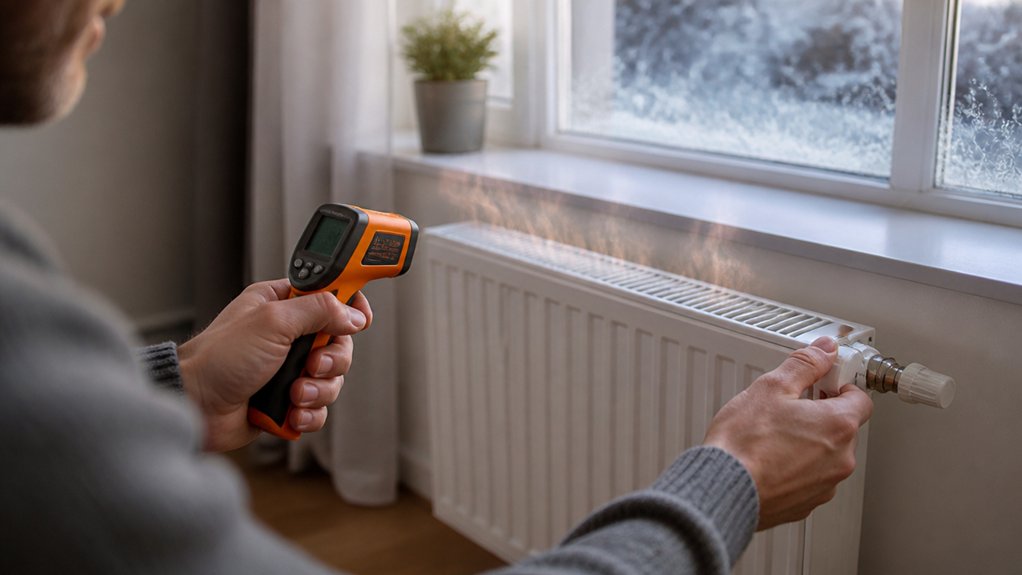
Start with a cold radiator, switch on the heating and note how long the room takes to reach a comfortable temperature. Compare it with similar rooms under the same settings; a slower warm-up can point to reduced performance. Check whether the radiator heats evenly from top to bottom, too.
Make sure furniture, curtains and covers aren’t blocking airflow, and set the thermostat to suit the room. Look for leaks or corrosion on the radiator and nearby pipes, and listen for unusual noises. Compare your energy use with previous winters, allowing for differences in weather and heating habits. If the radiator still performs poorly, ask a qualified heating professional to assess it and explain what may be causing the problem.
Bleed Radiators to Restore Even Heat
If a radiator is cold at the top but warm below, trapped air may be stopping hot water from circulating properly. Turn off the heating and let the radiator cool before using a radiator key to open the bleed valve; keep a cloth handy to catch drips. Close the valve as soon as air stops hissing and water begins to come out.
Spot Cold Spots
Check each radiator while the heating is running. If the top is cool but the bottom is warm, trapped air may be stopping hot water from circulating evenly. A cool patch near the top often points to air; if the whole radiator is cold, the cause may be elsewhere. Feel carefully and note whether the same pattern appears in other rooms.
Check that curtains, furniture or radiator covers aren’t restricting airflow. If a radiator is cold at the top, bleeding it can release trapped air and help heat circulate. Once it warms evenly, the room should feel more comfortable, and the heating system may run more efficiently.
Bleed Safely
A radiator that’s cool at the top but warm lower down often has trapped air. Bleeding it may help restore even heat. Switch off the heating first and let the radiator cool; hot water and metal can burn you.
Put a cloth and small container under the bleed valve. Use a radiator key to turn the valve slowly anticlockwise. When the hissing stops and water runs steadily, close it gently. Don’t force it or overtighten it, as that can damage the valve.
Check the boiler pressure afterwards, as bleeding can lower it. If it needs topping up, follow the boiler manufacturer’s instructions. If the valve leaks, won’t turn, or you’re unsure how to proceed, stop and contact a qualified heating professional.
Improve Heat Flow Around Your Radiators
Keep sofas, beds and cabinets clear of radiators so warm air can circulate. Leave a gap above the radiator as well; a shelf fitted too close can trap heat and make the room less comfortable. If long curtains hang over the radiator, draw them clear while the heating is on.
A reflective panel behind a radiator on an outside wall can send more heat back into the room, but it won’t make up for poor insulation. Check windows for draughts and seal gaps to stop warm air escaping. If heat is rising into an unheated space, improving the ceiling insulation may help.
These are straightforward ways to get more from the heat you’re already paying for, without turning the thermostat up.
Set Radiator Valves for Room-by-Room Comfort
Set each radiator’s thermostatic valve to suit the room, rather than heating every space to the same temperature. Living areas may need more warmth than bedrooms, while cooking can add heat to a kitchen.
Turn the valve to the setting recommended in its guide, then give the room time to warm up before making another adjustment. The numbers usually indicate a target room temperature, not how much heat the radiator produces, but check the instructions for your model.
Keep the valve’s sensor clear of curtains and furniture. If it’s covered, it may read the room as warmer than it’s and shut the radiator off too soon. Lower the setting in rooms you rarely use, and adjust it as your routine or the weather changes. Small, occasional changes are usually more useful than constant fiddling.
Reduce Heat Loss and Lower Heating Costs
Seal draughts around windows, doors and pipe openings to reduce heat loss. Check for gaps where frames meet the wall, and use a suitable sealant or draught strip; sealing too tightly can restrict needed ventilation, so don’t block vents.
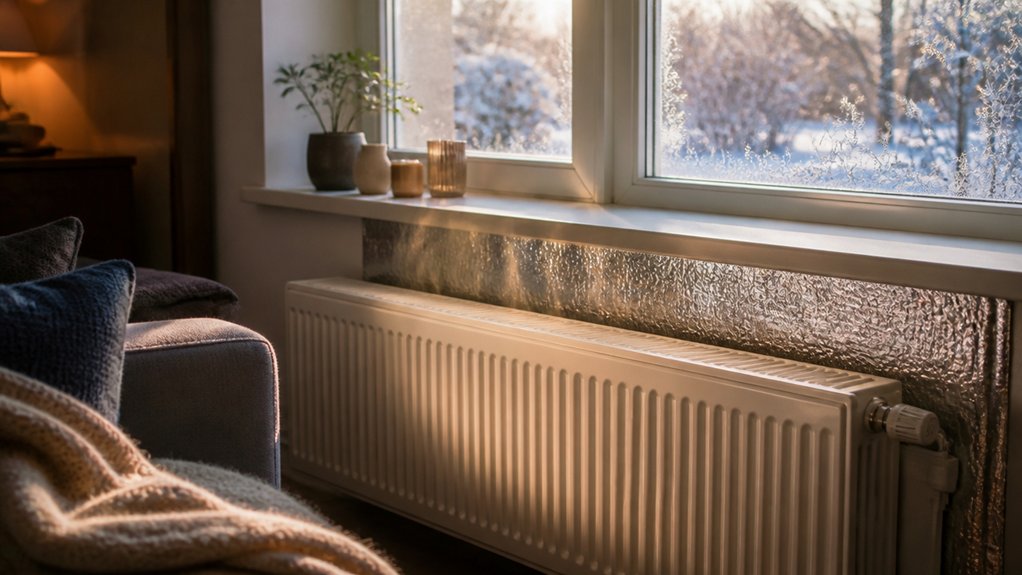
A reflective panel behind a radiator can help direct heat back into the room, though it works best where there’s a clear gap between the radiator and an outside wall.
Balance the radiators so each room gets the heat it needs, rather than overheating some spaces while others stay cold.
Seal Drafty Gaps
Check window frames, door edges, skirting boards and the points where pipes pass through walls for gaps that let warm air out and cold air in. On a windy day, feel for moving air or hold a strip of tissue near a suspected gap. Even small openings can make a room harder to keep comfortable and add to heat loss.
Use weatherstripping around doors and windows that open, and suitable caulk for fixed cracks. A door sweep can help block air beneath an exterior door. Choose materials that suit the gap, and fit them carefully: weatherstripping that stops a door or window closing properly can cause problems.
Draft proofing is often a straightforward job to do yourself. Check the seals again each winter, as materials can wear or come loose.
Install Reflective Panels
Reflective panels behind radiators on outside walls can send some radiant heat back into the room rather than letting it pass through the wall. They may help a radiator work more effectively, particularly in an older home with an uninsulated external wall, but they’ll do little on an internal or well-insulated wall.
Use purpose-made radiator panels or foil-backed insulation, cut to fit behind the radiator. Turn off the heating and let the radiator cool first. Follow the product instructions, keep the panel flat against the wall, and leave airflow around the radiator unobstructed. You can often fit a panel without taking the radiator off the wall, but work carefully around pipes and fittings.
Check the panel from time to time for dust, looseness or damage, and replace it if needed. If you’re unsure whether the wall is insulated or how to fit the panel safely, check the product guidance or ask a heating professional.
Balance Radiator Output
Reflective panels can reduce heat lost through an outside wall, but they won’t fix uneven heating on their own. If one room is too warm and another stays cold, adjust the radiator valves gradually to balance the heat. Start with radiators furthest from the boiler and open their valves as needed, then turn down radiators in overheated rooms. Make one change at a time and wait for the temperatures to settle before adjusting again.
Keep furniture and curtains clear of radiators so warm air can circulate. With steam radiators, check that each unit is level and that its air vent is working; trapped air can stop it heating evenly. Balancing the system can improve comfort and reduce wasted heat, though the result depends on the condition and layout of your heating system.
Troubleshoot Cold Spots and Uneven Heating
Cold spots and uneven heating usually point to trapped air, sludge or a system that needs balancing, rather than a failed radiator. If the top is cold but the bottom is warm, air may be trapped inside. Switch off the heating, let the radiator cool, then use a radiator key to open the bleed valve slowly; keep a cloth and a small container handy for drips.
Cold spots often signal trapped air, not radiator failure; let the radiator cool before bleeding it slowly.
If the bottom stays cold, sludge may be restricting water flow. Don’t try to force a fix: ask a heating engineer whether a power flush is suitable, as the right approach depends on the system’s condition.
If one room remains chilly, check that furniture isn’t blocking the radiator and look for draughts or poor insulation around windows and outside walls. Sealing gaps can help keep warmth in, though it won’t solve an underlying heating fault. Radiator valves can also be adjusted gradually to balance heat between rooms; make one change at a time and allow the system to respond.
Persistent cold spots, leaks or unusual noises need attention from a qualified heating engineer. Ask what they think is causing the problem and whether the proposed repair addresses that cause, rather than just the symptom.
Frequently Asked Questions
How Often Should Radiators Be Replaced?
Most radiators last around 15 to 20 years, but age alone doesn’t tell you when to replace one. Check for persistent leaks, rust or corrosion, cold patches, repeated repairs, or heating bills that keep rising. These can point to a radiator that’s no longer working properly.
Bleeding or flushing may clear trapped air or sludge, so it’s worth asking whether either is likely to help before replacing the radiator. If the heat still isn’t reliable, have a qualified heating professional check the radiator and the rest of the system.
Replacement may improve comfort and reduce the risk of water damage, but a sound radiator may be better kept and repaired. Check out the store that radiators Ireland home owners prefer.
Are Electric Radiators More Efficient Than Central Heating Radiators?
Electric radiators aren’t automatically more efficient than radiators connected to central heating. Electric units turn nearly all the electricity they use into heat at the point of use, while a boiler loses some energy. But electricity can cost more per unit, so your running costs depend on your energy tariffs and how each system is controlled.
To keep costs down, heat only the rooms you use, improve insulation and choose controls that let you set temperatures and schedules accurately. Before deciding, compare the likely running costs for your home and ask how much control you’ll have over heating individual rooms.
Can Radiator Covers Damage Radiators?
A radiator cover won’t usually damage the radiator, but it can reduce how well it heats the room. If the cover blocks airflow or holds warm air around the radiator, less heat reaches the room and your heating system may have to run longer.
Choose a cover with good ventilation, and make sure it doesn’t obstruct the controls. Check the radiator manufacturer’s guidance, too. If the radiator gets unusually hot, makes unfamiliar noises or the room feels colder, remove the cover and see whether performance improves.
What Radiator Size Is Best for My Room?
Choose a radiator based on the room’s heat loss, not just its floor area. Measure the room in feet and inches, and note the ceiling height, window size and insulation; these all affect the output needed, usually given in BTUs or watts.
A well-insulated room generally needs less heat than a draughty one. Use a heat-loss calculator for an estimate, then ask a heating professional to check it before you buy. An undersized radiator may leave the room cold, while an oversized one can cost more than necessary.
Are Smart Thermostats Compatible With All Radiator Systems?
Smart thermostats aren’t compatible with every radiator system. Before buying one, check the boiler, wiring and existing controls; many models work with standard gas or oil boilers, while electric radiators, older systems and some district-heating setups may need different controls or may not connect directly.
Ask the thermostat manufacturer or a heating installer to confirm compatibility with your exact system. A suitable setup can give you steadier control and help manage heating costs, but the result depends on how your boiler and radiators are configured.