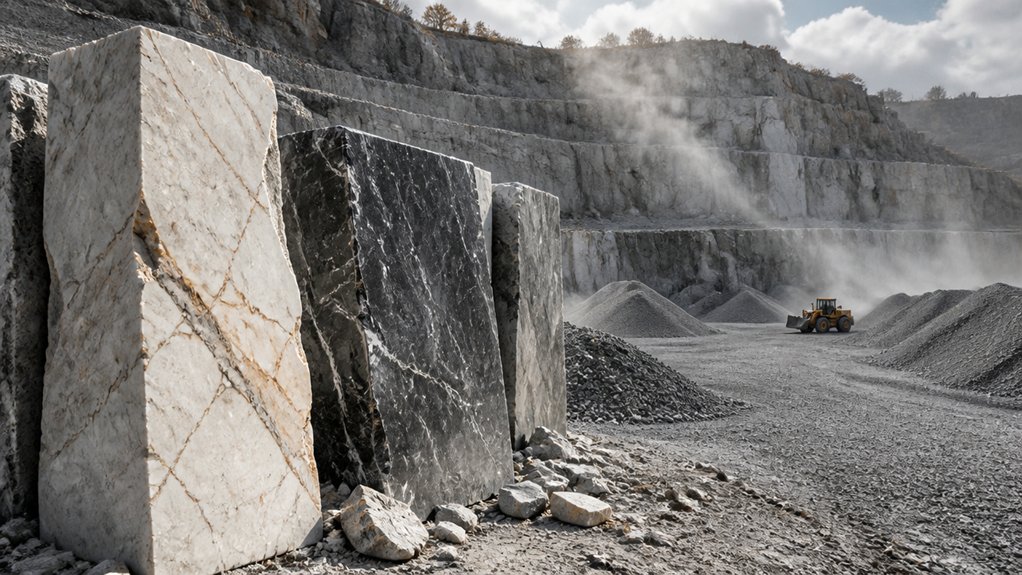
Your quarry can generate value in two distinct ways: premium dimension stone, cut into slabs for façades, counters, and paving, or aggregate, crushed for concrete, roads, and drainage. Geology guides your choice: dense, fine-grained rock yields consistent finishes, while coarser or fractured material suits bulk uses. Slabs can command higher prices, but aggregate depends on efficient production and nearby buyers. Compare access, processing costs, permits, and impacts to assess your property’s potential—and discover what shapes each opportunity.
Key Takeaways
- Dimension-stone quarries extract large, intact blocks for façades, countertops, and paving, prioritizing appearance, precise dimensions, and lasting value.
- Aggregate quarries crush and screen rock into particles for concrete, drainage, and road bases, prioritizing dependable performance and affordability.
- Geology shapes each material’s suitability: dense, fine-grained rock favors consistent slabs, while coarser or fractured rock often suits aggregate.
- Stone production uses careful block extraction, sawing, and finishing; aggregate production relies on blasting, crushing, screening, and quality checks.
- Dimension stone earns more per unit, while aggregates depend on high-volume local demand; both require permits, responsible operations, and community engagement.
How Do Dimension Stone and Aggregates Differ?
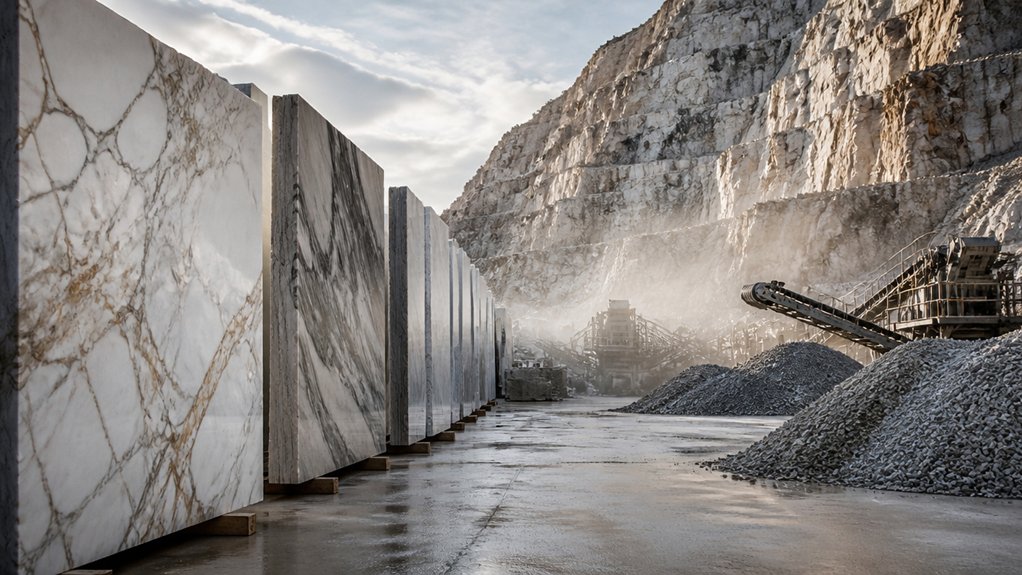
Dimension stone and aggregates serve different property needs: dimension stone is cut into precise slabs or blocks for visible features such as façades, countertops, and paving. Meanwhile, aggregates are crushed or screened into loose particles for concrete, drainage, and road bases.
You’ll choose dimension stone when appearance, finish, and lasting value shape a project’s appeal. Aggregates deliver practical performance, helping you build stable foundations, manage water, and control construction costs.
Their quarrying methods reflect these distinct goals: crews extract and finish large pieces for architectural use, or process rock into graded material for bulk applications.
Consider transportation challenges, too. Heavy loads and distance can raise delivered costs, so sourcing nearby often benefits your budget.
Match each product to its role, and you’ll protect both your property’s visual impact and its structural reliability.
How Geology Determines Stone and Aggregate
When you assess a property for quarry potential, rock type and texture help you identify whether it can yield premium dimension stone or reliable aggregate.
Mineral composition affects durability, appearance, and market value.
Fractures and formation reveal how efficiently you can extract usable material and shape a profitable operation.
Rock Type and Texture
A stone’s rock type and texture determine how well it performs—and how valuable it can be for your project. Dense, fine-grained stone often cuts into crisp, consistent slabs, giving kitchens, facades, and entryways a refined finish.
Coarser or naturally fractured rock may suit retaining walls, paths, and base gravel, where strength and reliable grading matter more than polish. Match the material to your property’s use, traffic, and design goals, and you’ll invest in surfaces that look right and last.
Texture also shapes fabrication costs: uniform blocks yield more usable stone, while irregular seams can increase waste. Vintage quarrying methods and quarry aesthetics can add character to a property, but assess the stone’s structure before choosing it.
Ask suppliers for sample pieces and performance details; the right fit protects your budget and boosts curb appeal.
Mineral Composition
Because minerals shape a stone’s strength, color, and weather resistance, composition matters as much as appearance when you choose materials for your property. Mineral diversity gives each stone distinct performance and visual appeal.
Quartz-rich granite, for example, resists wear and suits busy patios, while feldspar can add warm tones to cladding.
In limestone, calcite creates a softer look that works well for façades and garden features, though you’ll want to match it to local conditions.
Formation processes influence which minerals occur together, helping determine whether a quarry’s output suits polished countertops, durable paving, or economical aggregate.
For driveways and foundations, mineral content affects hardness, drainage, and long-term stability.
Ask suppliers about composition and intended use before you buy. Choosing the right blend helps protect your investment and gives your property lasting value.
Fractures and Formation
Beyond mineral content, a stone’s fractures and formation determine the sizes and shapes a quarry can produce—and how well they suit your property. For a patio, façade, or retaining wall, naturally spaced joints can yield broad, consistent blocks that install cleanly and create a refined finish.
Tight fractures may limit slab size, while irregular breaks often suit crushed aggregate better than premium cladding. Fault lines and mineral veins can add striking color and texture, but they may also weaken stone or complicate cutting.
Ask suppliers how quarry structure affects durability, available dimensions, and waste. When you match the geology to your project, you can choose materials that look right, perform reliably, and fit your budget.
The result is a surface or foundation built around your property’s practical needs and design goals.
How Dimension Stone Becomes Finished Slabs
Once quarry crews extract dimension stone, they cut and finish it into slabs that bring natural character and lasting value to your property. Skilled teams inspect each block, then use diamond-wire saws or gang saws to slice it into consistent slabs. Careful cutting preserves distinctive veining and color, helping you choose a surface that suits your design and budget.
Workers polish, hone, or texture each face to deliver the look and performance you want for countertops, floors, walls, or outdoor features. They also trim edges and check dimensions, so installation fits your plans with fewer surprises.
Throughout production, quarry safety protects crews, while thoughtful material storage helps prevent chips, stains, and weather damage. You receive a finished slab that combines natural beauty, practical durability, and lasting appeal for your property.
How Is Aggregate Blasted, Crushed, and Graded?
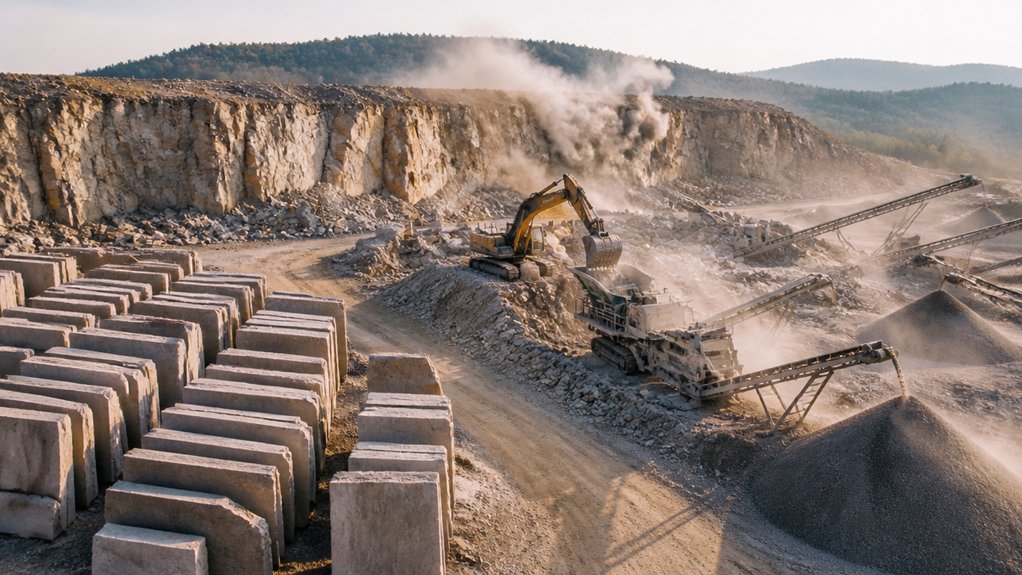
When a project needs a dependable foundation, properly processed aggregate helps keep your property’s construction on track. At the quarry, crews drill and carefully place controlled charges to break solid rock into manageable pieces. Strong Mining safety practices guide each blast, protecting workers, nearby properties, and operations.
Carefully controlled quarry blasts break solid rock into manageable pieces while strong safety practices protect workers, properties, and operations.
Loaders move the broken stone to crushers, which reduce it in stages. Screens then separate material by size, while conveyors keep production flowing. Regular equipment maintenance helps prevent breakdowns, control costs, and support consistent output.
Operators can adjust crushing settings and screening decks to meet specified gradations, giving you dependable material choices for your project.
From initial blast to final stockpile, careful quality checks catch inconsistencies before delivery. This disciplined process helps you source aggregate with predictable sizing and reliable performance, so you can plan confidently and keep construction schedules moving.
Where Are Dimension Stone and Aggregates Used?
Carefully processed aggregate supports the foundations, driveways, drainage systems, and concrete around your property, while dimension stone adds lasting character to walls, patios, steps, and exterior finishes.
You’ll find aggregate beneath paving, in retaining walls, and throughout landscaping, where it improves stability and manages runoff.
Dimension stone suits countertops, cladding, garden features, and entryways, giving your home a distinctive finish that can endure years of use.
For renovations, stone can also support Historical preservation, helping you match original materials and protect a building’s character.
Its Aesthetic applications range from refined interior details to bold outdoor focal points, so you can shape a cohesive look across your property.
Choose materials according to each project’s function, appearance, and exposure. The right combination can strengthen practical performance while increasing curb appeal and creating spaces you’ll value every day.
How Do Quarry Markets and Impacts Compare?
When you compare quarry markets, you’ll see aggregates win on sales volume, while dimension stone can command higher prices per unit.
Each quarry’s environmental and community impacts can also shape nearby property values and investment appeal.
Understanding both factors helps you judge which market offers the stronger opportunity.
Market Value and Scale
Although both supply essential materials, dimension-stone and aggregate quarries serve markets of different value and scale: dimension stone earns more per unit through selective extraction and finishing, while aggregate generates revenue through high-volume production for nearby construction projects.
If you’re evaluating land, compare its geology with access to buyers, transport routes, and processing facilities. A deposit suited to premium slabs may support higher margins, but requires careful extraction and specialized finishing.
Aggregate properties typically depend on reliable reserves, efficient equipment, and steady local demand; proximity to roads and building sites can strengthen their commercial appeal.
Market growth in housing and infrastructure can expand opportunities for both, though each follows a distinct supply chain.
Assess permits, operating costs, and buyer contracts before estimating a site’s value or long-term earning potential.
Environmental and Community Impacts
A quarry’s market value also depends on how its operations affect the surrounding land and community. If you own or assess property near a dimension-stone site, consider its smaller footprint, selective extraction, and potential for noise, dust, and visual change.
Aggregate quarries move far more material, so truck traffic, blasting, and land disturbance can weigh more heavily on nearby parcels and future development.
Strong sustainability practices can limit erosion, manage water, reduce dust, and support progressive reclamation. These measures protect land value and help operators retain permits and buyers. Ask whether the operator tracks impacts and restores worked areas.
Community engagement matters, too. Clear communication about schedules, traffic, and complaints can build trust and reduce conflict.
When you compare quarry investments, weigh production returns against mitigation costs, neighborhood acceptance, and the property’s post-quarry potential.
Frequently Asked Questions
How Long Does It Take to Open a New Quarry?
Opening a quarry can feel like waiting for a mountain to move: expect roughly two to seven years, depending on permits, site conditions, and financing. You’ll need to secure property rights, complete environmental reviews, and obtain approvals before extraction begins.
Strong Community engagement can ease concerns, while addressing Environmental impact early helps protect your investment and schedule.
With careful planning, you can turn promising land into a productive, market-ready asset without costly surprises or delays.
What Permits Are Required Before Quarrying Can Begin?
Before quarrying begins, you’ll typically need land-use approval, a mining or quarry permit, environmental impact review, water and air permits, stormwater authorization, and reclamation bonding. Requirements vary by location, mineral, and site, so confirm them with local and state regulators.
Secure access, zoning, and utility approvals too. Strong community engagement can ease reviews, protect neighboring property values, and build trust. Start early; a complete application helps you avoid costly delays and safeguard your investment.
How Are Abandoned Quarries Rehabilitated?
You rehabilitate an abandoned quarry by stabilizing slopes, restoring soil, managing water, and planting native vegetation. Some sites become parks, wetlands, or valuable development land.
In the U.S., abandoned mine lands number over 500,000, underscoring the opportunity to reclaim neglected property.
Through Environmental restoration, you can improve safety, biodiversity, and resale appeal.
Early community engagement helps you choose uses residents support, turning a liability into an attractive, marketable asset.
Plan monitoring to protect long-term value.
What Safety Measures Protect Quarry Workers?
You protect quarry workers with rigorous training, hazard controls, and consistent supervision.
Equip your crew with Personal protective gear, including hard hats, eye protection, high-visibility clothing, hearing protection, and suitable footwear.
Enforce machinery safety protocols: inspect equipment, guard moving parts, maintain clear exclusion zones, and require lockout procedures before repairs.
You’ll also reduce costly incidents by managing dust, stabilizing slopes, marking haul roads, and keeping emergency plans ready—protecting people, property, and productivity.
Can Quarry Operations Coexist With Nearby Communities?
Yes, quarry operations can coexist with nearby communities when you protect residents’ quality of life and property values. Strong Community impact planning gives you clear communication, traffic controls, dust suppression, and responsive complaint channels.
Noise mitigation—through quieter equipment, barriers, and carefully scheduled blasting—helps you limit disruption.
With transparent monitoring and dependable safeguards, you can build trust, reduce conflicts, and support a stable local property market while maintaining productive quarry operations.