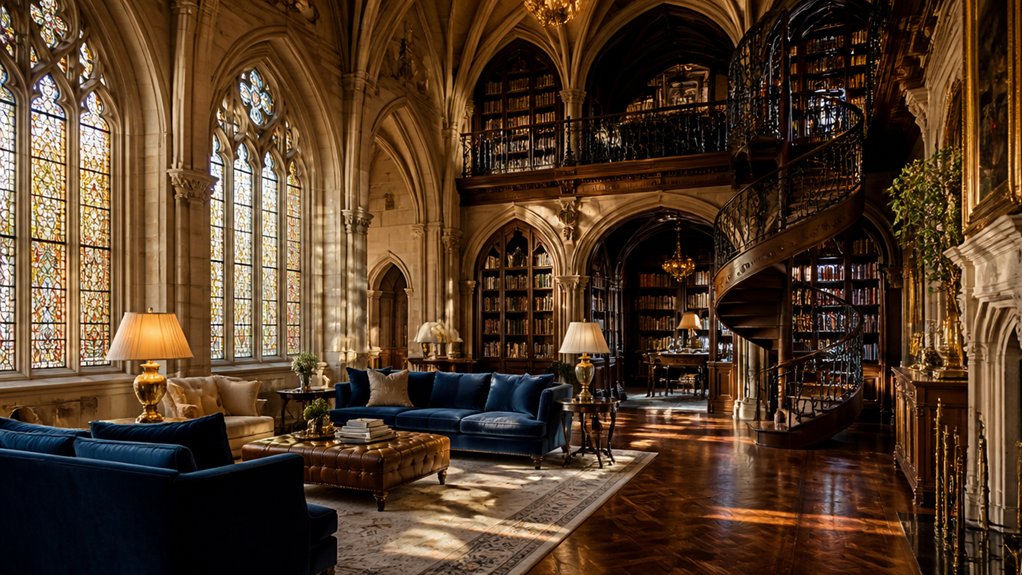
You can turn a century-old Neo-Gothic library into a luxury home by protecting its arches, carved stone, leaded windows, timber, and surviving bookcases. Start with a condition survey, then repair historic materials with compatible methods and conceal new wiring and climate systems. Zoned heating, warm dimmable lighting, and discreet smart technology add everyday comfort without sacrificing character. Rework grand reading rooms into inviting lounges or dining spaces, and frame the façade with thoughtful landscaping. The transformation’s finer decisions reveal how heritage becomes an asset.
Key Takeaways
- A century-old Neo-Gothic library became a distinctive luxury home by retaining its soaring arches, carved stonework, leaded windows, and timber details.
- Preservation specialists surveyed the building to identify original features, assess structural conditions, and guide compatible restoration work.
- Reading rooms were reimagined as comfortable lounges and dining spaces, with furnishings arranged to suit the building’s grand proportions.
- Discreet climate, lighting, plumbing, and smart-home systems modernized daily living without compromising historic character.
- Thoughtful landscaping, tailored storage, and layered lighting completed the conversion while highlighting the library’s architectural heritage.
The Neo-Gothic Library Before Its Conversion
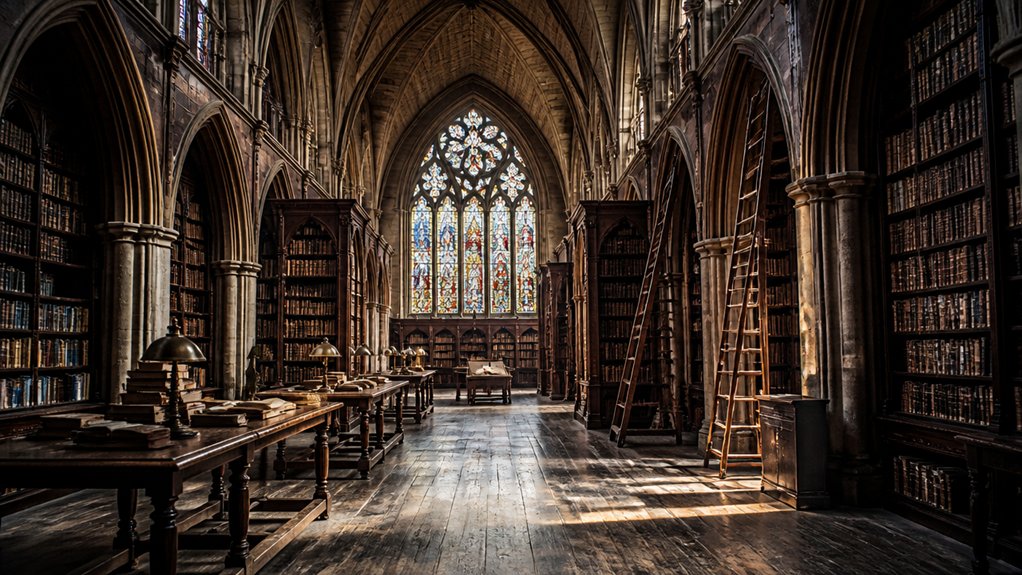
Before its conversion into a luxury home, the Neo-Gothic library was designed to make a lasting impression. You’d notice its soaring proportions, pointed arches, and richly detailed stonework before reaching the reading rooms.
Dark timber, decorative tracery, and carefully placed windows gave the interior a sense of ceremony while drawing daylight across long tables and shelves. These Library aesthetics weren’t merely ornamental; they reinforced the building’s role as a civic landmark and a destination for readers.
Its Historical significance rested in that public purpose, as well as in the craftsmanship and architectural ambition visible throughout. For a prospective buyer, the original library offered more than impressive square footage: it presented a rare, recognizable identity.
You could see how its grand scale and distinctive details set it apart from conventional residential properties in a competitive luxury market.
Preservation Goals for the Historic Library Home
Preserving a Neo-Gothic library as a home means protecting the features that give it character while making the building practical for modern life. Your first goal is to identify which original details carry the most architectural and market value: pointed arches, carved stone, leaded windows, timber trusses, and surviving bookcases.
A careful condition survey helps you distinguish authentic fabric from later alterations and prioritize conservation work. You’ll want to retain the building’s scale, craftsmanship, and historic atmosphere without treating every surface as untouchable.
That balance defines successful adaptive reuse: the home gains a new purpose while its defining story remains legible. Set clear standards for modern interventions, too, so additions respect historic materials, proportions, and sightlines.
Buyers value distinctive heritage, especially when preservation feels intentional rather than merely decorative.
Retrofitting the Library for Modern Living
A successful retrofit brings discreet modern comfort to the library without competing with its Neo-Gothic character. You can make daily routines feel seamless by planning efficient heating, cooling, and ventilation around the home’s varied spaces.
Zoned climate controls let you adjust comfort room by room, while discreet insulation upgrades help manage energy costs without changing the exterior.
Modern lighting can layer task, ambient, and accent sources, giving you flexible illumination for work, entertaining, and quiet evenings. Choose warm, dimmable LEDs and compact fixtures that suit the home’s scale.
Smart technology puts lighting, temperature, security, and audio controls within easy reach, whether you’re at home or away. Prioritize reliable connectivity and intuitive interfaces, not novelty.
With carefully selected systems, you’ll gain convenience, efficiency, and a stronger resale proposition while keeping the experience tailored to modern luxury.
Preserving the Arches, Stonework, and Reading Rooms
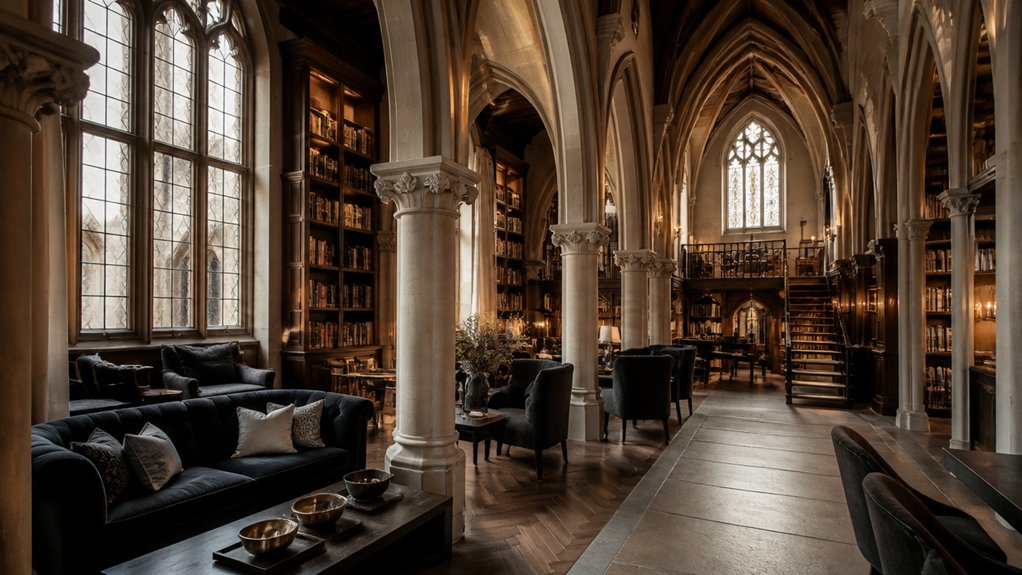
Even as you update the library for luxury living, its arches, stonework, and reading rooms should remain the defining features. Have a preservation specialist assess each surface before work begins; a documented condition survey helps you prioritize repairs and protect the building’s value.
Preserve the arches, stonework, and reading rooms with a specialist-led survey before renovations begin.
Clean masonry gently, repoint joints with compatible mortar, and retain tool marks that reveal the original craft. Restore timber and metal details rather than replacing them, and conceal modern services where they won’t compete with historic lines.
In the reading rooms, protect original proportions and sightlines. Thoughtful interior lighting can highlight vaulted ceilings and textured stone without glare or heat damage.
Coordinate landscaping design with exterior masonry: manage drainage, trim vegetation away from walls, and frame entrances without obscuring Gothic details. These choices make authenticity a lasting luxury asset.
Turning Library Rooms Into Living Spaces
You can preserve carved arches, stonework, and other defining details while adapting each room to modern living. Reimagining a reading room as a lounge or dining space lets you add function without erasing its Neo-Gothic character.
Start by matching the room’s layout, lighting, and finishes to both its architecture and your needs.
Preserving Architectural Character
When a former library becomes a home, its grand proportions and Neo-Gothic details can do more than decorate the rooms—they can guide the design. You’ll preserve that value by treating original stonework, tracery, timber beams, and iron hardware as assets, not obstacles.
Before finishes go in, commission a condition survey; targeted Fungal remediation and Structural reinforcement can protect historic fabric while meeting modern safety standards. Choose discreet upgrades that respect sightlines and material progressions, and repair rather than replace wherever feasible.
Custom millwork can conceal wiring and climate controls without competing with carved details. Match new plaster, masonry, and woodwork carefully, but don’t fake age: honest, compatible materials read as refined.
With this approach, you retain the building’s identity—and give buyers a distinctive home whose craftsmanship supports lasting appeal.
Reimagining Reading Rooms
A former reading room can become the home’s most compelling living space without losing its sense of scale. You can preserve the room’s grand proportions while giving it a clear, comfortable purpose. Arrange seating in intimate groupings rather than pushing every piece against the walls; a tailored sofa and sculptural lounge chairs can anchor conversation beneath soaring ceilings.
Furnishing aesthetics matter: choose refined, durable materials that complement original woodwork, stone, and stained glass without competing for attention. A discreet bar or reading nook can add function while keeping the room adaptable for entertaining.
Thoughtful Lighting design makes the transformation feel complete. Layer warm table lamps, concealed architectural fixtures, and carefully aimed accents to soften shadows and highlight historic details. You’ll create a welcoming living space that honors the library’s past and strengthens the home’s appeal.
The Finished Historic Library Home
With the renovation complete, the former Neo-Gothic library now pairs its historic character with the comforts of a luxury home. You’ll find original stonework, pointed arches, and soaring ceilings balanced by discreet climate controls, updated plumbing, and carefully integrated storage.
The result preserves architectural details buyers value while making daily living practical. In the main rooms, tailored furnishings define inviting zones without obscuring the building’s scale. Thoughtful lighting design highlights carved features and supports reading, dining, and entertaining after dark.
Beyond the windows, a considered garden landscape extends the home’s appeal, creating private outdoor space and framing the historic façade. For you, the finished property offers more than a striking conversion: it delivers a rare blend of provenance, modern performance, and flexible living, with distinctive character that can support lasting market interest.
Frequently Asked Questions
Who Designed the Original Neo-Gothic Library?
You’d expect a century-old Neo-Gothic library to have a famous architect behind it—but the article doesn’t name the original designer. It highlights the building’s Architectural details and Preservation challenges, yet offers no attribution you can verify.
Where Is the Century-Old Library Located?
You’ll find the century-old library in [location], where its Neo-Gothic architecture gives the property a distinctive market identity. Its Historical significance adds more than visual appeal: it connects the home to the area’s civic and cultural past.
For you, that legacy can make the residence especially compelling, while careful Architectural preservation helps retain the craftsmanship and character that distinguish this conversion from a standard luxury home.
The location’s appeal also supports its long-term value.
Who Commissioned the Library’s Construction?
You can trace the library’s construction to its original commissioner, but the available context doesn’t identify that person by name. Why does that detail matter?
For you, knowing who commissioned it helps decode its architectural symbolism and understand the ambitions behind its Neo-Gothic design. It also sharpens the story of its preservation challenges: a century-old institution’s purpose, patronage, and legacy all shape how convincingly its transformation can honor the past while serving a new market.
Is the Converted Home Open to Visitors?
No, you can’t visit the converted home as a walk-in attraction. Public access isn’t generally available because the residence remains a private property, so don’t plan on dropping by or expecting regular opening hours.
You may find private tours mentioned in coverage or offered through special arrangements, but availability depends on the owners and any event organizers. Check directly with the source advertising a tour before making plans; access can change without notice.
What Is the Property’s Current Market Value?
You can’t determine the property’s current market value from the information provided; no listing price, location, or recent sale data appears here.
A reliable Property valuation would require comparing the home with similar luxury properties, evaluating its condition and distinctive architectural features, and reviewing recent transactions.
Market trends also matter: local demand, inventory, interest rates, and buyer appetite for historic conversions can shift value.
You’ll need an up-to-date appraisal or verified listing to establish a defensible figure.