
Start with how you’ll use the room: reading, relaxing, gathering or walking through it. Choose seating that fits the room and has supportive cushions; durable, comfortable fabric is practical, though finer materials may need more care.
Use a mix of finishes, soft textures and warm, dimmable lighting to add depth without clutter. Give the room a clear focal point, such as a piece of art or an architectural feature, then add a few personal accents. Keep walkways open and surfaces uncluttered so the room feels comfortable as well as polished.
Key Takeaways
Plan the room around how you use it each day, not just how it looks. Keep clear routes from the entry to the seating and adjoining rooms, and check that doors and drawers can open without hitting furniture.
Choose seating that supports the way you relax, read and host. Before buying, check the proportions against the room and try the cushions if you can; durable fabric may be easier to live with, while more delicate options can need extra care.
Give the room a clear focal point, such as a fireplace, a view or a large piece of art. Balance it with furniture and accessories of different shapes and heights, but avoid adding so much visual weight that the room feels crowded.
Use a restrained colour palette and bring it together with a few repeated colours or finishes. Mix materials and textures for interest, and consider how they will wear and clean; polished surfaces can feel formal, while softer finishes tend to make a room feel more relaxed.
Layer ambient, task and accent lighting so the room works for different activities. Add personal artwork and useful accessories, but leave enough clear space to keep the room comfortable rather than cluttered.
Plan a Living Room Layout for Everyday Comfort

Start by considering how you use the room, not where the sofa looks best. Note where you read, gather, work and walk through, then arrange the activity areas around those routines. Keep a clear route from the entry to adjoining rooms; if people have to cut through the seating area, conversation and movement will compete.
Sketch the room or mark the furniture positions with painter’s tape, and check the clearances before you commit. A few inches can make a noticeable difference to how easily you move around.
Use windows, a fireplace or other fixed features to help anchor the layout, but check that the main seats still have balanced sightlines. The trade-off is that a feature-led arrangement may limit where furniture can go, so weigh that against the routes and activities the room needs to support.
Choose Elegant, Comfortable Living Room Furniture
Choose seating with a frame and cushions that hold up to daily use. Check that the cushions support you without feeling too firm, and choose a fabric that suits how the room is used; some materials are easier to clean, while others may feel softer but need more care.
Measure the room and the furniture before you buy. Leave enough space to walk around each piece, and compare the furniture’s scale with the room so it feels comfortable rather than crowded or undersized.
Choose Refined Seating
Choose seating that fits the room before choosing its style. Measure the sofa and chair footprints, then check doorways, walkways and sightlines; a piece that looks right in a showroom can crowd a living room at home.
A sofa with a simple outline is easier to place, while a well-shaped accent chair can add contrast without making the room feel mismatched. Compare fabric samples in your room’s light, and consider how they’ll stand up to everyday use. Textured linen blends have a relaxed look; performance velvet may be easier to manage in a busy household, but check its care instructions.
Keep the colour palette restrained if you want the materials and details to stand out. Distinctive legs or neat seams can add character, but they won’t make an uncomfortable seat worth keeping. Sit on the pieces before buying, and check that the seat depth and support suit the people who’ll use them.
Prioritize Lasting Comfort
Don’t judge a sofa by a quick sit in the showroom. Spend several minutes on it, change positions and check that the seat supports your back without feeling hard or restrictive. Cushions should feel comfortable and spring back into shape after you get up; foam and down blends feel different, so try both if you can.
Check the arm height and seat depth against how you actually use the room, whether you read, host guests or stretch out after work. Ergonomic cushions may ease pressure and help you sit comfortably, but the right shape depends on your posture and habits. Linen, leather and tightly woven performance fabrics all have trade-offs in feel, upkeep and wear, so ask how each option handles daily use and cleaning.
Before you buy, ask about the frame, cushion cores and care requirements. A well-made sofa should be comfortable in everyday use and hold up over time, not just look good on the showroom floor.
Balance Style And Scale
A living room can feel polished and still be comfortable. Look for furniture with clean lines and cushions deep enough for everyday use. A tailored sofa can anchor the room, while sculptural chairs add character; if the chairs are too bulky or ornate, they may compete with the sofa.
Check each piece against the room’s dimensions and the furniture beside it. A large sectional can work in an open-plan room, but in a smaller space a compact sofa may leave more room to move. Before buying, measure the room and mark out the furniture’s footprint, including space for doors and clear walkways.
Vary heights and visual weight to keep the layout balanced. A low sofa can sit well with a slender floor lamp, while a broad coffee table may need lighter side tables nearby. Choose upholstery and finishes that can handle daily use; delicate fabrics may look smart but need more care.
Layer Refined Materials and Soft Textures
A well-furnished living room can feel warm without looking cluttered. Pair a veined marble side table with brushed brass, or place a smooth lacquered cabinet beside a wood console with a strong grain. Before choosing, check that the finishes work together in colour and that the surfaces suit how much use they’ll get; polished finishes can show scratches and marks more readily.
Use soft textures where you sit and walk: a cashmere throw, bouclé upholstery or a hand-knotted wool rug. Mix them with leather or linen rather than matching every fabric. Ask how each material handles wear, cleaning and sunlight, and consider performance fabric if the room gets heavy use. Repeat a few finishes around the room, then vary their texture and scale to give the furnishings a collected, balanced feel.
Use Lighting to Create Warmth and Drama
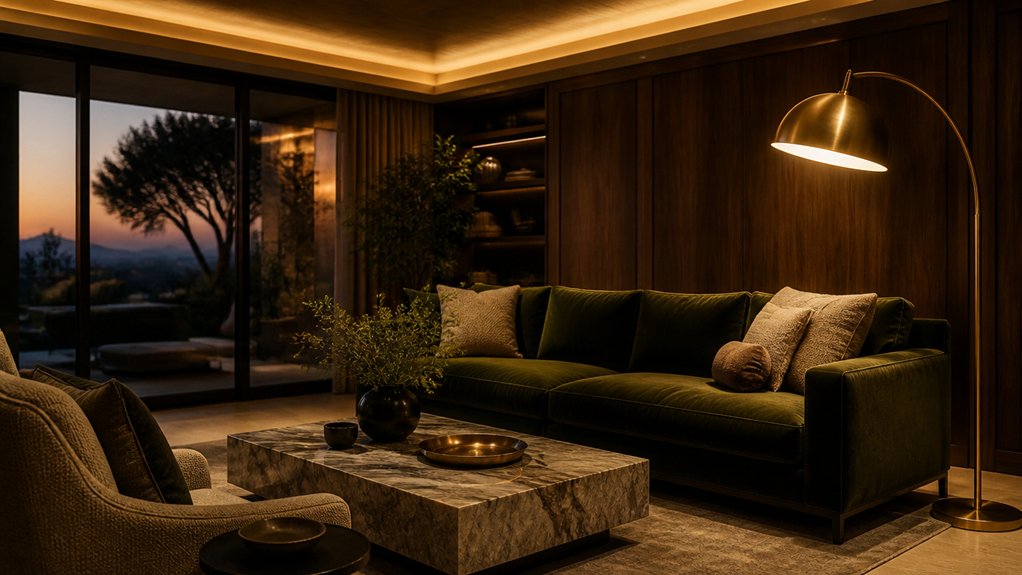
Layer ambient, task and accent lighting so the living room is comfortable and has depth. A dimmable ceiling fixture or recessed lights provide general light; floor and table lamps add focused light where you read or relax. Warm-white bulbs can bring out the colour and texture of finishes, though the right tone depends on the room and your preference.
Use accent lights to pick out architectural details, a pendant or a textured wall. Aim adjustable spots at surfaces rather than at eye level to reduce glare and create shadows that add dimension. Put different lights on separate switches or smart controls so you can choose practical, brighter light or a softer evening setting. Check that switches are in convenient places, and consider how much wiring work is needed before choosing new fixtures.
Add Art and Personal Touches With Intention
Choose artwork that suits your taste and gives the room a clear focal point. Before hanging it, check the size and placement against the furniture so it feels balanced rather than crowded. Display personal objects selectively; a few well-chosen pieces add character, while too many can make the room feel cluttered or over-staged.
Choose Meaningful Artwork
Choose artwork that suits the room and your own taste. An original, limited-edition print or commissioned piece can give the room a clear focal point. Pick a subject with a personal connection, such as a place you know or a motif that matters to you; too many matching themes can make a room feel forced.
Check the size against the wall and nearby furniture before buying. A large canvas can sit well above a sofa, while a pair of smaller works can bring order to a narrow wall. Match the colours to the furnishings for a quieter look, or use contrast for more energy. Choose a frame that suits both the artwork’s medium and the room’s finishes.
Hang the work at eye level and use focused lighting if you want to bring out its colour and texture. Before you commit, check how the piece looks in the room’s natural and evening light. Choose something you’ll still be glad to see every day.
Curate Personal Objects
Personal objects should tell your story without crowding the room. Choose pieces that matter to you and suit the room’s character, such as an heirloom, a travel find or a well-made book.
Before placing an item, consider its size, material and how it sits with the furniture. A brass bowl can add warmth to a stone coffee table, while a family photograph can soften a polished console.
Display only what feels significant. Too many objects compete for attention; a few carefully chosen pieces look collected rather than cluttered. Look for good craftsmanship and finishes with texture, but leave some surfaces clear. You don’t need to fill every corner to make a room feel personal.
Create a Cohesive Display
A cohesive display links artwork and personal objects through a shared colour, scale or material. Choose one anchor piece, such as a large painting or sculptural mirror, then arrange smaller items around it. Check that the wall and furniture can support the pieces, especially heavier mirrors, and use suitable fixings for the wall type.
Repeat a few colours or finishes from the upholstery, rugs or metalwork to connect the display to the rest of the room. Vary heights and shapes, but leave enough space for each item to read clearly. Framed art, ceramics and keepsakes can work well together; a matching set is easier to arrange, but may feel less personal.
Keep pieces that add meaning, texture or contrast, and move the rest elsewhere. Picture lights or a discreet lamp can bring out details after dark, but avoid glare and make sure cords are safely routed.
Finish With Details That Keep the Room Livable
Once the main pieces are in place, choose finishing details that can take everyday use. Performance fabrics, sealed stone and sturdy metals are practical options, but check how each material needs to be cleaned and maintained. A durable finish may cost more upfront, while a softer or more delicate one may need replacing sooner.
Add throws and cushions for comfort, keeping their colours and textures in step with the room. A tray keeps remotes, coasters and reading glasses together; baskets are handy for toys and spare blankets. Put task lighting beside reading or gathering spots, and consider dimmers so you can adjust the light without shifting furniture.
Keep walkways clear and frequently used surfaces easy to reach. Finishes should make daily routines simpler, not add chores. Edit the accessories from time to time, and keep out only what’s useful or worth looking at.
Frequently Asked Questions
How Can I Make a High-End Living Room More Sustainable?
A sustainable living room starts with materials that hold up to everyday use. Choose durable furniture made from responsibly sourced timber, and consider reupholstering sound pieces you already own; check that the frame is sturdy before spending money on new fabric.
For textiles, look for organic, recycled or traceable fibres, and ask how they’re made and cared for.
Use warm LED bulbs and dimmers to reduce electricity use while keeping the room comfortable. Choose low-VOC paint and natural materials where they suit the job, but check care and maintenance needs: some natural finishes mark more easily than synthetic alternatives.
What Smart-Home Features Are Useful in a Luxury Living Room?
Smart-home controls can make a luxury living room easier to use, but plan them around how you live and keep the hardware discreet. Set up lighting scenes for reading, entertaining and relaxing, and check that the controls are simple to use alongside voice commands. Automated shades help manage daylight and privacy; make sure there’s room for their fittings and a practical way to operate them if the system is down.
Discreet speakers, a central control system and climate sensors let you adjust sound and temperature without adding clutter. Ask how the system will work with your existing equipment, and consider that more integrated controls can be harder to change or repair later. A smart mirror can show schedules or display art, while hidden charging keeps surfaces clear; check that charging points are easy to reach and suited to the devices you use.
How Much Should I Budget for a High-End Living Room Renovation?
A high-end living room renovation can vary widely in cost. The main factors are the room’s size in square feet, local labour rates, and the work involved. Polished stone, custom furniture and tailored upholstery add cost; choosing where to spend and where to use simpler finishes helps keep the budget under control.
Before setting a target, get itemised local quotes for labour, lighting, materials and furniture. Ask what’s included and how changes to the scope will be priced. Allow room in your budget for unexpected work, particularly if the renovation involves opening walls or replacing existing finishes.
Should I Hire an Interior Designer for a Luxury Living Room?
A designer can be worth hiring for a luxury living room if you want a well-planned result without coordinating every decision yourself. They can help organise the layout, choose a colour palette and source furnishings or trades that may be hard to find on your own.
Match the level of help to the work. A consultation may be enough for advice on finishes or furniture; a full-service designer makes more sense when the room involves structural changes or several trades. Before committing, compare portfolios and fees, and ask who’ll manage ordering, deliveries and trades, how changes are handled, and what isn’t included. A designer adds cost, so weigh that against the time and coordination you’d otherwise take on.
How Can I Protect Valuable Furnishings From Pets and Children?
Protect valuable furniture by choosing tightly woven, stain-resistant upholstery that’s easier to clean and less likely to snag. Ask how the fabric handles claws, spills and regular cleaning; tougher fabrics can feel less soft, so check a sample before you commit.
Use finishes labelled safe for pets and children, and follow the maker’s instructions. Keep breakable items out of reach, add washable throws and discreet corner guards, and store toys in lidded containers. These measures help limit damage without making the room feel like a showroom.