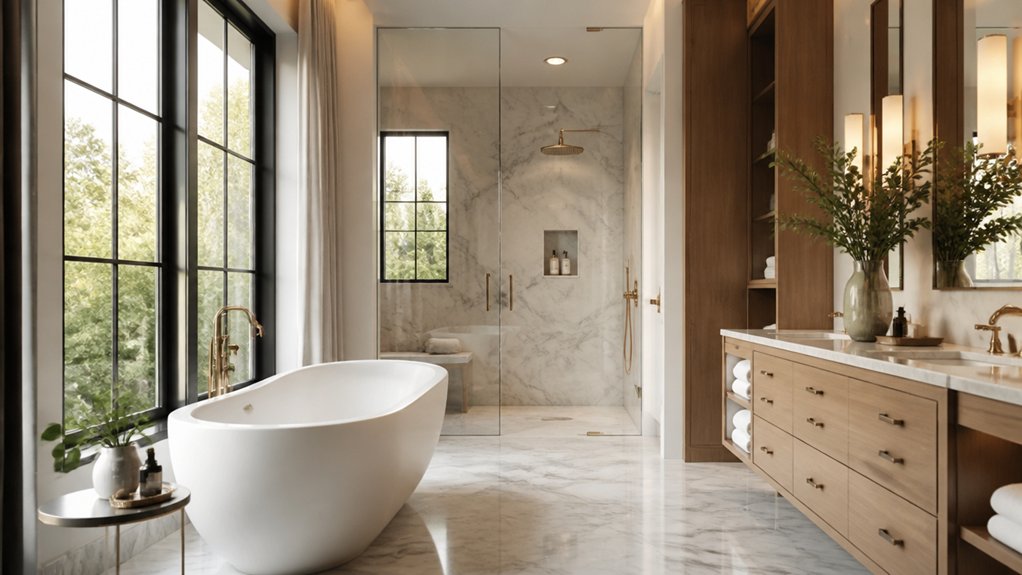
A luxury ensuite should make your daily routine easier and still appeal to future buyers. A walk-in shower is often a practical choice: check that it’s easy to clean, has enough room to move and is detailed to keep water where it belongs. A freestanding tub can be a good feature if you’ll use it and have enough floor space; otherwise, it may take up room better used for storage.
Heated floors, layered lighting, durable finishes and well-planned storage add comfort, but each needs to suit the way you use the room. Ask how finishes will hold up to moisture and cleaning, and plan lighting for both everyday tasks and a softer evening setting. Choose practical, timeless fixtures that fit your home and local market, balancing everyday comfort with choices that may support resale value.
Key Takeaways
Plan the walk-in shower around comfortable access, reliable drainage and glass that is easy to clean. Check where water will run and whether the drain can be positioned properly; poor drainage can leave standing water or let it escape onto the bathroom floor.
For everyday comfort, consider underfloor heating, layered lighting and dimmers, with controls that are easy to reach and operate. Choose durable surfaces made for bathrooms and hardware that suits the home’s style. Ask how each finish stands up to moisture, cleaning and regular use, as some materials need more upkeep than others.
Build in practical storage with mirrored cabinets, recessed shelves or divided drawers, so essentials stay handy and worktops remain clear. A freestanding tub can be a good addition if there is enough room and the floor can support its weight. Before choosing one, check plumbing needs and local building requirements with your building department, and consider whether it suits likely buyers in your area.
Plan a Luxury Ensuite Around Daily Life

A luxury ensuite should make daily routines easier, not just look good in a showroom. Plan the route from getting ready to winding down, then place storage, lighting and outlets where you’ll use them. Check clearances around doors, drawers and fixtures, and plan wet areas to limit splashes and protect finishes.
Keep everyday products within reach, add task lighting at the mirror and use concealed storage to cut down on clutter. If two people share the room, consider when each needs to get ready and whether the layout gives both enough space.
Open shelving is easy to access, but it can look untidy; closed cupboards keep things out of sight but need practical internal storage.
A layout that suits your habits can make the room more comfortable and help it appeal to future buyers. Before choosing finishes, check that they’ll hold up in wet areas and are straightforward to clean.
Choose a Walk-In Shower or Freestanding Tub
Whether a walk-in shower or freestanding tub adds more value depends on how you use the bathroom and what local buyers expect. If you mostly take quick showers, a roomy walk-in may be the more practical choice. Look for a generous entry, good-quality fixtures and glass that’s easy to clean; make sure the layout leaves enough room to move comfortably.
A freestanding tub suits you better if you enjoy long soaks and have enough floor space to fit it without crowding the room. Check that the floor can support the tub when it’s full, and don’t remove the only practical shower just to make room for one. In many markets, buyers appreciate having both, but if space or budget rules that out, choose the feature you’ll use most. Compare local listings to see what buyers in your area expect.
Add Heated Floors and Layered Lighting
Heated floors can make an ensuite more comfortable, especially on cold Wyoming mornings. Ask your installer how the system will affect floor height and which controls suit the room; the right choice depends on the floor build-up and how you use the space.
Plan lighting in layers: general light for everyday tasks, with softer lighting for winding down. Dimmers and straightforward controls make it easier to adjust the room, but check that the fittings and controls are suitable for the bathroom’s damp areas.
Heated Floor Comfort
Heated flooring can make an ensuite more comfortable, especially on cold mornings and after a shower. Radiant heat sits beneath tile or stone and warms the floor without taking up wall space. It provides steady comfort, though it won’t heat the room as quickly as some other heating options.
Before choosing a system, check that it suits your floor finish and ask how the thermostat will be installed and programmed. A programmable thermostat lets you set heating times and reduce use when the ensuite is empty, but the system still adds to your energy use.
Heated floors can be an appealing feature for future buyers, and pairing them with suitable lighting can make the room feel more welcoming.
Ambient Lighting Layers
Layered lighting makes an ensuite easier to use and more comfortable at the start and end of the day. Use a soft ceiling light for general illumination, then add mirror lights aimed at your face to reduce shadows while grooming. Check that the fittings are suitable for their location, especially near a shower, and ask your electrician what protection is required.
A low-level light beneath a floating vanity or inside a shower niche can add depth and provide a gentler glow in the evening, but it needs careful placement to avoid glare and make cleaning straightforward. Warm-coloured light can sit well with natural stone, timber and brushed metal, though the right tone depends on the finishes and the light you prefer. Well-placed lights can draw attention to architectural details and help a small ensuite feel more open.
Dimmers and Controls
Choose dimmers that let you adjust each lighting layer separately. That gives you bright mirror lights for grooming and a softer setting for the evening, without changing fixtures. Before buying, check that the dimmer is compatible with your bulbs; mismatched controls can cause flickering or buzzing.
Smart controls can set scenes, schedule lights or adjust them by phone or voice. A morning setting might switch on the vanity and shower lights, while an evening scene dims them for a soak. Keep the controls simple enough for everyone in the household to use, and ask your electrician what wiring and compatible fittings are needed.
You can also programme heated floors to warm before you get up. This adds comfort, but heating and lighting schedules should suit your routine so they aren’t running when nobody needs them. Reliable, straightforward controls make the room easier to use and can help it feel well planned.
Select Elegant, Durable Bathroom Finishes

Choose tile for its durability and how well it suits the rest of the ensuite, not just its current colour or pattern. Check that it’s suitable for bathroom use, and ask how much maintenance the surface needs. A textured finish can offer more grip underfoot, but it may take longer to clean; a smoother tile is easier to wipe down but can be slippery when wet.
For the other finishes, look for materials that can handle regular moisture and cleaning. Ask how they’ll wear over time and what care they need, so you can weigh upkeep against appearance before you commit.
Timeless Tile Choices
Timeless tile can give an ensuite a tidy, lasting finish, but choose it for its suitability as well as its appearance. Marble-look tile, subway layouts and simple mosaics are reliable options; check the tile’s care requirements and make sure it’s suitable for a damp room. Warm whites, soft greys and natural stone colours are easy to live with, while a small accent can add character without dominating the room.
Size affects the result. Larger tiles can make a compact ensuite feel less busy, but they need a suitable, flat surface and careful cuts around corners and fittings. Smaller tiles add detail to niches and feature walls, though more grout lines mean more joints to clean. Before choosing, look at grout samples beside the tile: a close colour match softens the pattern, while a gentle contrast makes it stand out. A restrained design may suit changing tastes, but no tile choice guarantees appeal to future buyers.
Durable Premium Finishes
Choose finishes that can handle moisture, stains and everyday knocks. Porcelain and quartz are practical options; sealed natural stone can also last well, but it needs the right care and may require periodic resealing. Ask what cleaning products are safe and how often the surface needs attention.
Brushed metal hardware tends to show fingerprints less than a mirror-bright finish, though the exact result depends on the metal and coating. For taps, shower fittings and cabinet handles, check the finish, warranty terms and care instructions. Poor-quality fittings can corrode, leak or need replacing sooner, while a more durable option may cost more upfront.
Keep colours and finishes consistent with your taste, but consider whether you’ll still like them in a few years. The right choices can keep the bathroom looking considered without making upkeep a constant job.
Build In Smart Storage and Premium Fixtures
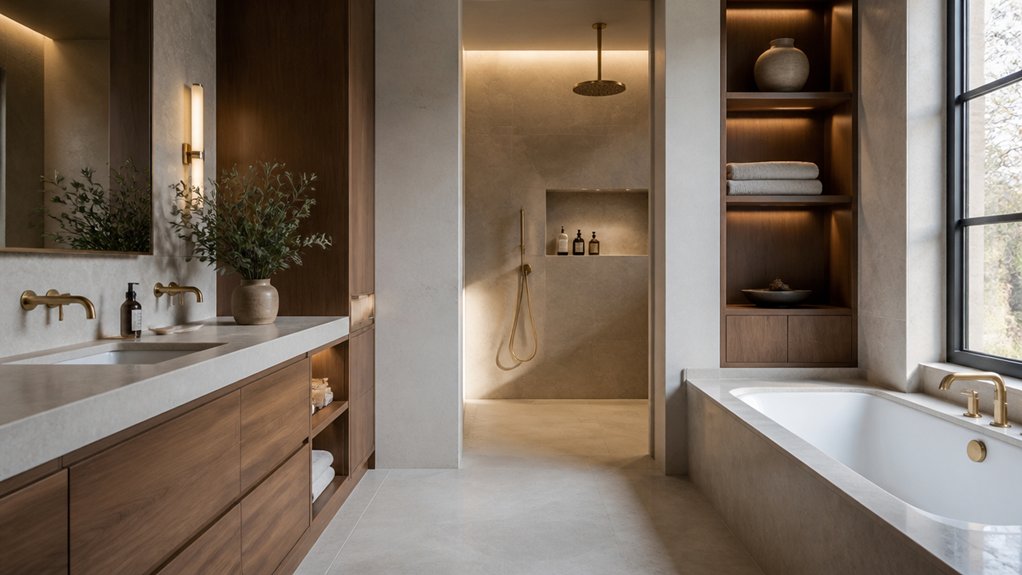
Smart storage and well-chosen fixtures can make an ensuite easier to use and keep it looking tidy. Recessed shelves save space, while mirrored cabinets keep everyday items close at hand. Deep drawers with dividers help organise toiletries, towels and grooming tools, but check their depth and clearance before ordering so they don’t foul the basin plumbing or door swings.
Premium fixtures should be comfortable to use and straightforward to maintain. Choose taps and shower controls you can operate easily, and coordinate their finish with the cabinet hardware if you want a consistent look. A wall-mounted tap clears the counter, but it needs suitable plumbing in the wall and can be harder to access for repairs; ask your plumber how it will be installed and serviced. For shower fittings, check that the controls suit your routine and that the surfaces are easy to clean.
Invest in Features That Boost Home Value
To add lasting value, focus on ensuite features you’ll use every day: a well-planned walk-in shower, hard-wearing surfaces and good lighting. Choose finishes that suit the rest of your home rather than chasing short-lived trends. Ask how surfaces stand up to moisture and cleaning; poor material choices can mean more upkeep and a tired-looking bathroom at resale.
Balance comfort with what buyers in your area are likely to value. A walk-in shower can feel spacious and is easier to access, but check that the layout allows for proper drainage and a practical screen. A freestanding tub can make a strong focal point, though it takes up floor space and is only worth considering if the room and local market support it. Give equal attention to sound plumbing, ventilation and water-efficient fittings, and check local requirements with your building department before work begins.
Frequently Asked Questions
How Much Does a Luxury Ensuite Bathroom Renovation Typically Cost?
A luxury ensuite renovation can vary widely in cost. The main factors are the room’s size in square feet, any plumbing or structural changes, the finish materials and local labour rates. Custom cabinetry, natural stone, underfloor heating and high-end fixtures all add to the bill; simpler finishes can keep costs down.
Ask for an itemised quote so you can see what’s included and compare options. Allow room in your budget for unexpected work, particularly if the existing walls or plumbing need attention, and agree on the project schedule before work starts. A complex renovation may take several weeks, so confirm the expected timeline with your builder.
How Long Does an Ensuite Bathroom Renovation Usually Take?
An ensuite renovation usually takes two to four weeks, though straightforward updates may take less. Moving plumbing, making structural changes or choosing custom finishes can add time, particularly if materials arrive late.
Before work starts, ask your contractor for a written schedule with clear milestones and regular updates. Check lead times for tiles, fittings and other materials, and set aside a contingency for hidden problems such as water damage behind the walls. These steps make it easier to plan around the work without guessing when your shower will be usable again.
Do I Need Planning Permission to Renovate an Ensuite Bathroom?
For a straightforward ensuite update, such as replacing fixtures or finishes without changing the layout or exterior, planning permission isn’t usually needed.
If you move plumbing or drainage, change ventilation or electrics, or alter structural parts of the building, building regulations may apply. Check with your local building department before work starts, as requirements depend on the property and the work involved.
Listed buildings and homes in conservation areas may need extra approval, even for work that wouldn’t normally require planning permission. Ask the local authority which permissions apply and whether any exemptions cover your project; checking first can prevent delays and avoid having to undo work.
How Can I Make a Small Ensuite Feel More Spacious?
A small ensuite can feel more open without moving walls. Wall-hung fixtures free up visible floor space, while a frameless shower screen keeps sightlines clear; check that the wall can support the fixtures and that the screen suits the shower layout. Pale, reflective finishes can help bounce light around, but they show water marks and fingerprints more readily.
Arrange storage and fittings so essentials are within reach without narrowing the walkway. Layer the lighting with a well-lit mirror and light in darker corners, then make sure the ventilation is adequate to reduce moisture and help prevent mould. Check with your local building department about any requirements that apply to electrical work or ventilation.
What Ventilation Is Best for Preventing Mould in an Ensuite Bathroom?
For an ensuite, fit a quiet extractor fan that vents outdoors and has a humidity sensor. Choose one suited to the room’s size, and check that the duct run is properly installed; a fan that vents into a roof space can move the damp problem rather than solve it. Run it during showers and for about 20 minutes afterwards, then wipe down wet walls and leave the door ajar when practical.