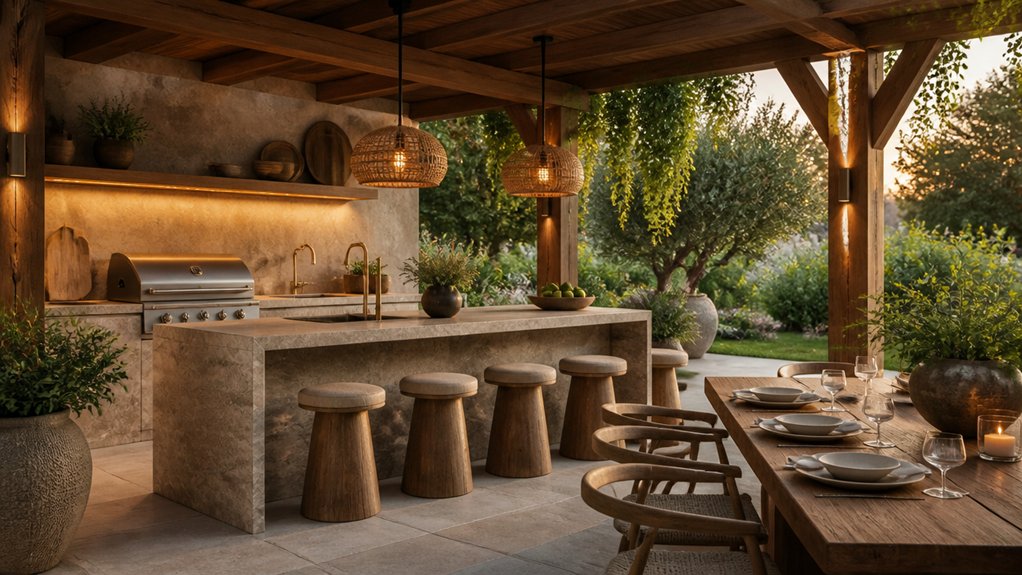
A well-planned outdoor kitchen makes a practical setting for alfresco meals and entertaining. Before choosing finishes or appliances, map the routes between the house, cooking area and dining space, and note the views, sun, prevailing wind and available utilities. Check access for deliveries and ask the relevant trades what connections and site preparation will be needed.
Choose appliances to suit the way you cook, then select counters and cabinets made to withstand local weather. Stone can be durable, but its weight and the support it needs should be considered; other materials may be lighter but need different care. Allow for task lighting, shade and comfortable seating, and check local building requirements with your building department before work begins.
Set a budget that covers permits, site preparation, labour and utility work, as well as the kitchen itself. Keep a contingency for problems uncovered during construction, such as difficult ground or changes to existing services.
Key Takeaways
Plan the kitchen around how people move through the yard, as well as the views, sun, wind, drainage and privacy. Keep clear routes between the grill, dining table and seating; a layout that looks good on paper can become awkward when chairs are pulled out or several people are cooking.
Start with a built-in grill, enough worktop for food preparation and durable counters. Add appliances only if they suit the way you entertain, since each one needs space, a suitable utility connection and protection from the weather. Sealed stone and porcelain are practical counter options, while outdoor-rated cabinetry is better suited to changing conditions than indoor units.
Make the dining and lounge areas comfortable as well as attractive. Allow room to pull chairs back, plan shade for the times you use the space, and choose lighting rated for outdoor use, with task lighting at the cooking area and softer light for seating. Check that water drains away from the kitchen and that wind or nearby windows will not make smoke a nuisance.
Set a budget that covers materials, labour, utility connections, permits and site preparation. Ask for itemised bids so you can compare what is included, and confirm the proposed schedule, inspections and warranty terms before work begins. Permit and code requirements vary, so check with your local building department.
Plan a Luxury Outdoor Kitchen Around Your Space
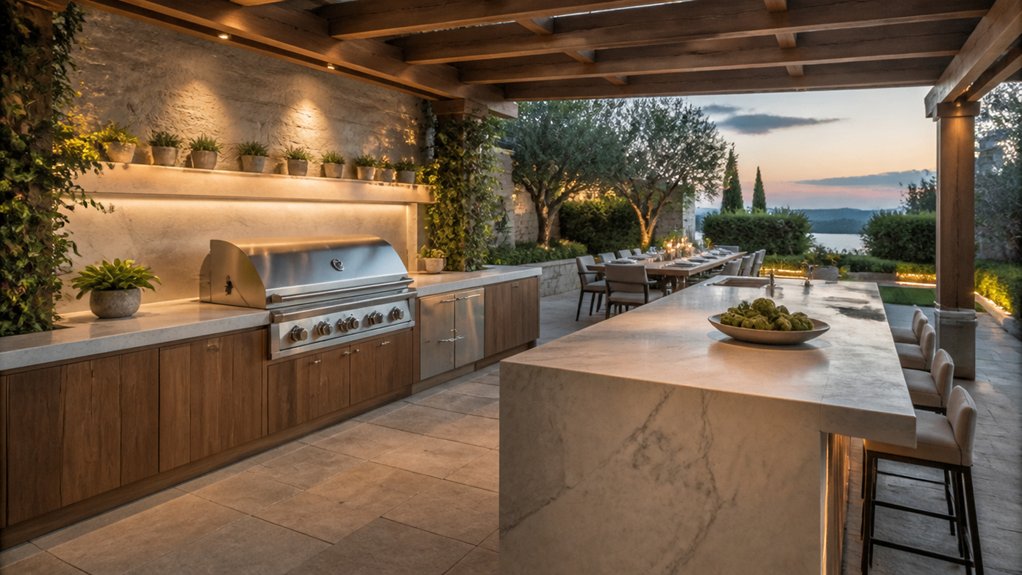
Start by watching how you use the yard: note the routes between the house, patio and seating, where people tend to gather, and which views you want to keep open. Measure the area in feet and square feet, then plan counter space and dining to suit the lot. A layout that looks spacious in a showroom may block a walkway or leave too little room for chairs at home.
Check the site’s sun, prevailing winds, drainage and privacy before settling on a location. Poor drainage can leave water around the kitchen, while wind and strong sun can make cooking and dining less comfortable. Ask how each location affects access to the house, existing paths and nearby seating.
Choose finishes that suit the house and landscape, but put weather resistance and maintenance first. Stone, metal and sealed surfaces can stand up to regular use, though each needs suitable care for your local conditions. Ask how materials handle Wyoming’s weather and what upkeep they require. A well-planned kitchen should fit the way you live outdoors, preserve clear routes and views, and add useful living space without crowding the yard.
Choose Appliances for Cooking and Entertaining
Once the layout is set, choose appliances to suit the meals you cook and the people you host. A built-in grill can anchor the cooking area, and a side burner is useful for sauces or keeping a dish warm. A pizza oven is worth considering if you’ll use it; it takes up space and needs to fit the menu, not just look distinctive. A beverage fridge keeps drinks close, while an ice maker or wine cooler adds convenience if you entertain often.
Plan for a clear workflow: put prep space near the grill, keep cold storage within easy reach, and leave guest seating away from active cooking. Check the appliance dimensions and required clearances before finalising counters or cabinetry, and ask what fuel, power and ventilation each unit needs. Choose capacity for your household rather than the largest models available; bigger appliances take up more room and may add installation costs.
Select Durable Materials for Outdoor Conditions
Choose materials for the weather your outdoor kitchen will face, not just their showroom appearance. Salt air can corrode unsuitable metal, strong sun can fade or weaken some finishes, and rain and freeze-thaw cycles can damage surfaces that absorb water.
For metal fittings and appliances, ask for stainless steel suited to your exposure, particularly if you live near the coast. Sealed stone and porcelain are practical counter options, but check how much sealing and routine care each requires. Stone can stain if spills are left to soak in, especially near cooking and serving areas.
For cabinetry, marine-grade polymer handles moisture well; properly treated hardwood is another option, but it needs regular maintenance. Ask your contractor which finishes suit your climate, how often they need renewing, and what signs of wear to watch for. More durable materials may cost more upfront, while lower-maintenance choices can reduce the time and effort spent on upkeep. Compare expected lifespan and care requirements before deciding.
Add Lighting and Shade for Day-to-Night Comfort
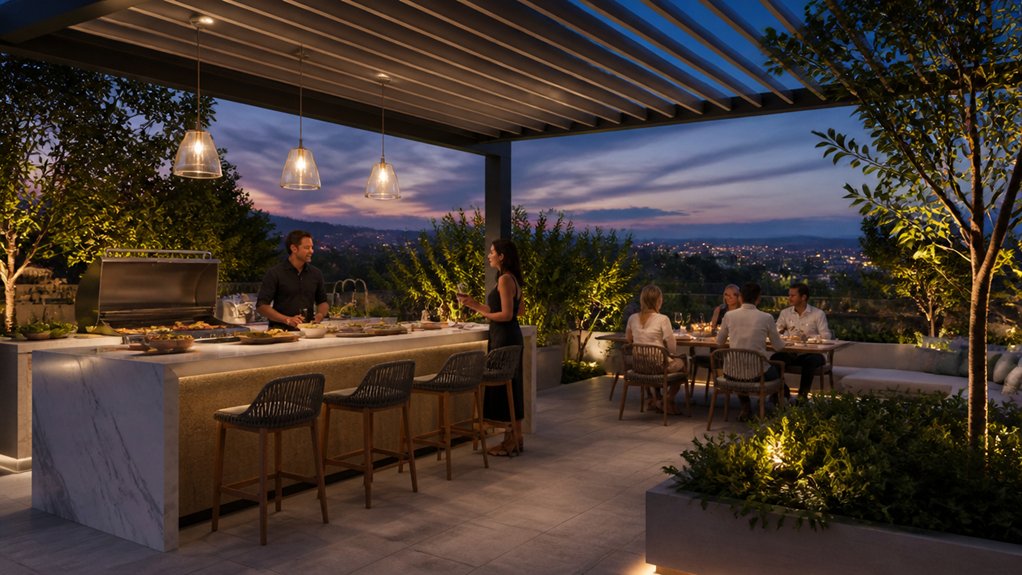
Plan lighting and shade before the kitchen is built. Put task lights over the counters and a suitable fixture above the cooking area, positioned to light the work without shining in your eyes. Ask your electrician about weather-rated LED fittings, dimmers and separate switches so you can adjust the light for cooking, dining or entertaining.
For shade, a pergola, retractable awning or adjustable louvers can cut strong sun while still letting in daylight. A fixed pergola is sturdy but offers less flexibility; an awning or louvers let you change the coverage, though their moving parts need maintenance. Check how each option handles local wind and snow, and ask your building department whether permits or other local requirements apply.
Good shade can help manage heat and protect appliances and finishes, while well-placed lights can show off the kitchen’s details and make it more inviting at night. Plan the wiring, switches and shade structure early; adding them later can mean extra work and disruption.
Create Comfortable Dining and Lounge Areas
Plan the dining area with enough room to pull chairs out and move around without blocking the cooking space.
Pair it with lounge seating if you want guests to stay longer, but allow enough space between the two areas for people to pass comfortably.
Add shade for daytime use and lighting suited to eating and relaxing after dark; fixed covers offer more protection, while umbrellas are easier to reposition.
Comfortable Dining Zones
Place the dining table close enough to the cooking area for serving, but leave clear routes for guests and anyone carrying food. A direct path to the indoor kitchen is useful too; check that doors, steps and furniture won’t pinch the route.
Choose a table to suit your usual gatherings, with room to add seats when needed. Measure the patio before you buy: a table that’s too large can crowd chairs and walkways, while one that’s too small may not work for larger meals. Think about shade, lighting and exposure to the weather, and keep lounge seating out of the main dining paths so the whole area remains easy to use.
Relaxed Lounge Seating
Place outdoor sofas or chairs near the kitchen, but keep the route to the dining area and house clear. That keeps conversation close to the cooking without making people squeeze past the seating. Before choosing furniture, measure the available space in feet and allow room to pull chairs out and walk around them.
A compact sectional can mark out a lounge on a smaller patio, though it may be harder to rearrange. Two armchairs are more flexible, but need a suitable table between them. Look for weather-resistant frames and cushions, and choose colours and finishes that suit your home; check how the materials should be cleaned and stored, as exposure to the weather can wear them down. Add a low table within easy reach for drinks and serving pieces, then check that the whole arrangement feels comfortable without blocking circulation.
Shade and Soft Lighting
Once the seating is in place, plan shade and lighting to make the dining and lounge areas comfortable and usable after dark.
Choose a structure that suits the house, such as a pergola, retractable canopy or covered pavilion. A fixed roof offers more dependable shelter but can make the area feel enclosed; a retractable canopy gives you flexibility, though you’ll need to check how it handles Wyoming wind and weather. Ask your builder how the structure will be fixed and whether local permits or building rules apply.
Adjustable screens can help manage low sun, while a ceiling fan can improve comfort on still, warm days. For lighting, use dimmable pendants over the table, task lights near cooking areas and low-voltage fixtures along paths and steps. Keep fittings suitable for outdoor use, and position them to light walking routes without shining into people’s eyes or overpowering the setting. Together, shade and well-planned lighting make the kitchen more practical for everyday use and entertaining.
Set a Budget and Plan for Installation
Set a firm budget before choosing finishes or appliances. Allow for labour, utility connections, permits and site preparation, as well as the features you want most. Costs can change with the site, materials and service runs, so check what each quote includes.
Plan around how you’ll use the kitchen and which features may support your property goals. Before work starts, ask your local building department what permits and requirements apply. Choosing simpler finishes or fewer appliances can help keep the project within budget.
Define Your Budget
Set a budget that fits your finances and your plans for the property. The cost depends on the size and scope of the kitchen, local labour rates, materials, utility work, permits, delivery and installation. Include each of these in your estimate, and keep a contingency for unexpected site conditions or price changes.
Compare contractor quotes with costs for similar projects in your area. Ask for an itemised proposal that lists allowances, exclusions and payment milestones, and clarify who’ll coordinate trades and check permit requirements with the local building department. A realistic budget helps protect your cash flow and keeps design choices in line with your property’s value and resale prospects.
Prioritize Key Features
Choose features that suit the way you cook and entertain, and that will add lasting value to your property. A built-in grill, enough prep space and durable countertops make a sound starting point.
Add a pizza oven, wine fridge or premium cabinetry only if you expect to use it; each adds cost and may need extra space or upkeep.
When setting your budget, put practical essentials ahead of decorative extras. Allow for materials that can handle Wyoming’s weather, and compare options for durability, maintenance and potential resale appeal. The cheapest option upfront may cost more to maintain or replace. Ask suppliers what care the materials need, how they hold up outdoors and what their warranties cover before you commit.
A focused list helps keep the project manageable and the finished kitchen suited to your home.
Plan Installation Costs
Installation can cost as much as the appliances and materials, so include site preparation, utility connections, permits, labour and delivery in your budget. Sloping ground, long gas or electrical runs, and the need to upgrade existing services can all add work. Ask contractors to inspect the site and provide itemised estimates that spell out what’s included.
Set a firm spending limit and keep some money aside for unexpected work. Compare bids by scope, materials and workmanship, not price alone; poor installation can create safety problems and costly repairs. Weather-resistant surfaces may cost more upfront but need less maintenance over time, so weigh durability against appearance and initial cost.
Before work starts, confirm the schedule, warranty terms and who’ll arrange inspections. Permit and code requirements vary, so check with your local building department.
Frequently Asked Questions
Do Outdoor Kitchens Increase a Home’s Resale Value?
An outdoor kitchen can help your home appeal to buyers, but don’t count on getting back everything you spend. Its value depends on local demand, the climate and how buyers in your area use outdoor entertaining spaces.
Before you build, compare the likely resale benefit with the full cost, including durable materials and ongoing upkeep.
Keep the layout practical and the finishes in keeping with your home.
A large or highly personalised kitchen may limit buyer appeal, while weather-resistant materials and a straightforward design are more likely to suit a range of tastes.
Do I Need a Permit to Build an Outdoor Kitchen?
Permit requirements depend on your location and how the outdoor kitchen is built. Before work starts, contact your local building department and ask whether you need permits or inspections, particularly for gas lines, electrical wiring, plumbing, a roof or other permanent structures. Requirements can vary, so don’t assume a small project is exempt.
Sort this out before choosing materials or scheduling trades. Unapproved work can lead to fines, delays or costly changes, and may complicate a future sale. Keeping the permits and inspection records can help show buyers that the kitchen meets local requirements.
How Should I Protect an Outdoor Kitchen During Winter?
Before freezing weather arrives, clean the outdoor kitchen, shut off utilities and drain water lines. Follow each appliance manufacturer’s winterisation instructions; water left in pipes or equipment can freeze and cause damage. If you’re unsure how to isolate gas or electricity safely, check the appliance instructions or ask a qualified professional.
Use fitted, breathable covers for the grill, counters and cabinetry, and secure them against Wyoming’s wind. Breathable fabric helps limit trapped moisture, while a tighter cover may offer better protection from blowing snow but can hold dampness against surfaces.
Bring cushions and removable accessories indoors. Check the covers through winter, clear snow promptly, and inspect plumbing and appliances before using the kitchen again in spring.
Can an Outdoor Kitchen Be Connected to Indoor Smart-Home Systems?
Yes, an outdoor kitchen can connect to your indoor smart-home system, provided the equipment and controls are compatible. You may be able to manage lighting, audio, refrigeration and some appliances from the same app or voice assistant; check each product’s requirements before buying, as not every appliance supports smart controls.
Plan for outdoor-rated equipment, reliable Wi-Fi coverage and properly installed electrical connections. Ask your electrician how the system will be protected from weather and whether your local building department requires permits or inspections. Extending your existing network and controls can make the kitchen easier to manage and help you monitor energy use, but it adds equipment and installation work.
How Often Should Outdoor Kitchen Plumbing and Gas Lines Be Inspected?
Have your outdoor kitchen’s plumbing and gas lines inspected annually, and arrange a check before the season when you’ll use them most. Look for visible corrosion, loose fittings, damp patches and unusual smells, but don’t try to diagnose or repair a gas leak yourself. A corroded fitting caught in spring may prevent damage to nearby cabinetry and an interruption during a gathering.
Arrange more frequent checks if you’re near the coast, use the kitchen year-round or notice an unusual odour. Ask a licensed professional to check for leaks and explain what needs repair; local rules may also apply, so check with your building department.