
A five-star bedroom starts with a layout that works. Leave clear paths around the bed, and put reading lights and switches where you can reach them without getting up. Sort out temperature and noise early; poor insulation or a badly placed heating vent can make an otherwise well-finished room uncomfortable.
Choose bedding that suits Wyoming’s changing temperatures, and check how easily it can be washed and maintained. A custom headboard can fit the room better than a standard size, but allow for its depth so it does not crowd the bed or block switches. Layer dimmable lights for reading and winding down, and plan discreet storage before the walls and finishes are set.
For an ensuite, spa-inspired finishes can make the room feel calmer, but choose surfaces that stand up to moisture and are easy to clean. Ask your builder how each material will be installed and maintained; natural stone, for example, needs different care from many manufactured surfaces.
Key Takeaways
Start with the daily routine. Leave clear paths on both sides of the bed, put switches where you can reach them without getting up, and keep everyday items close in drawers or cupboards. Check wardrobe and bedside storage against what you actually use; too little space leaves surfaces cluttered, while oversized furniture can make the room awkward to move through.
For bedding, choose sheets by fibre and weave rather than relying on thread count alone. A climate-appropriate duvet and natural fabrics such as cotton or linen can make the bed more comfortable, but they need different care and may feel different against the skin. Ask to handle samples before choosing.
A well-proportioned upholstered headboard can anchor the room without overwhelming it. Keep the colour palette restrained and coordinate the fabrics, timber, metal and other finishes. Before ordering, check the headboard’s width and height against the bed, wall and nearby switches.
Use warm, dimmable lighting at several levels: general room lighting, reading lights and softer accent lighting. Put bedside controls within easy reach and plan any LED details so the fittings and wiring can be accessed for maintenance. Confirm dimmer and lamp compatibility before installation to avoid flickering or limited control.
Full-height wardrobes make good use of wall space, but check that doors and drawers can open without obstructing the bed or walkway. A plush rug, lined curtains and carefully planned ensuite features add comfort; weigh their upkeep, cleaning access and effect on the room’s usable floor area before committing.
Plan a Luxury Bedroom Renovation Around Comfort
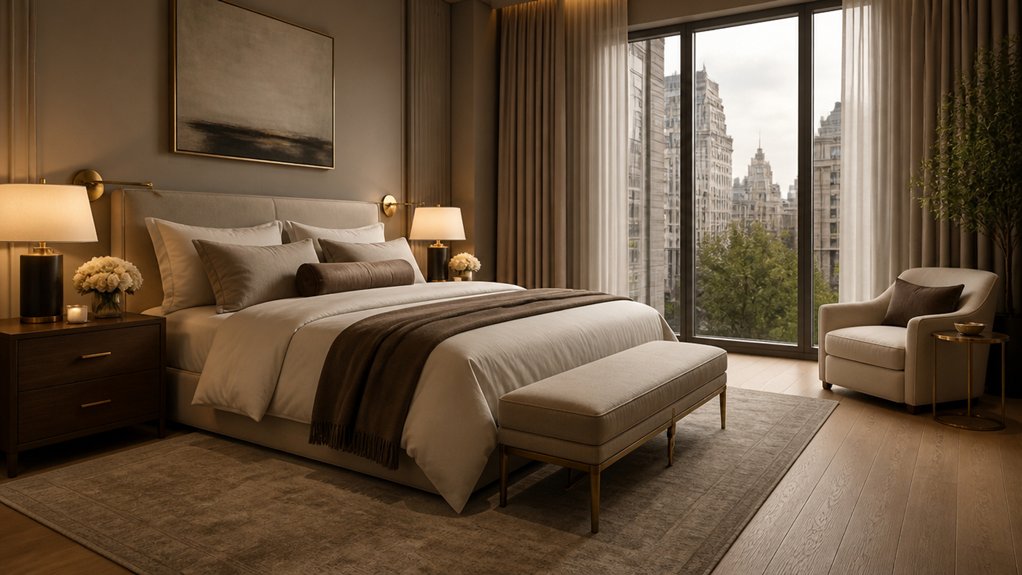
A bedroom is comfortable when the layout and building work support good rest, not just a certain look. Before renovating, note how you use the room, from winding down to getting up. Leave clear paths around the bed, place a reading chair where a lamp can reach it, and plan storage near the things you use. Put switches and outlets within easy reach of the bed so you aren’t crossing a dark room at night.
Deal with temperature and noise early, as both can affect the layout and the work behind the walls. Check for draughts and weak insulation, and ask about quieter heating and cooling equipment; better insulation can help keep temperatures steady, but the right solution depends on the existing walls and system. If traffic noise comes through the windows, compare improved glazing with other options, bearing in mind that the frame and installation matter as well as the glass. Have the room measured before finalising plans, and check with your local building department if the work may require approval.
Choose Hotel-Worthy Bedding and Refined Materials
Choose bedding with a thread count that feels comfortable, but don’t rely on that number alone: the fibre and weave affect how it feels and breathes. Pick a weight suited to your climate, then layer cotton, wool or linen for texture. Too many materials or patterns can make the bed look busy, so keep the mix simple.
Choose Premium Bedding
Choose bedding for how you sleep and the conditions in your bedroom. Start with sheets, a supportive mattress and a duvet that suits your room temperature; the wrong choices can leave you too warm, too cold or poorly supported.
Compare the fibre, weave and finish of sheets rather than relying on thread count alone. Long-staple cotton percale feels cool and crisp, while sateen is smoother with a slight sheen. Linen or moisture-wicking cotton blends may suit warm sleepers, though each fabric feels different against the skin.
Match mattress support to your usual sleep position, and try the firmness in person if you can. Choose a duvet insert with a fill level suited to your climate, then check that the cover fits without bunching. Before buying, check care labels, construction and warranty terms; durable, easy-care bedding is less trouble to maintain.
Layer Refined Materials
Beyond the bed, combine materials that feel good to use and are straightforward to maintain. Smooth oak or walnut works well with brushed brass, honed stone and wool, but check samples together in the room’s light before choosing; finishes that look balanced in a showroom can clash at home. Repeat a few colours across the lighting, hardware and furniture to keep the room cohesive.
For a practical touch, consider a linen-upholstered bench, a leather-trimmed tray or a velvet chair, but leave enough space to move around them. Ask how each surface should be cleaned and whether it will stand up to everyday wear. A plush rug can soften the floor underfoot, while lined curtains can reduce light and help with privacy; both need regular care.
Create a Custom Headboard and Serene Focal Point
A custom upholstered headboard can give the bedroom a clear focal point. Choose a shape and fabric that suit the room, and check how the upholstery will be cleaned and secured before you commit. Velvet feels soft but can show marks; linen has a more relaxed texture, while wood or metal can be easier to maintain.
Layer materials carefully so the room has depth without feeling busy. Keep the headboard’s size and colour in proportion to the bed and room, and ask how each finish will wear over time. A restrained palette and balanced proportions help create a calm, hotel-inspired feel.
Upholstered Headboard Designs
A custom upholstered headboard can make a bedroom feel more considered without changing the whole room. Match its height and width to the bed and ceiling: a tall, curved shape makes a stronger feature, while a simple panel suits a quieter scheme. A wingback design frames the bed; a wider, wall-spanning headboard can help a small room feel more planned.
Choose fabric for its appearance and how it will hold up to use. Performance velvet offers rich colour and is generally easier to clean, while linen-look fabric has a more relaxed finish. Before ordering, ask the upholsterer about stain resistance, where the seams will sit, how firm the padding is, and how the headboard will be fixed to the wall or bed. A poor fit, weak fixing or unsuitable fabric can make it look worn or feel uncomfortable sooner than expected.
Layered Textures and Materials
Layering textures around the bed can make it a focal point without leaving the room feeling flat. Choose a headboard fabric such as bouclé, linen or velvet, then pair it with a simple contrasting finish, such as a slim timber surround, leather piping or brushed-brass trim. Each option changes the feel and upkeep: velvet is soft but can show marks, while timber and metal are easier to wipe clean.
Repeat one of the finishes in a bedside detail, such as a timber tray or metal lamp base, to help the materials sit together. Keep the colour palette restrained, and balance rough, soft or nubby surfaces with smoother ones, such as timber or stone. Check fabric care instructions, consider how often the headboard will be touched, and view samples in your bedroom’s lighting before ordering.
Calm, Balanced Focal Points
A headboard can anchor the bedroom without taking over. Choose a width that frames the bed and extends a little beyond the nightstands. Before ordering, check the wall and bed measurements; a headboard that’s too wide can crowd the room, while one that’s too narrow may look out of place.
Upholstery adds texture, but ask how the fabric wears and how it’s cleaned. Warm wood gives a firmer, easier-to-wipe surface; check the grain and finish against the other materials in the room. Keep the shape simple and choose one detail, such as channel stitching, a narrow brass trim or a gentle curve. More decoration can compete with the bed and make the room feel busy.
Repeat the headboard’s colour or finish in a few small accents rather than adding another large statement piece. Symmetrical bedside lighting and restrained art help keep the arrangement balanced, with some clear wall space around the bed.
Layer Bedroom Lighting for a Relaxing Mood
A relaxing bedroom needs more than one ceiling light. Use ambient, task and accent lighting on separate controls so you can set the room for different activities. A dimmable ceiling fixture gives general light; bedside sconces or pendants let you read without lighting the whole room. Concealed LED strips behind the headboard or beneath a floating vanity add a softer glow, though they need a suitable power supply and access for maintenance.
For a warm evening feel, choose bulbs around 2700K and check that they’re compatible with your dimmer. Warm-dimming bulbs get softer in colour as you lower the brightness, but they can cost more than standard dimmable bulbs. Muted, warm-coloured shades and finishes can also make the light feel more inviting. Put switches where you can reach them from bed, and check the wiring and control options with your electrician before work begins.
Add Smart Storage Without Sacrificing Style
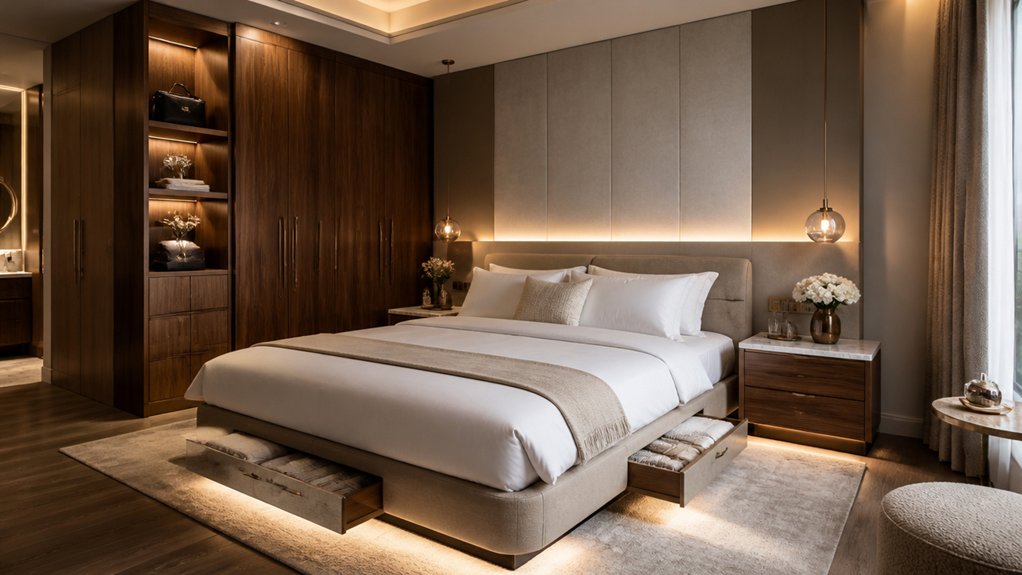
Once the lighting is sorted, plan storage so the bedroom stays tidy without feeling crowded. Built-in wardrobes can use the full height of a wall and suit the room’s architecture, but check that doors have enough clearance to open and that the interior is laid out for the clothes, luggage and accessories you actually own. Shelves above a desk or beside the bed are useful; leave some space clear rather than filling every shelf with décor.
Bedside tables with drawers keep chargers, books and personal items out of sight. A storage bed can hold seasonal linens without taking up floor space, though check that the lift-up base or drawers will work with your room layout. A window seat can also hide spare blankets if there’s room beneath it. Match finishes to the other woodwork, and use discreet handles or push-latches for a simpler look. Ask your joiner how the storage will be built and maintained; the right choice depends on access, available space and the finish you want.
Bring Spa-Inspired Comfort to the Ensuite
A spa-like ensuite starts with finishes that can handle daily moisture. Large-format porcelain is practical and easy to maintain; stone-look surfaces add warmth, though natural stone may need more care. Ask how each material should be sealed and cleaned before choosing.
For the shower, allow enough room to move, and check that the floor falls correctly towards the drain. Frameless glass keeps the room open but needs regular cleaning, while a rainfall head can use more water than a standard showerhead. Built-in niches keep toiletries off the floor; make sure they’re waterproofed properly. A steam shower needs careful waterproofing, ventilation and controls you can reach before stepping inside.
Underfloor heating, dimmable lighting and a towel rail or nearby storage add comfort, but each needs to suit the room’s layout and electrical requirements. A floating vanity with deep drawers helps keep the counter clear, and brushed-metal fixtures can tie the finishes together. A bench or compact soaking tub is worth considering if there’s enough floor space; check clearances before committing, as either can make a small ensuite feel cramped. For any work involving plumbing, wiring or structural changes, check requirements with your local building department.
Frequently Asked Questions
How Can I Reduce Noise for a More Restful Bedroom?
Start by finding where sound gets in. Check for gaps around doors and windows, then fit weatherstripping and a door sweep; these are straightforward fixes, but they won’t block much noise if sound is travelling through the walls or glass.
For street noise, consider windows with acoustic glazing and blackout properties. Heavy curtains, upholstered panels and a thick rug can soften sound inside the room, though they won’t stop all outside noise. If noise persists, ask a builder to assess whether wall insulation is suitable, or try a white-noise machine. The right choice depends on where the noise is coming through and how much work you’re willing to take on.
What Bedroom Upgrades Can Improve Indoor Air Quality?
Good bedroom air starts with controlling what gets into the room and giving stale air a way out. Use low-VOC paint and look for flooring or furniture made without added formaldehyde; check product labels, as lower-emission options can cost more.
A properly sized HEPA purifier can capture airborne particles, but it won’t remove every pollutant or replace ventilation. Keep up with HVAC filter changes, and check the system manual for the right filter type. Plants may add greenery, but don’t rely on them instead of filtration.
Keep indoor humidity in a sensible range, repair leaks promptly, and use a sealed HEPA-filter vacuum to reduce dust and allergens. If condensation or musty smells persist, find the moisture source rather than masking the problem.
How Do I Choose Artwork for a Luxury Bedroom?
Choose artwork to suit the mood you want, then check that its colours and size work with the bedroom. A large piece above the bed can make a clear focal point; smaller works are usually easier to place in a reading nook. Measure the wall before you buy, and compare frame finishes with the room’s other finishes. Consider how the artwork will be lit, and choose materials that will hold up in that spot. Most importantly, pick pieces you’ll be glad to see every day.
Can a Luxury Bedroom Renovation Improve Energy Efficiency?
A luxury bedroom renovation can cut energy use as well as make the room more comfortable. Start by checking the insulation, windows and gaps around doors; poor fitting or missing insulation can leave the room draughty and make heating work harder.
Choose insulation and glazing suited to Wyoming’s climate, and ask how each option affects heat loss, summer heat and the room’s appearance. Smart thermostats and efficient lighting can also reduce energy use, though their benefit depends on how you use the room.
Compare installation costs with likely savings, and check with your local building department if the work may require approval.
How Should I Plan for Renovation Permits and Timelines?
Treat your renovation plan as a working schedule, not a guess. Before setting dates, ask your contractor and local building department which permits, drawings, inspections and approvals the work requires; requirements vary by location and project.
Submit complete applications early, and allow for review, possible revisions, material lead times and inspection availability. Keep milestones and follow-ups in writing, decide who’ll contact the building department, and leave a contingency in your schedule so delays are less likely to disrupt your budget or move-in plans.