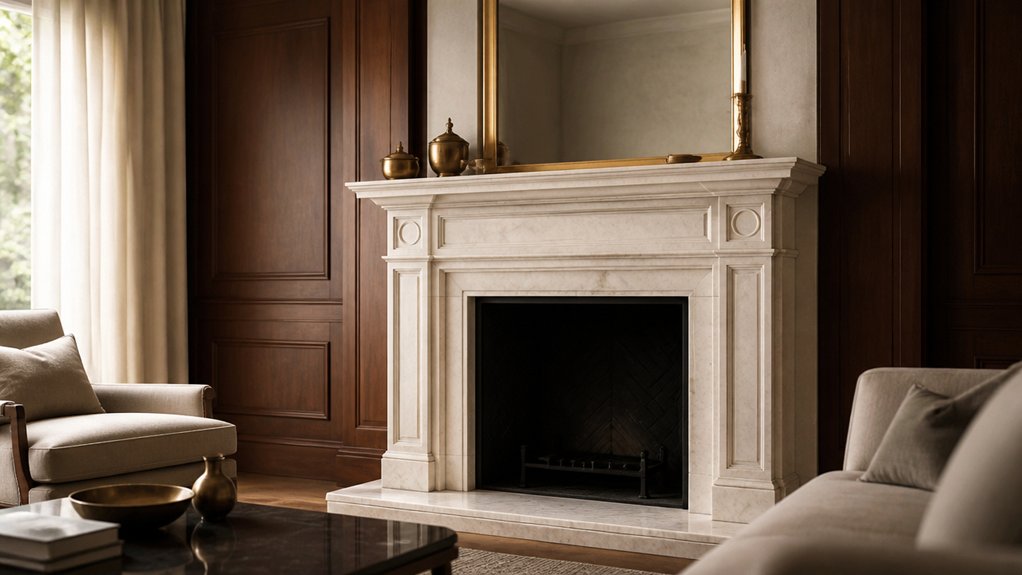
A marble fireplace can provide a lasting focal point, but the stone needs to suit the room and how you use it. A carved mantel works well with traditional furnishings; a slim surround gives a cleaner look in a modern interior.
No two slabs have the same veining, so inspect the whole piece in both daylight and evening light before choosing. Ask how the finish will affect cleaning and upkeep, and check that the fireplace’s proportions suit the room. Include installation and any preparation work in your budget, as costs depend on the stone, design and site conditions.
Key Takeaways
A marble fireplace can work in a traditional or contemporary room, and it will still suit the space if you change the furnishings later. The main trade-off is that marble has natural variation, so choose the stone and mantel together rather than relying on a small sample.
Check the mantel’s scale against the room and fireplace opening. Carved profiles tend to look more formal; a plain surround gives the stone a simpler, more modern feel. Ask to see the full slab before it is cut, since veining and undertones can differ from one section to another and affect the room’s colour scheme.
Warm-toned marble often sits well with brass, velvet and rich wood; cooler stone can pair with polished nickel, glass and neutral fabrics. Marble needs prompt spill clean-up and a pH-neutral stone cleaner. When setting the budget, allow for fabrication, installation and ongoing care, not just the stone itself.
What Makes a Marble Fireplace Timeless
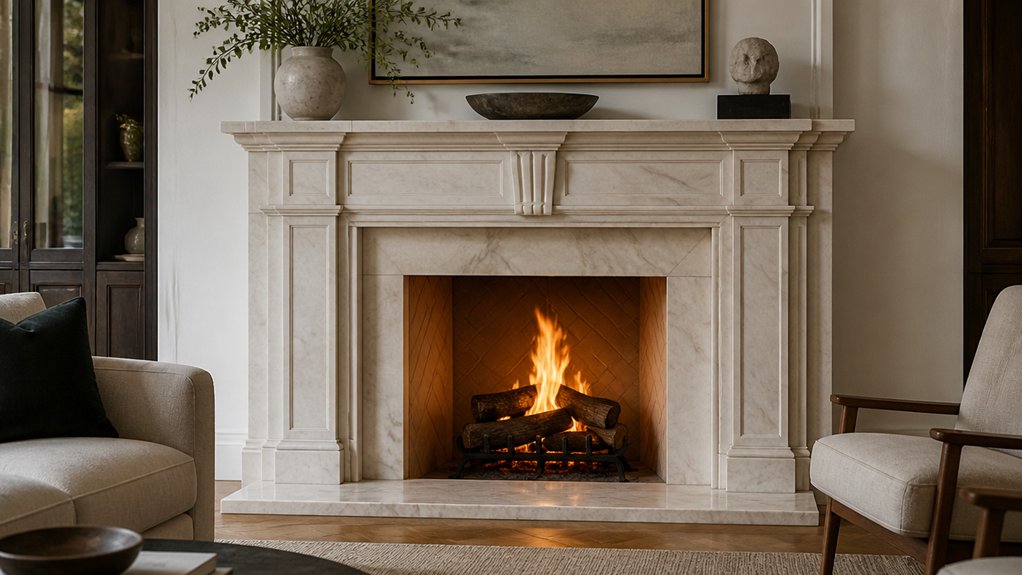
Marble works in both traditional and contemporary rooms, so a fireplace made from it can still suit the house as furnishings and finishes change. Its natural colour and veining vary from slab to slab; look at the actual stone before choosing, rather than relying only on a small sample.
Marble can last for decades with suitable care, but it can stain or mark, so ask how the finish should be maintained and whether it suits the way you use the room. The mantel can be shaped and finished to suit a formal, architectural look or a simpler modern one. A well-proportioned fireplace can be a lasting focal point and contribute to the home’s perceived quality, though the stone, design and installation all affect the cost.
How Marble Veining Shapes the Room
Marble veining sets the visual rhythm around a fireplace, so look at how the pattern will run across the mantel and any adjoining stonework. Fine, close-set lines can keep a small room feeling less busy, while broad, sweeping veins make a stronger focal point in a larger room. Ask to see the full slab before it’s cut; a small sample may not show how the veins will land at joins or around openings.
Check the marble in both daylight and evening light, as its colour and contrast can look different under each. Compare its undertones with the flooring, upholstery and metal accents. Matching them gives a quieter finish; a measured contrast makes the fireplace stand out, but can be harder to balance with the rest of the room.
Marble Fireplace Styles for Classic and Modern Homes
Once you’ve chosen a marble veining pattern, match the surround to the house. In a traditional room, a carved mantel and fluted pilasters suit a more formal look. Check that the proportions work with the fireplace opening and the room; a surround that’s too bulky can dominate the space. Tailored upholstery and polished metal fittings can help tie the details together.
In a modern home, a simple slab surround or plain frame lets the marble take centre stage. Slim profiles, a concealed firebox and minimal trim keep the design clean, but make sure the firebox and surround are compatible and installed to the appliance maker’s requirements. Marble also pairs well with matte walls, warm timber or dark metal. The choice is a trade-off between traditional detail and a simpler, more architectural finish; either can make a strong focal point without crowding the room.
How to Choose Marble for Your Fireplace
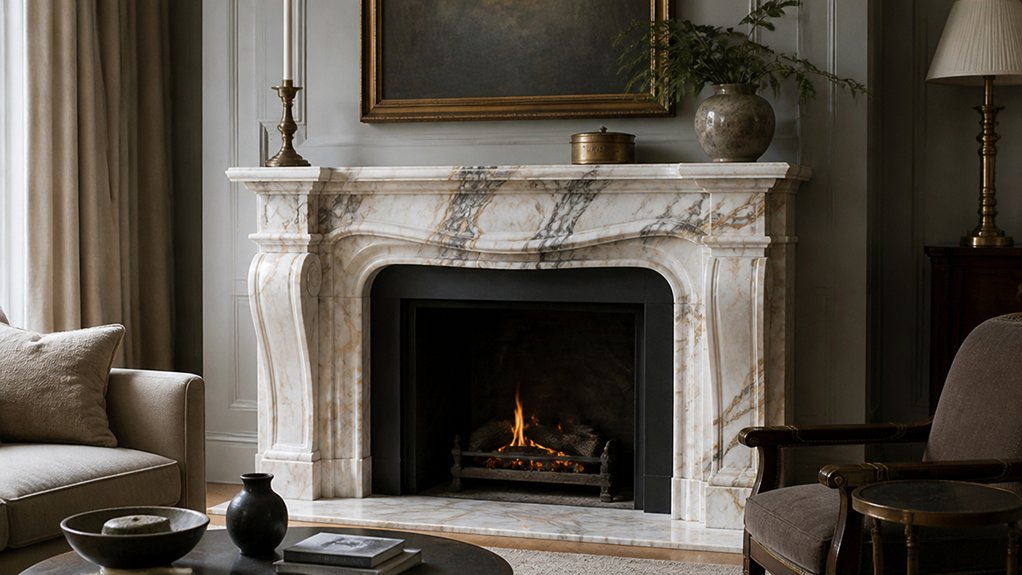
Choose marble for your fireplace by looking at the colour, veining and finish, then checking how each option looks in your home’s daylight and evening light. A polished surface reflects more light and gives a formal look, but it can show marks more readily. A honed finish is less reflective and has a softer appearance. Limestone is another option if you want subtle texture and a quieter colour; ask about sealing and ongoing care before you decide.
Inspect the full slab, not just a small sample, to see how the veining will run across the surround. Look for cracks, repairs and changes in thickness, and ask your fabricator how the stone and finish will handle the heat and what maintenance they need. Choose a grade and finish that suit how you use the room and how much care you’re willing to take on.
Pairing a Marble Fireplace With Luxury Interiors
A marble fireplace can anchor a room, but choose the stone to suit the rest of the interior. Warm-coloured marble usually sits well with brass, velvet and rich wood; cooler grey stone works with glass, polished nickel and neutral fabrics. Look at full slabs before choosing, as veining can vary and may not match a small sample.
Let the fireplace guide your choices, then repeat one or two of its colours in the lighting, textiles or coffee table. Keep surrounding surfaces fairly uncluttered, and check that the fireplace’s size and proportions suit the room. Too many competing patterns or statement pieces can make the stone feel out of place.
Allow for more than the cost of the marble. Ask what fabrication, installation and surrounding materials are included, and how the stone will be supported and finished. Marble needs care, so check what cleaning and maintenance it requires and whether that fits your household.
Keeping Your Marble Fireplace Beautiful
Dust the marble surround regularly with a soft microfibre cloth. Wipe up spills promptly with a damp cloth and a pH-neutral cleaner made for natural stone. Vinegar, citrus, abrasive powders and harsh chemicals can etch or dull the finish, so keep them away from the marble.
Use coasters or protective pads under accessories, and lift items rather than dragging them across the stone. Keep candles and metal ornaments from leaving wax, soot or rust marks. If the marble needs sealing, use a product intended for natural stone and follow its instructions; the right approach depends on the stone and the sealer. Regular, gentle care helps preserve the polished finish and natural veining.
Frequently Asked Questions
Can a Marble Fireplace Be Installed in an Existing Home?
Yes, a marble fireplace can be installed in an existing home, but the structure, hearth, chimney and ventilation need checking first. Ask a qualified contractor whether the floor and surrounding structure can support the fireplace, and whether any changes are needed to meet local requirements. Check permits and applicable codes with your local building department.
Choose the marble colour and surround to suit the room, but weigh appearance against upkeep and cost. The price will depend on factors such as the marble, the size of the surround and any structural or chimney work. Careful planning helps avoid installation problems and gives you a durable focal point that may add to your home’s appeal.
Do Marble Fireplaces Require Special Structural Support?
A marble fireplace may need extra structural support, depending on its weight, size and how the floor and framing are built. Before installation, ask a qualified professional to assess the load and confirm the structure can carry it safely.
A large, solid-marble surround may need reinforced framing; a lighter design may not. Check what support is required before choosing the stone, as the assessment can help prevent structural problems and unexpected work during installation.
Are Marble Fireplaces Compatible With Gas or Electric Inserts?
A marble fireplace can work with either a gas or electric insert, provided the insert fits the opening and the surrounding stone and materials meet its clearance requirements. Measure the opening carefully, and have the installer check the marble and backing before work begins; an insert that’s too large or installed too close can damage nearby materials.
A gas insert needs a suitable gas line and venting, so ask the installer what alterations the fireplace will require. An electric insert usually avoids combustion and is simpler to fit, but its running costs depend on electricity use. Compare energy use, the source of the marble and other materials, and future maintenance when choosing; check with your local building department about applicable requirements.
How Long Does Marble Fireplace Installation Typically Take?
A straightforward marble fireplace installation usually takes one to three days once the stone is ready and the site is prepared.
A custom surround can take several weeks from measuring and fabrication to final fitting, so ask whether the quoted schedule includes that lead time.
Timing depends on the fireplace’s size, stone availability, site preparation and whether you’re fitting a gas or electric insert.
Before work starts, ask who’s arranging delivery, how the fireplace will be supported, and when the stone placement and finishing will happen.
Confirm the schedule with your contractor, and check with your local building department about any requirements for an insert.
Can a Marble Fireplace Increase a Home’s Resale Value?
A marble fireplace can help a home appeal to buyers, but it won’t guarantee a higher resale price. The effect depends on local demand, the home’s overall condition and style, and the quality of the installation.
Choose marble that suits the room, and make sure the surround and hearth are properly fitted. Poor workmanship or a fireplace that looks out of place can put buyers off, while the cost of the work may not be recovered if you spend beyond what’s typical for your neighbourhood. Keep maintenance records, and mention the marble’s durability and lasting appearance in your listing and during showings.