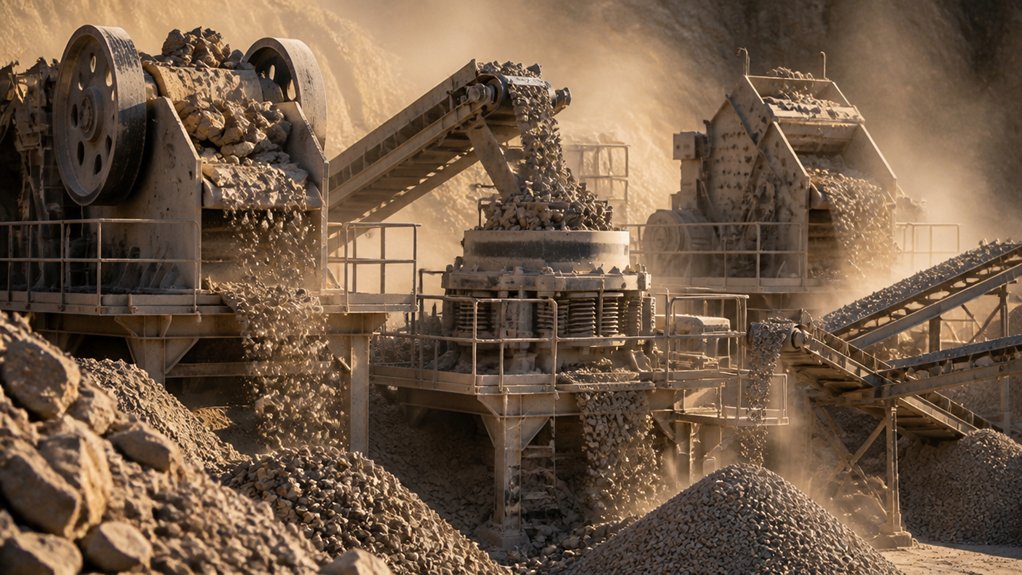
Choose a rock crusher by matching your feed, material, and aggregate goals to the machine’s strengths. A jaw crusher tackles large, tough rock in primary crushing, while a cone crusher handles hard, abrasive stone in secondary or tertiary stages. For softer, less abrasive material, an impact crusher can produce cubical aggregate for asphalt or concrete. Weigh capacity, site access, wear-part costs, and maintenance to protect uptime and control operating expenses. Explore each option to find the right fit for your property.
Key Takeaways
- Jaw crushers use compressive force between heavy jaw plates to break large, tough, abrasive rock during primary crushing.
- Cone crushers compress material in a crushing chamber, making them effective for secondary or tertiary processing of hard, abrasive rock.
- Impact crushers use high-speed impact to reduce softer, less abrasive material and produce cubical aggregate with fewer flaky particles.
- Choose a crusher based on rock hardness and abrasiveness, feed and target sizes, throughput, site constraints, and required aggregate shape.
- Compare total operating costs—not just purchase price—including energy, wear-part replacement, maintenance labor, and downtime.
Choose a Rock Crusher by Your Needs
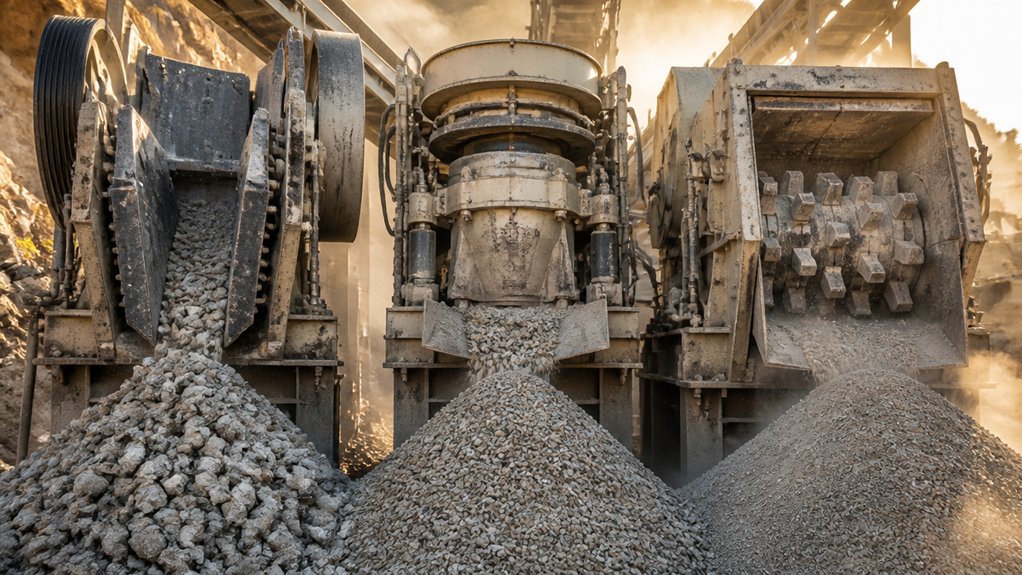
Choosing the right rock crusher starts with the material you’ll process, the output size you need, and how much you’ll produce. Your site’s goals will guide the best fit, whether you’re building a permanent plant or need a mobile unit for changing jobs.
Consider Rock durability, since harder stone can demand more wear-resistant components and raise maintenance costs. Match the machine’s capacity to your expected throughput so you don’t pay for power you won’t use or limit your production during peak demand.
Your property also shapes the decision. Check available space, access routes, power supply, and noise limits before you commit.
A well-matched crusher can help you control operating costs, protect nearby land, and reduce environmental impact. Compare service access, parts availability, and lifecycle value, too.
You’ll get a more reliable investment when the equipment suits both your material and your operation.
Jaw Crushers for Primary Crushing
When your site needs to break large, tough rock at the start of the process, a jaw crusher offers dependable primary crushing. Its compressive action reduces feed into manageable pieces, helping you prepare material for the next stage.
A jaw crusher’s compressive action breaks tough rock into manageable pieces, preparing material for the next stage.
A wide feed opening can accept bulky stone, while adjustable settings let you control output size to suit your operation. Choose a robust frame and wear-resistant jaw plates to support material durability under demanding conditions.
Accessible components can simplify inspections and help you manage maintenance frequency, protecting uptime and operating costs.
Match crusher capacity to your feed rate, loader, and downstream equipment to avoid bottlenecks. With the right configuration, you’ll gain reliable performance, efficient material flow, and a durable asset that supports consistent production across your aggregate site.
Cone Crushers for Hard Rock
For hard, abrasive rock, a cone crusher delivers controlled secondary or tertiary crushing with a durable design built for demanding sites. Its compression chamber reduces tough feed while protecting valuable uptime and wear components.
Choose a model sized for your material, target output, and site layout, so you can match capacity without oversizing your investment. Hydraulic systems simplify setting adjustments and help clear uncrushable material, giving you responsive control when conditions change.
Reliable protection features also help limit costly damage during unexpected overloads. Keep performance consistent with scheduled Lubrication maintenance, routine inspections, and timely liner replacement.
A well-matched cone crusher can support dependable production across demanding shifts, while robust construction helps you manage abrasive feed and extend service life. You’ll gain a practical, durable asset for your operation.
Impact Crushers for Cubical Aggregate
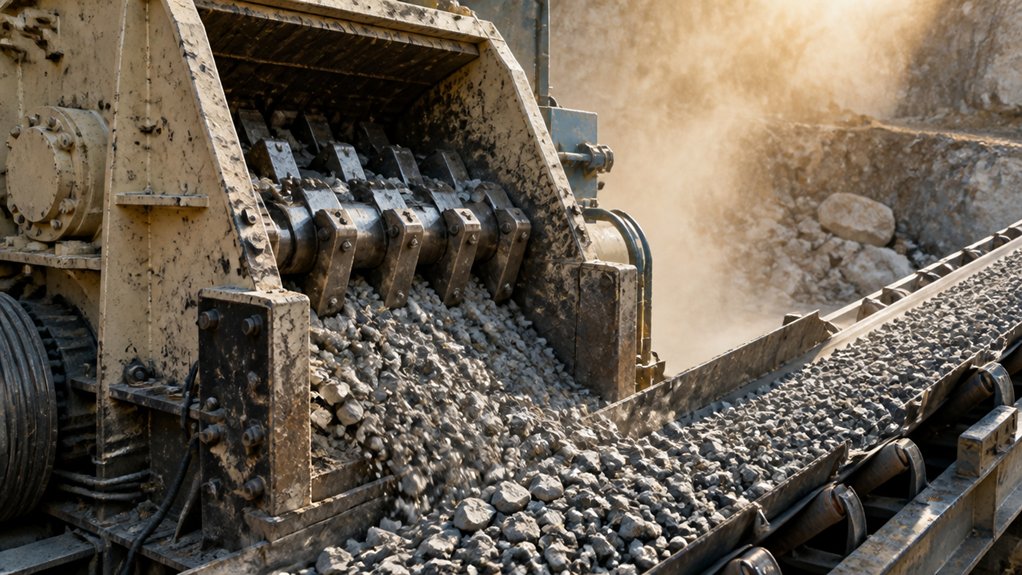
When you need cubical aggregate, an impact crusher helps you produce well-shaped, consistent material. Its high-impact action suits applications from concrete and asphalt to road base.
You’ll get versatile crushing performance with shape that supports quality end products.
Cubical Shape Production
Impact crushers turn feed material into cubical aggregate by striking and reshaping particles rather than simply compressing them. Their rotor accelerates stone into impact plates, then repeated collisions refine its shape. You get more evenly proportioned particles, with fewer elongated or flaky pieces that can weaken a mix or complicate placement.
That consistent geometry can improve packing, support reliable performance, and help your finished material meet demanding specifications. You can adjust rotor speed, apron settings, and feed conditions to balance shape, gradation, and throughput for your operation.
Well-formed aggregate also presents clean, uniform faces, enhancing the appearance of exposed surfaces.
Consider Surface durability alongside particle shape: sound, well-graded stone can resist handling wear and deliver dependable results. Efficient processing may also reduce recirculation, helping limit energy use and Environmental impact while protecting your product value.
Impact Crusher Applications
Where can cubical aggregate make the biggest difference? On projects where strength, finish, and dependable performance matter, your impact crusher can turn suitable feed into consistently shaped stone. Use it to produce premium asphalt and concrete aggregates, where angular, cubical particles support strong mixes and smooth placement.
You can also supply road base, manufactured sand, and decorative stone, helping your operation serve varied markets from one versatile machine.
Match the crusher to your material and target gradation to protect product quality and control operating costs. Efficient impact reduction can limit waste, while thoughtful equipment selection helps manage environmental impact.
Review maintenance requirements, including wear-part access and replacement intervals, before you buy. With the right setup, you’ll deliver market-ready aggregate, meet demanding specifications, and make your property more productive without sacrificing reliability or value.
Match Crushers to Rock and Feed Size
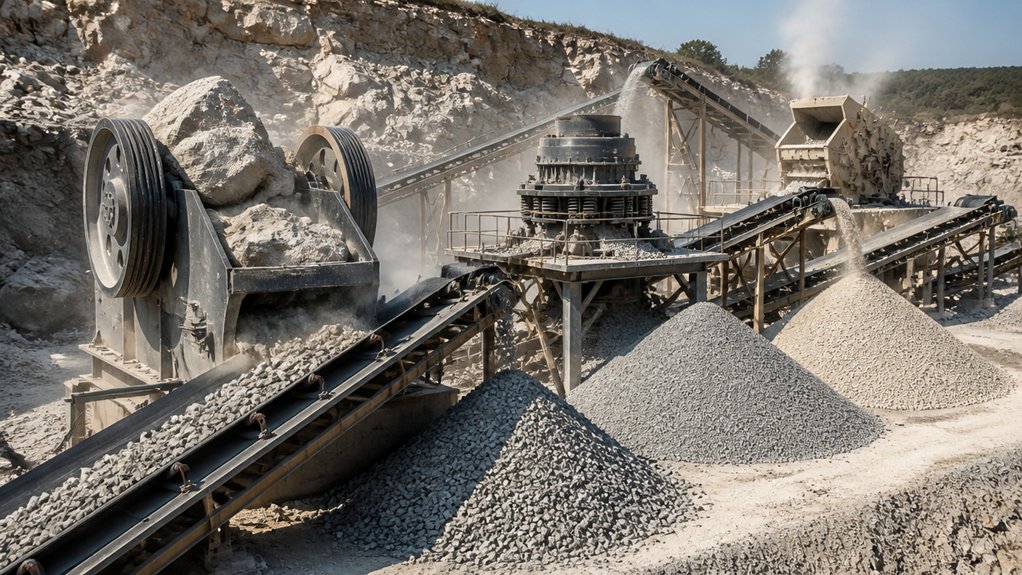
Choosing the right crusher starts with matching its design to the rock’s hardness, abrasiveness, and feed size. Your material’s properties guide whether a jaw, cone, or impact crusher fits the job.
Jaw crushers handle large, tough feed efficiently, making them a strong choice for primary reduction.
Cone crushers suit hard, abrasive rock and perform best when you maintain a steady, properly sized feed.
Impact crushers work well with softer, less abrasive material that can break through force rather than compression.
Check the maximum feed dimensions against the crusher opening, and account for oversized pieces that could interrupt operation.
Material hardness affects the force required, while abrasiveness influences how quickly components wear.
Consistent sizing supports feed consistency and helps your machine run smoothly.
Match the crusher to your rock and incoming material, and you’ll build a dependable setup for your site’s conditions.
Compare Crusher Output, Wear Costs, and Uses
Compare each crusher’s output and gradation to the specifications your project requires. You’ll also want to weigh wear costs against the machine’s best-fit applications.
That balance helps you protect your budget and choose equipment that delivers lasting value.
Crusher Output and Gradation
A crusher’s output depends on its design, settings, and feed material, shaping both the gradation you get and the cost of producing it. For your operation, the right machine delivers consistent sizing and dependable throughput, helping you meet project specifications without unnecessary recirculation.
A jaw crusher handles primary reduction, producing a coarser, less uniform product that suits further processing. A cone crusher refines hard, abrasive rock into a more controlled, cubical gradation. An impact crusher offers flexible sizing and a well-shaped product, especially with softer or recycled materials.
Your choice affects how efficiently material moves through each stage.
Adjust the closed-side setting, rotor speed, and screen configuration to tune output. Match feed size and consistency to the crusher, and you’ll improve Material flow and crushing efficiency while achieving the gradation your customers require.
Wear Costs and Applications
How much wear a crusher incurs depends on the rock it handles and the product you need. Jaw crushers handle abrasive feed with durable, replaceable liners, making them a dependable choice for primary reduction.
You’ll typically send material to a cone crusher for consistent, shaped aggregate; its liners wear faster on hard, abrasive stone, so factor replacement costs into your budget.
Impact crushers deliver well-shaped, finely graded material, but their blow bars can wear quickly on abrasive rock. They’re often more economical on softer feed or recycled concrete.
Compare liner and blow-bar life, labor, and downtime—not purchase price alone. Your maintenance requirements depend on feed hardness, throughput, and operating settings.
Choose equipment that matches your application to protect uptime and product value. Efficient crushing can also reduce rehandling and fuel use, lowering your operation’s Environmental impact.
Frequently Asked Questions
How Often Should a Rock Crusher Receive Preventive Maintenance?
Schedule preventive maintenance daily, weekly, and monthly, then follow your manufacturer’s service intervals.
You should inspect guards, belts, fasteners, and feed systems each shift; check crusher lubrication and hydraulic systems weekly; and arrange thorough inspections monthly.
Track operating hours, material abrasiveness, and production demands to adjust the schedule.
Prompt wear part replacement protects your equipment’s value, reduces costly downtime, and keeps your property’s aggregate operation productive, safe, and dependable throughout the year.
What Safety Checks Should Operators Perform Before Starting a Crusher?
Before starting a crusher, inspect guards, emergency stops, belts, hoses, electrical connections, and the work zone. Clear debris and confirm no one’s inside restricted areas.
Are you ready to protect your crew and equipment? Verify operator training, require proper safety gear, and test alarms and communications.
Check fluid levels and follow the manufacturer’s startup sequence. A careful pre-start check helps prevent injuries, costly damage, and downtime while keeping your operation productive.
Can Crusher Settings Be Adjusted Remotely?
Yes, you can adjust many modern crushers remotely, depending on the model and control system. Remote adjustment lets you fine-tune settings from a connected interface, helping you respond quickly to changing material and protect your property’s productivity.
With accurate crusher calibration, you can maintain consistent output, reduce unnecessary wear, and support efficient operation.
Check your machine’s specifications, connectivity, and safety procedures first; remote controls complement—not replace—on-site inspections and trained operator oversight.
What Permits Are Required to Operate a Mobile Rock Crusher?
You’ll typically need air-quality, stormwater, land-use, and operating permits to run a mobile rock crusher, though requirements vary by location, site, and project. Think of permits as keys: one missing key can keep your property’s operation locked down.
Before mobilizing, contact your local planning office and environmental agency; confirm permit requirements, noise limits, and inspection rules. Strong regulatory compliance protects your schedule, reduces enforcement risk, and helps you keep valuable site work moving smoothly.
How Can Crusher Noise and Dust Be Controlled on Site?
You can control crusher noise and dust with smart equipment choices and disciplined site practices.
For Noise reduction, position the crusher away from homes, use acoustic barriers, maintain components, and schedule loud work thoughtfully.
For Dust suppression, apply water sprays at feed points and conveyors, cover stockpiles, and keep haul roads damp.
You’ll protect neighbors, improve working conditions, and help your project meet local requirements while preserving your property’s value and reputation.