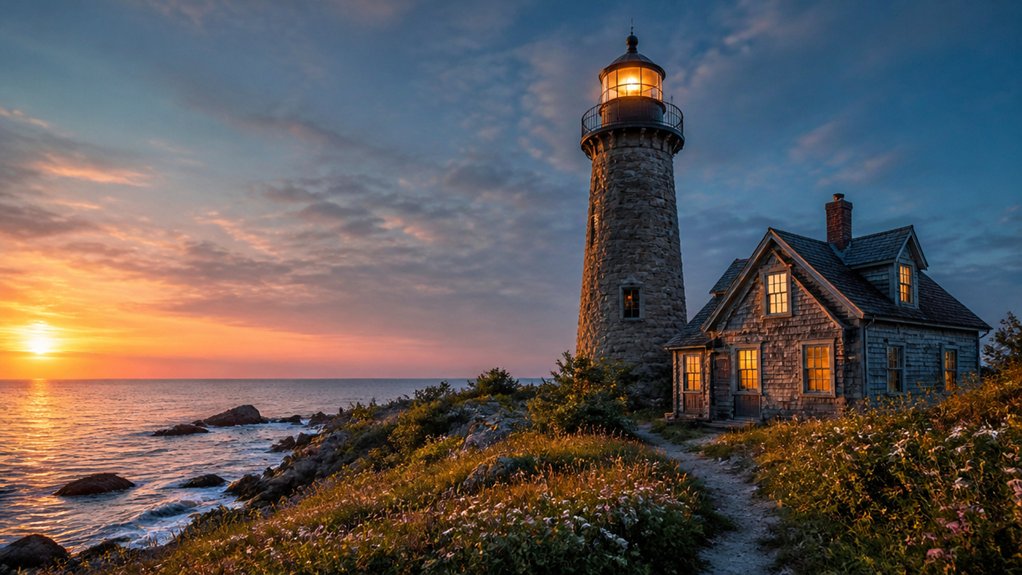
Step through the modest door of this isolated 1800s lighthouse and you’ll trade Atlantic winds for a warm, carefully considered retreat. Original stone walls, repaired with traditional materials, preserve the keeper’s quarters’ rugged character, while timber, soft lighting, and flexible furnishings make compact rooms feel welcoming. You can linger over coffee beside deep-set windows, watch the sea shift beneath storm-gray skies, then retreat to a plush bed and hot shower. Discover how heritage and comfort meet in every thoughtful detail.
Key Takeaways
- The isolated 1800s lighthouse was carefully adapted into a coastal home while preserving its maritime character and rugged stone exterior.
- Restoration began with documenting salt damage, cracks, and weathering, then repairing the masonry with compatible stone and lime mortar.
- Compact rooms were redesigned with built-in storage, flexible furnishings, and a modest kitchen to make everyday living practical.
- Warm timber, soft lighting, durable fabrics, reliable heating, and modern comforts transformed the chilly interior into a welcoming retreat.
- Deep-set windows, open sightlines, and restrained coastal colors make the sea and changing skies part of daily life.
The Keeper’s Quarters: An Isolated 1800s Lighthouse
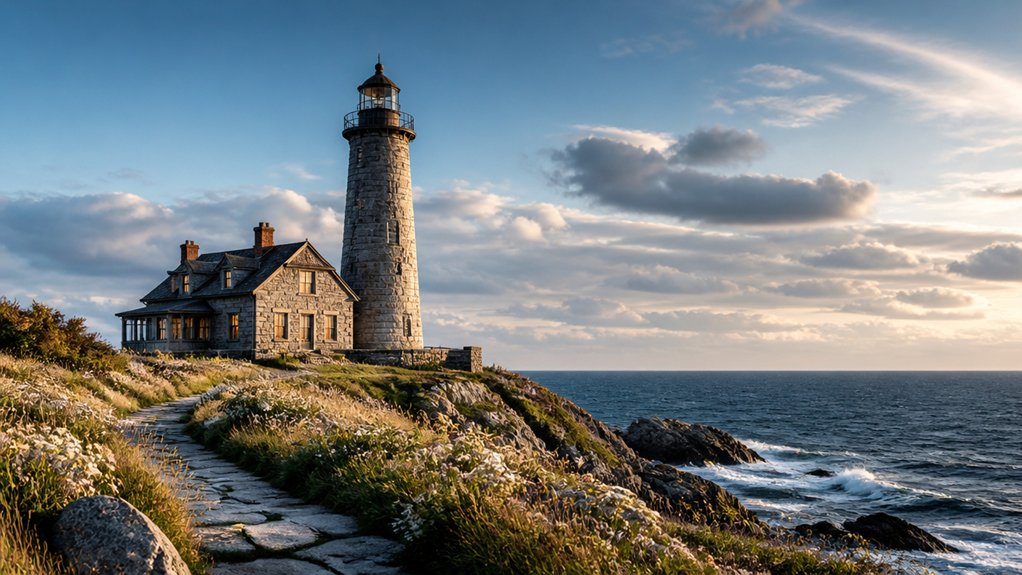
Before it became a coastal sanctuary, the lighthouse stood alone against the Atlantic, its stone tower rising above a rugged, wind-scoured shore. You’d have entered the keeper’s quarters through a modest door, leaving salt spray and hard weather outside.
Inside, compact rooms served a demanding routine: tending the lamp, tracking storms, and watching for ships along a perilous coast. Thick stone walls held the chill, while narrow windows framed restless water and shifting skies.
Every object had a purpose; every hour answered the sea. Maritime folklore gathered around such isolated stations, where distant lights promised safe passage and unseen forces seemed to haunt the waves.
Lighthouse symbolism carried equal weight: endurance, vigilance, and hope made visible. This 1800s outpost offered no easy comfort, only a rare, compelling glimpse into a keeper’s solitary world.
How the Lighthouse Became a Coastal Home
How does a lonely beacon become a home? You begin by imagining daily life inside its dramatic silhouette: morning coffee beside salt-bright windows, dinner beneath the lantern room, and quiet nights with the surf as soundtrack.
Imagine a beacon transformed into a home, where coffee, candlelit dinners, and the sound of surf shape each day.
The transformation respects the tower’s Maritime architecture while making its compact footprint work harder. You can create welcoming rooms with built-in storage, flexible furnishings, and carefully planned lighting, turning narrow spaces into intimate retreats rather than awkward corners.
A modest kitchen and comfortable sleeping area bring modern ease without stealing the lighthouse’s character. Coastal preservation guides the choices, from energy-conscious systems to materials suited to sea air.
The result feels less like a themed rental than a genuine sanctuary: a distinctive, market-ready escape where you can experience the coast from a keeper’s own point of view.
Preserving the Lighthouse’s Original Stonework
Before you shape the lighthouse into a coastal sanctuary, assess its stonework for salt damage, cracks, and weathered joints.
A careful inspection reveals what you can preserve—and where historic masonry needs expert restoration.
Keep the original stone intact, and you’ll retain the rugged character buyers prize.
Assessing Stonework Condition
Assess the lighthouse’s stonework before shaping it into a coastal sanctuary: look for cracked joints, loose blocks, salt damage, and weathered faces. Map each concern, noting its location, extent, and whether it’s changing. Photograph details in consistent light, so you can compare them over time and share a clear record with preservation professionals.
Pay special attention to exposed corners, window surrounds, and areas where rain or sea spray lingers. These clues reveal how wind, moisture, and age have shaped the tower—and where its character remains strongest.
A careful survey protects Maritime heritage while helping you preserve architectural integrity. You’ll also gain a realistic picture of the building’s condition before setting design priorities, timelines, or budgets. Let the stone’s honest texture guide your vision, not assumptions about what it needs.
Restoring Historic Masonry
When you restore a lighthouse’s historic masonry, preserve the original stone wherever it’s sound and repair only what’s failing. You’ll protect the tower’s maritime history while keeping its weathered character intact.
Start by matching replacement stone to the original in color, grain, and durability; a close match lets repairs blend into the rugged coastal silhouette.
Use compatible lime mortar rather than hard modern cement, which can trap moisture and damage softer stone. Repoint carefully, replacing only loose or eroded joints, and let each repair breathe through changing seasons.
Skilled masons can stabilize cracked sections without erasing the marks of wind, salt, and time.
This thoughtful architectural preservation safeguards the lighthouse’s structure and its appeal. You’ll retain authentic texture for guests to admire, while creating a resilient landmark that feels both storied and welcoming.
Modern Comforts Inside the Keeper’s Quarters
The keeper’s quarters pair their weathered stone walls and sweeping sea views with the comforts of a thoughtfully designed retreat. Inside, interior design balances historic character with an easy, modern rhythm: warm timber, tactile fabrics, and carefully chosen lighting soften the rugged masonry without disguising its past.
You can settle into a plush bed, draw a hot shower, and prepare coffee in a well-equipped kitchenette before the day begins. Modern amenities make this remote escape feel effortless, from reliable heating and discreet climate controls to fast Wi-Fi for planning your next outing.
Thoughtful storage keeps the rooms uncluttered, while durable finishes stand up to sandy shoes and salty air. You get the rare pleasure of a lighthouse stay without sacrificing the everyday comforts that turn a memorable visit into a truly restorative one.
Designing Around the Lighthouse’s Sea Views
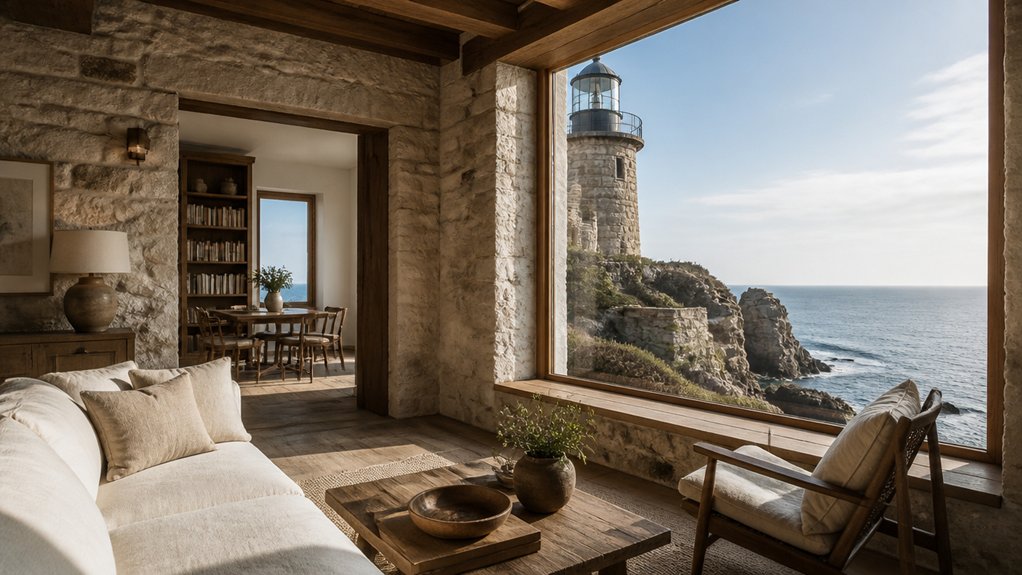
Framed by deep-set windows and open sightlines, the sea becomes part of the lighthouse’s interior design. You can watch light shift across the water from rooms shaped to keep the horizon in view.
Rather than compete with the scenery, the restrained palette lets blue, silver, and storm-cloud gray take center stage. Stone walls and carefully placed furnishings frame each vista, while clear pathways preserve an easy flow from one window to the next.
This thoughtful approach to Coastal architecture turns changing tides into a living backdrop, giving every moment a sense of Seaside serenity. At sunrise, the glass catches a soft glow; by evening, distant boats become delicate silhouettes.
You don’t just look out at the coast—you experience its scale, movement, and quiet drama from within.
What Makes the Restored Lighthouse Feel Like Home
Beyond its sweeping sea views, the restored lighthouse feels like home through thoughtful comforts that respect its rugged character. You’ll find warm oak floors underfoot, soft wool throws within reach, and a wood-burning stove that turns stormy evenings into an invitation to linger.
In the kitchen, modern appliances make everyday meals easy, while stone walls and aged brass keep the setting rooted in its past.
Bedrooms pair crisp linens with quiet, sheltered corners, giving you room to recharge after a day on the shore.
Subtle maritime symbolism—an old compass, a lantern-shaped pendant—adds meaning without turning the rooms into a theme.
Outside, coastal landscaping softens the stone approach with salt-tolerant grasses and native blooms.
Every detail feels considered, so you can settle in, breathe deeply, and belong.
Frequently Asked Questions
Where Is the Lighthouse Located?
You’ll find the lighthouse on a rugged stretch of coastline, where the land keeps watch over the sea. Its exact location isn’t specified here, so you’d need the original article or a property listing to pinpoint it.
Still, you can picture its historic architecture rising above the waves, a stone sentinel guarding maritime history. Follow the coastal road, and you’ll discover a sanctuary where salt air, old stone, and ocean light meet.
Is the Lighthouse Open to the Public?
Whether you can visit depends on the lighthouse’s location and current access rules; the information provided doesn’t confirm that it’s open to the public.
Before planning your trip, check with the property’s official website or local tourism office for visiting hours, tours, and restrictions.
You’ll want to respect any limits that protect the historic stonework and fragile shoreline.
Historical preservation and conservation efforts help keep this coastal landmark standing for future visitors to admire.
Can Visitors Stay Overnight in the Keeper’s Quarters?
Yes, you can stay overnight in the keeper’s quarters, where historic stone walls and sweeping coastal views turn a simple getaway into a memorable escape.
These carefully maintained Overnight accommodations let you experience the lighthouse after day visitors leave, with the sea as your soundtrack.
Thoughtful Historical preservation keeps the building’s character intact while offering modern comforts.
Book ahead, since limited availability makes this distinctive coastal retreat especially appealing for travelers seeking something beyond an ordinary hotel.
What Wildlife Can Be Seen Near the Lighthouse?
You may spot seabirds riding the wind, shorebirds probing tidal pools, and seals or dolphins surfacing offshore.
During Bird migration, the coastline becomes a moving tapestry: flocks sweep past like living brushstrokes, reminding you that every journey leaves a trace.
Keep watch for Marine mammals from a respectful distance, and bring binoculars to catch subtle movement against the waves.
Each glimpse turns your lighthouse visit into a vivid encounter with the wild coast.
How Can Travelers Reach the Lighthouse?
You can reach the lighthouse by taking a local boat from the nearest harbor, then following the marked coastal path from its landing. Check seasonal schedules and weather before you go; rough seas can delay crossings.
Wear sturdy shoes, pack water, and book ahead to secure your spot. Along the way, you’ll pass rugged shoreline and hear local legends tied to the beacon.
Respect historical preservation rules, and leave the stone sanctuary untouched for future visitors.