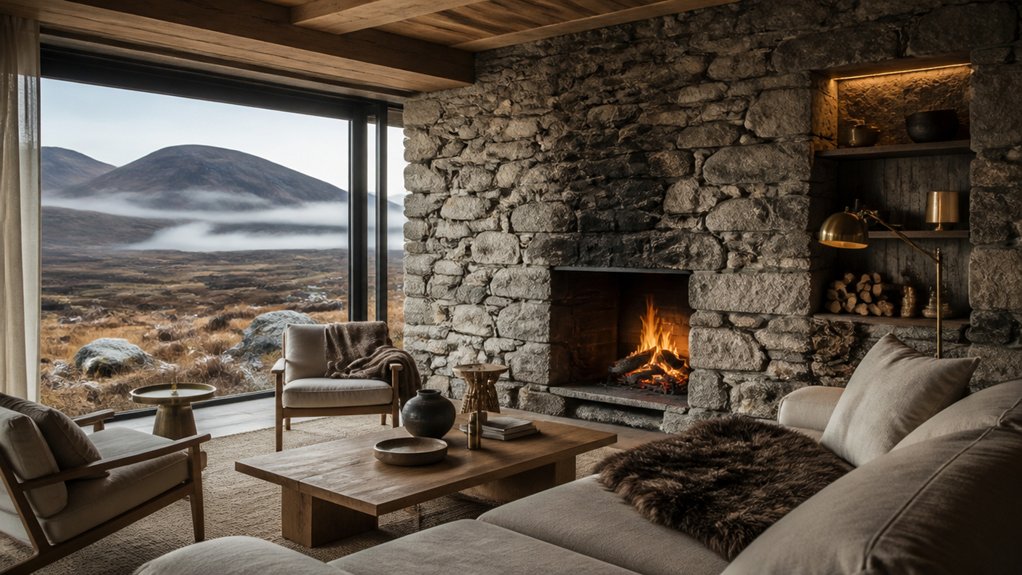
You can transform a remote stone bothy into an ultra-luxury sanctuary without losing its rugged soul. Preserve the weathered stone walls, then pair them with wide-plank oak, tactile wool and linen, and refined touches of brushed brass or darkened steel. An open-plan layout, built-in storage, and carefully placed lighting make the compact interior feel spacious and inviting. Keep the palette grounded in the landscape, and you’ll discover how each design choice elevates comfort while honoring the bothy’s working past.
Key Takeaways
- Preserve and gently clean the original stonework, letting its weathered texture anchor the sanctuary’s design.
- Pair rugged walls with wide-plank oak flooring, natural wool, linen, and leather for warmth and tactile luxury.
- Create an open-plan lounge, dining, and kitchen, using furniture and lighting to define zones without partitions.
- Maximize daylight and frame dramatic landscape views through carefully placed openings, while protecting the bothy’s scale and silhouette.
- Add understated polish with honed stone, brushed brass, darkened steel, and subtle lighting suited to the remote setting.
What Was the Stone Bothy Like Before Its Transformation?
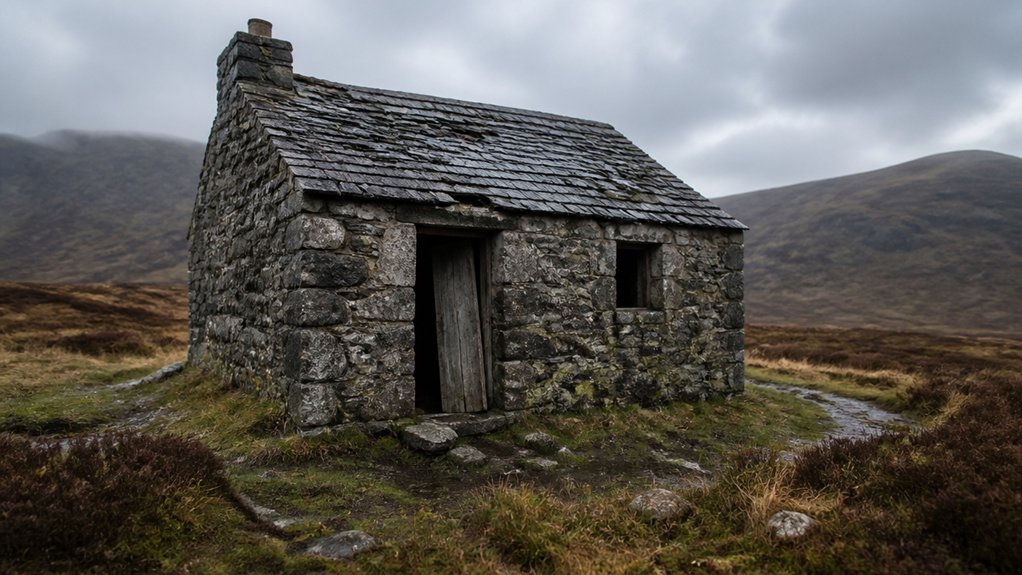
Before its transformation, the stone bothy was a humble, weather-worn shelter built for basic comfort, not luxury. You’d find thick stone walls, a simple roof, and a compact interior shaped by practical needs rather than polished finishes.
A weather-worn stone bothy, built for simple shelter, with thick walls and a compact, practical interior.
Its remote setting offered quiet and dramatic views, but limited access to services made everyday comforts scarce.
Small windows admitted daylight while keeping the building’s footprint modest. Inside, you’d encounter functional surfaces, basic furnishings, and signs of years spent facing wind and rain.
The Historic architecture gave the structure a strong sense of place, while its rustic charm came from honest materials and an unpretentious layout.
For a buyer or visitor, the appeal lay in authenticity and seclusion—not convenience, spaciousness, or refined amenities.
It was a solid starting point, with clear potential for a more comfortable stay.
How Did the Design Preserve the Bothy’s Rugged Character?
Rather than disguising the bothy’s age, the design made its original stonework the focal point. You can see how the rough walls anchor each room, preserving the shelter’s history while giving the retreat a distinctive sense of place.
Instead of smoothing away every irregularity, the renovation lets varied textures and weathered details remain visible. That restraint keeps the setting authentic—and gives you a more compelling contrast with the clean lines of a Modern interior.
Careful planning also protects the building’s scale and rugged silhouette. Open sightlines help you appreciate the stonework, while discreet upgrades support comfort without competing for attention.
Sustainable materials reinforce the connection to the landscape, and thoughtful lighting draws out the walls’ natural character. The result feels refined, not overworked: you experience the bothy’s original spirit alongside the ease expected of a high-end escape.
Which Materials Add Luxury to a Stone Bothy?
Which materials make a stone bothy feel luxurious without losing its rugged appeal? Start with the original stone: clean it gently, then let its texture anchor your modern interior. Pair it with wide-plank oak flooring, whose warm grain softens the masonry without competing with it.
Choose tactile wool, linen, and leather for upholstery and throws; natural fibers feel inviting and wear well in a remote retreat. In the kitchen and bath, use honed stone, brushed brass, and darkened steel to add polish without a glossy, showroom finish.
Select statement fixtures with sculptural forms, such as a bronze pendant or aged-metal faucet, to create memorable focal points. Keep your palette restrained—earth, charcoal, and muted cream—so each material earns its place and the bothy’s original character remains unmistakable.
How Does the Layout Make the Bothy Feel Spacious?
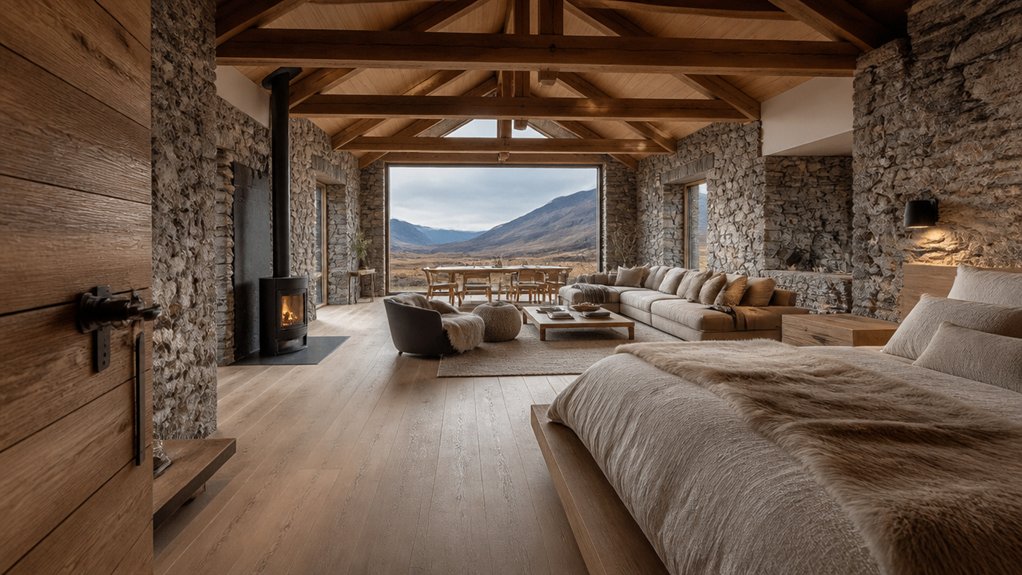
Thoughtful planning lets the bothy’s stonework and natural finishes shine without making the rooms feel cramped. An open plan layout links the lounge, dining area, and kitchen, so you can move easily and enjoy longer sightlines. Instead of adding partitions, designers use furniture placement and subtle changes in lighting to define each zone.
This approach preserves the character of the original shell while making every square foot work harder.
Natural light optimization also shapes the sense of space. Carefully positioned windows draw daylight across pale surfaces, while reflective finishes help it reach deeper into the interior.
You’ll notice how clear circulation routes keep the floor visually open, and built-in storage reduces clutter without sacrificing comfort. The result feels generous, not oversized: a considered retreat where practical planning supports a premium, relaxed stay.
How Does the Remote Setting Shape the Bothy’s Design?
Set far from everyday conveniences, the bothy’s remote location makes self-sufficiency part of its design. You’ll find practical choices shaped by distance: durable local stone helps the building sit naturally in its surroundings, while careful landscape integration limits disruption to the rugged terrain.
Existing openings guide daylight and frame views, reducing the need to alter the structure. Because deliveries and repairs can be difficult, the design favors robust materials and straightforward systems that perform reliably in changing weather.
Historical preservation also matters: retaining the bothy’s original character connects your stay to the place’s working past, rather than making the retreat feel imported.
The result is a property that responds to its setting, protects its sense of place, and offers a distinctive escape without relying on urban infrastructure.
Which Details Make the Bothy Feel Truly Luxurious?
Luxury emerges in the details that make a remote stone bothy feel effortless to inhabit. You notice it in tactile materials: thick wool underfoot, linen against your skin, and timber that brings warmth to rugged stone.
A restrained color palette lets the landscape lead, while carefully chosen accents add depth without visual clutter. Thoughtful artificial lighting shifts from bright, practical task light to a softer evening glow, so each room feels useful and inviting.
You’ll appreciate discreet storage, well-placed outlets, and reliable heating as much as sculptural furnishings; comfort matters when the weather turns.
In the bathroom, generous water pressure, quality fixtures, and plush towels deliver a hotel-level ritual. These considered choices don’t shout luxury. They remove friction, protect the bothy’s character, and make your stay feel quietly exceptional.
Frequently Asked Questions
Who Designed the Transformed Stone Bothy?
You’ll find that architect James Macdonald Wright and designer Niall Maxwell led the transformation, challenging the theory that luxury requires a new-build shell. They instead reworked a remote stone bothy, making architectural innovation serve the existing structure.
For you, the result shows how careful planning can turn modest architecture into a high-end retreat. Maxwell shaped the interior aesthetics, balancing refined finishes with the building’s rugged character, while Wright’s architectural approach preserved its sense of place and history.
Where Is the Remote Stone Bothy Located?
You’ll find the remote stone bothy on the Isle of Skye, off Scotland’s northwest coast. Its setting connects you with the island’s rugged local landscape, where dramatic hills and open moorland frame the historic structure.
The property’s historical architecture reflects its origins as a modest rural shelter, while its secluded position offers a distinctive sense of escape. Check the specific listing for its exact location and access details before planning your visit.
How Can Guests Book a Stay at the Bothy?
You can book a stay by contacting the bothy’s owner or booking provider directly; the available information doesn’t identify a specific website or reservation channel. Ask about dates, rates, minimum stays, and cancellation terms before you commit.
During the booking process, confirm what’s included, how you’ll receive access instructions, and whether you’ll need to bring supplies.
Check nearby local amenities, too, so you can plan transport, meals, and essentials around this remote retreat.
What Is the Nightly Rate for Staying There?
You’ll need to check the bothy’s current booking listing for its nightly rate; no verified price is provided here. Your total may vary with dates, minimum-stay rules, and any cleaning or service fees.
Compare the full checkout price before you book, and ask the host about seasonal rates if your dates are flexible. Those details reveal the property’s Pricing strategies and help you judge whether the stay fits your budget before confirming your reservation.
Is the Bothy Accessible Year-Round?
Seasonal access isn’t guaranteed year-round: you’ll need to confirm availability with the property before booking.
Seasonal accessibility depends on the route, local conditions, and any closures, so don’t assume every date is equally practical.
Weather considerations matter, especially in a remote setting where snow, heavy rain, or high winds can disrupt travel.
Check forecasts, ask about access arrangements, and clarify cancellation terms before you commit, so your stay starts smoothly.