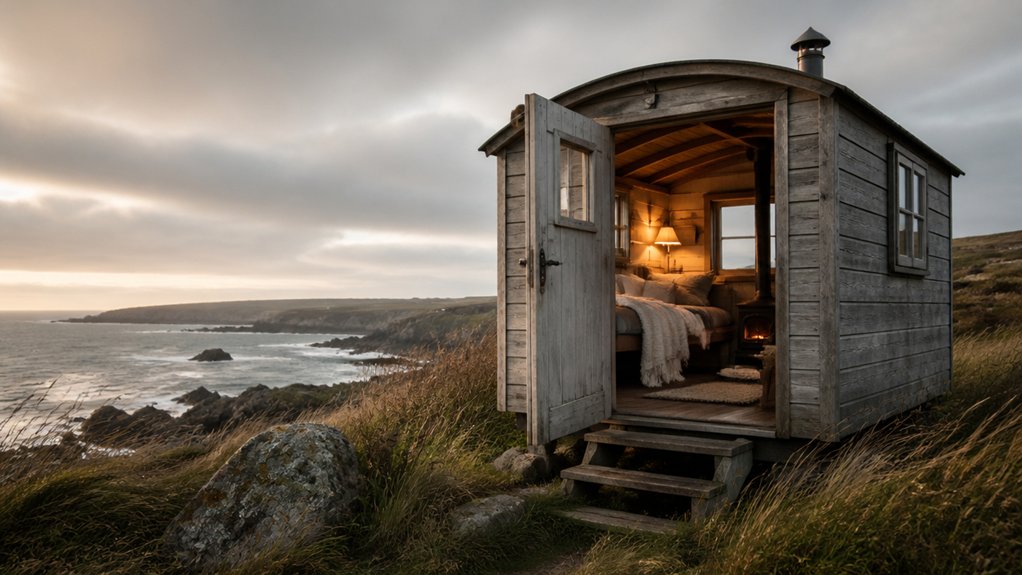
Elevate your coastal shepherd’s hut by first defining how you’ll use it and setting a realistic budget. Preserve original timber, wheels, and joinery, repairing rather than replacing wherever possible. Make every inch work with multifunctional furniture, vertical storage, and discreet insulation. Choose durable, quick-drying textiles, supportive bedding, warm lighting, and efficient heat for comfortable weekends. Echo the shoreline with restrained colors and natural textures, keeping views open and heritage details visible. Ahead, discover practical ways to bring it all together.
Key Takeaways
- Define the hut’s purpose and budget, then prioritize durable, coastal-ready upgrades that preserve its traditional character.
- Repair original timber, ironwork, and joinery before replacing anything; use authentic materials and breathable finishes.
- Create a restrained coastal palette with natural textures, warm wood, and simple window treatments that keep the space bright.
- Maximize the narrow layout with multifunctional furniture, vertical storage, discreet insulation, and efficient heating.
- Layer quick-drying, UV-resistant textiles, supportive bedding, and warm lighting for comfortable, practical overnight stays.
Plan Your Coastal Shepherd’s Hut Makeover
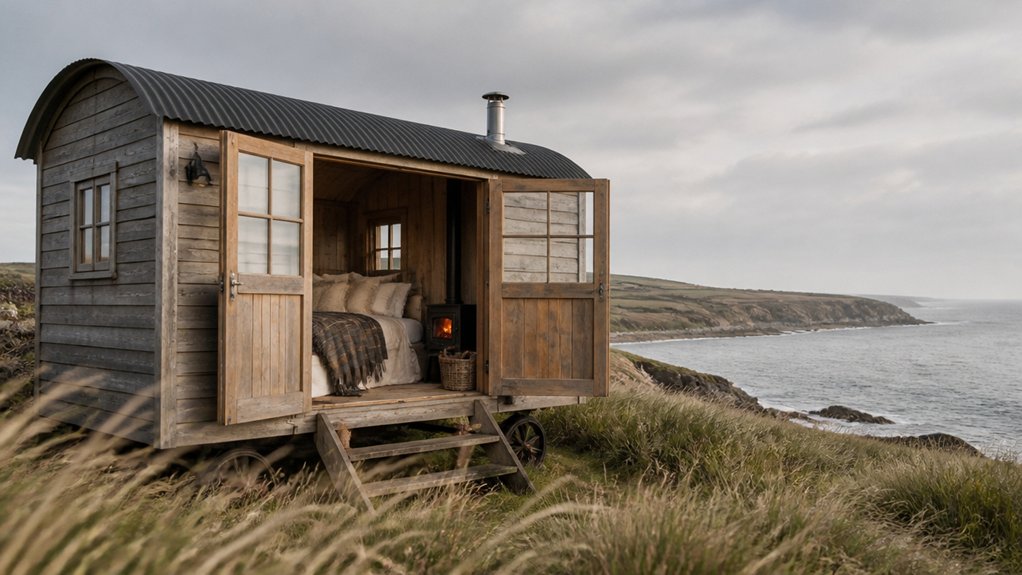
Before choosing paint colors or cushions, decide how you want your coastal shepherd’s hut to work. Will you use it for quiet reading, weekend guests, or a flexible mix? Let that purpose guide every purchase, so your makeover feels intentional rather than themed.
Decide how your hut will be used first, then let its purpose guide every design choice.
Set a realistic budget, then prioritize durable finishes that can handle sandy shoes, damp coats, and frequent use.
Seaside inspired decor works best when you edit carefully: choose a few tactile materials, such as weathered wood, woven shades, or linen, instead of filling the hut with nautical motifs.
Build a Coastal color palette around one anchor shade, then add restrained accents that complement the hut’s existing character.
Before ordering, measure key surfaces and check samples in changing daylight.
A clear plan protects your budget and gives each design choice purpose.
Maximize Space in a Small Shepherd’s Hut
Make every square foot work harder with furniture that serves more than one purpose.
Draw the eye upward with smart vertical storage, then keep essentials neatly tucked away to preserve a calm, open feel.
Choose Multi-Functional Furniture
In a compact shepherd’s hut, every piece of furniture should earn its place. Choose Multipurpose furniture that adapts to your weekend routine: a dining table can double as a work surface, while a storage ottoman offers a perch and a place to tuck away throws.
A sofa bed gives you flexible seating by day and a comfortable guest bed at night, without committing precious floor area to a separate bedroom setup.
Look for Space saving solutions with a light visual footprint, such as nesting tables that slide away when you need room to move.
Prioritize sturdy mechanisms, easy-care fabrics, and proportions suited to the hut’s narrow layout. When each piece serves more than one purpose, you’ll keep the interior uncluttered and make your coastal retreat feel considered, comfortable, and ready for every stay.
Make Use of Vertical Space
When floor space is limited, look up: wall-mounted shelves, hooks, and slim cabinets keep essentials within reach without crowding a shepherd’s hut’s narrow walkway.
Choose vertical shelving in pale wood or painted finishes to echo your coastal palette while drawing the eye upward. Open shelves can display books, ceramics, or folded linens, giving useful items a considered place in your design.
Add hanging storage behind the door or beside the bed for coats, bags, and everyday accessories. A rail with sturdy hooks offers a flexible alternative to bulky wardrobes, while a narrow cabinet can conceal taller necessities.
Keep installations secure and proportionate to the hut’s walls, and leave windows clear to preserve natural light. With smart placement, you’ll gain practical capacity and make the compact interior feel more spacious.
Keep Storage Clutter-Free
Vertical shelves add capacity, but a clutter-free system keeps a small shepherd’s hut feeling calm and open. Give every item a clear home, from beach towels to tea tins, so you can find what you need without rummaging.
Choose baskets that slide beneath benches and lidded boxes that complement your coastal palette; matching finishes make practical storage feel intentional. Use simple Organizational techniques, such as grouping supplies by activity and labeling containers discreetly.
A quick weekly reset prevents everyday essentials from spreading across counters and sleeping areas. Apply decluttering strategies before each season: remove worn gear, donate duplicates, and keep only what earns its place.
When you buy something new, let one item go. These habits protect precious floor space, preserve sightlines, and help your hut feel polished, welcoming, and ready for a relaxing weekend.
Add Weekend Comforts: Bedding, Heat, and Light
To make a shepherd’s hut feel like a true weekend retreat, layer in comfort without losing its rustic character. Start with luxury bedding: a supportive mattress, crisp sheets, and a well-chosen duvet can make a compact sleeping nook feel boutique-worthy. Choose pieces that suit the hut’s scale, so the bed feels inviting rather than crowded.
For chilly evenings, portable heaters offer flexible warmth without demanding a permanent installation. Check the manufacturer’s safety guidance, keep clear space around the unit, and select a model suited to your hut’s size.
A dimmable bedside lamp or wall-mounted reading light adds practical illumination while preserving the room’s intimate mood. Warm-toned LEDs use little energy and create a softer glow than harsh overhead lighting.
With thoughtful choices, you’ll make every overnight stay feel comfortable, polished, and ready for a relaxed weekend away.
Choose Cozy, Weather-Friendly Hut Textiles
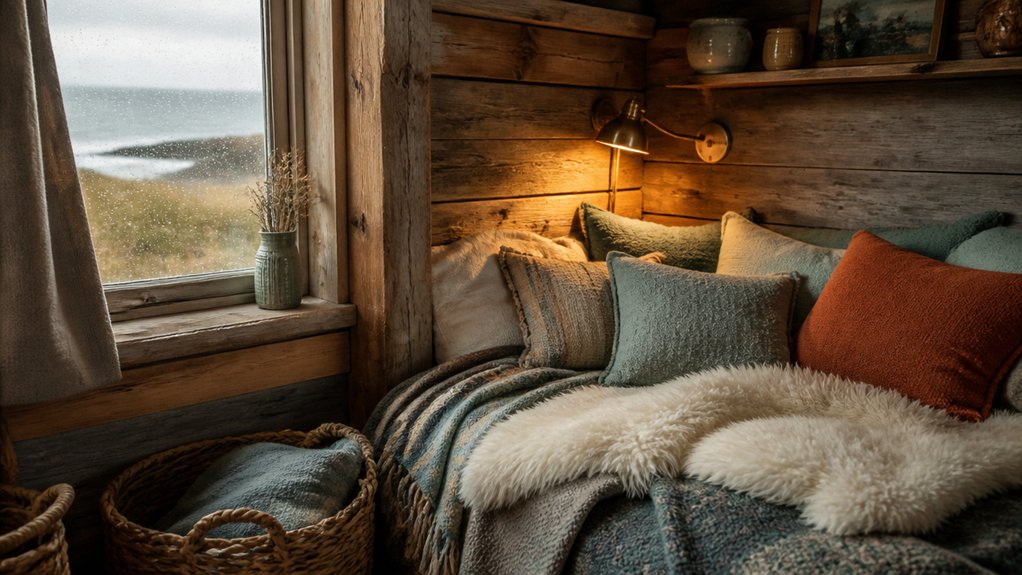
Choose wool, linen, and cotton layers to bring tactile warmth and an easy coastal palette to your hut.
For exposed windows and damp-prone corners, choose weather-resistant textiles that stand up to shifting seaside conditions.
You’ll get a polished, comfortable retreat without sacrificing practicality.
Layer Warm Natural Fabrics
When the coastal air turns cool, natural fabrics make your shepherd’s hut feel warmer without losing its easy, windswept character. Layer natural textures to add depth without crowding the compact interior.
Start with a wool throw in a muted dune or sea-glass shade, then pair it with linen cushions and a cotton coverlet. Incorporate tactile fabrics that invite you to settle in, balancing nubby weaves with smoother finishes for a considered, collected look.
Choose a tight palette of sand, cream, and soft blue so each layer feels connected to the coastal setting. A small sheepskin beside the bed or over a chair adds softness where you’ll appreciate it most.
Keep patterns restrained and let the fibers provide visual interest. These thoughtful layers make your retreat feel polished, relaxed, and ready for slow weekends.
Choose Weather-Resistant Textiles
Coastal weather can bring damp air and sandy feet, so choose textiles that dry quickly and hold up to frequent use. For cushions and throws, look for tightly woven, fade-resistant fabrics that clean easily and feel comfortable against your skin.
UV resistant fabrics help preserve rich color when sunlight streams through the hut’s windows, while removable covers make seasonal washing simple. Choose marine inspired patterns—subtle stripes, sea-glass tones, or small-scale motifs—to reinforce the coastal mood without overwhelming the compact interior.
Balance patterned upholstery with solid cushions, and keep a spare set ready for damp weekends. Check care labels before buying: mildew-resistant finishes and quick-drying fibers can save time and extend each piece’s life.
You’ll get a polished retreat that’s practical, inviting, and ready for changing weather.
Bring Coastal Views and Colors Indoors
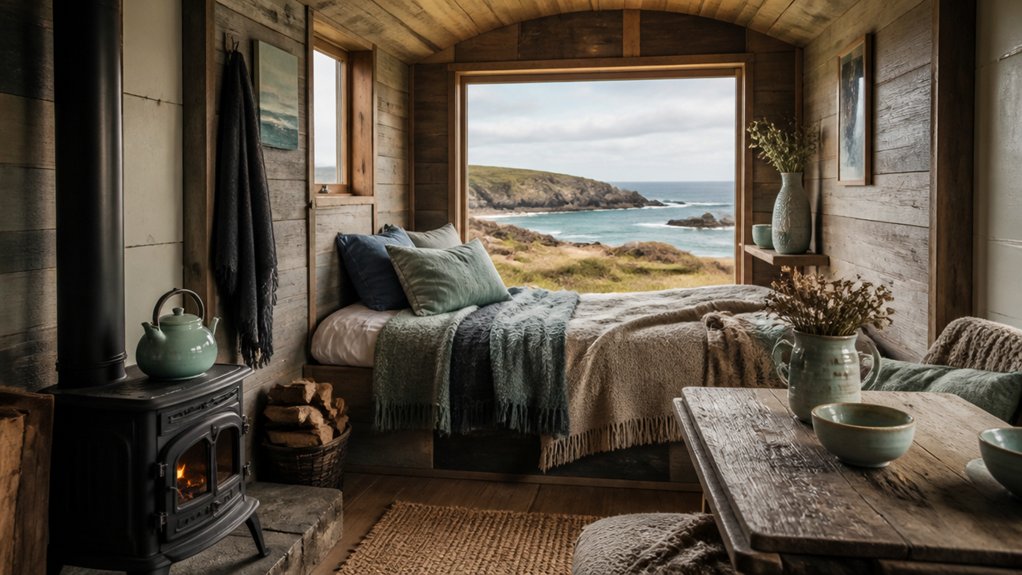
To bring the coastal setting indoors, echo the sea and sky with a restrained palette of soft blues, sandy neutrals, and crisp white. Use these Seaside color palettes to make the compact hut feel brighter and more spacious without overwhelming its views.
Let the landscape lead: frame windows with simple treatments, keep sightlines open, and repeat a favorite horizon hue in cushions or a small rug. Coastal decor accents, such as sea-glass vases, woven baskets, or a driftwood-toned lamp, add texture and a sense of place without clutter.
Choose a few well-scaled pieces rather than a collection of themed ornaments; each should earn its place through function or visual impact. For a polished finish, balance cool shades with warm natural finishes, then edit accessories until the room feels calm, inviting, and connected to the shore.
Keep Your Shepherd’s Hut’s Traditional Character
A restrained coastal palette works best when it complements, rather than replaces, the hut’s heritage. Keep original timber cladding, iron wheels, and visible joinery where you can; these details give your retreat a story that new-build cabins can’t replicate.
Restore worn surfaces with breathable finishes instead of covering them with trendy paneling. For historical preservation, repair first and replace only what’s beyond saving, choosing materials that match the hut’s age and construction.
Inside, pair practical upgrades with period character. Add discreet insulation, efficient heating, and well-planned storage without obscuring original beams or windows.
Source vintage fittings and locally made pieces to reinforce cultural authenticity, while keeping comfort and durability in view. Guests value a distinctive stay, and thoughtful preservation can strengthen your hut’s appeal without turning it into a themed set.
Frequently Asked Questions
Do I Need Planning Permission to Renovate a Coastal Shepherd’s Hut?
The answer isn’t set in stone: you may need planning permission to renovate a coastal shepherd’s hut, depending on its location, use, and the changes you’re proposing. Check with your local planning authority before work begins, especially if the hut sits in a conservation area, national park, or protected coastline.
Even when permission isn’t required, building regulations may apply. Plan your interior decor and energy efficiency upgrades around those rules to avoid costly redesigns.
What Permits Are Required to Place a Shepherd’s Hut Near the Coast?
You’ll typically need planning permission, and coastal regulation may add permits for protected landscapes, flood zones, habitats, or shoreline works. Check local rules before choosing your hut’s position, foundations, utilities, or access route; even a movable structure can count as development.
If your site has heritage status, Historical preservation requirements may apply. Contact your planning authority and environmental agency early, then shape your design around approved setbacks, materials, drainage, and visual impact before ordering.
How Can I Protect a Hut From Salt Air and Corrosion?
Choose durable materials, seal vulnerable joints, and rinse away salt regularly. Apply salt resistant coatings to exposed metal, and inspect them each season for chips or wear.
For lasting corrosion prevention, specify marine-grade stainless steel, galvanized fixings, and powder-coated hardware.
Keep timber ventilated, lift the hut clear of standing water, and replace damaged seals promptly.
With a cohesive finish and a simple maintenance routine, you’ll protect your investment without compromising its coastal character.
What Insurance Should I Arrange for a Weekend Shepherd’s Hut?
Arrange specialist shepherd’s-hut insurance that covers the structure, contents, storm damage, theft, and public liability—especially if you host paying guests.
Check whether your home policy excludes movable buildings or commercial use, and confirm cover for coastal risks, including salt-air corrosion and wind.
Match your insurance coverage to your hut’s bespoke finishes, appliances, and replacement costs.
Keep receipts, document upgrades, and schedule Shepherd’s hut maintenance to reduce avoidable claims and protect your investment.
Can a Shepherd’s Hut Be Rented to Holiday Guests?
Yes, you can rent your shepherd’s hut to holiday guests, provided you meet local planning, licensing, tax, and safety requirements. Check whether your land permits short-term stays, and arrange suitable guest and property insurance.
Thoughtful Shepherd’s hut design can help your listing stand out, while Coastal hut amenities—such as reliable heating, private washing facilities, and comfortable bedding—can support stronger reviews and rates.
Confirm rules before you advertise or accept bookings.