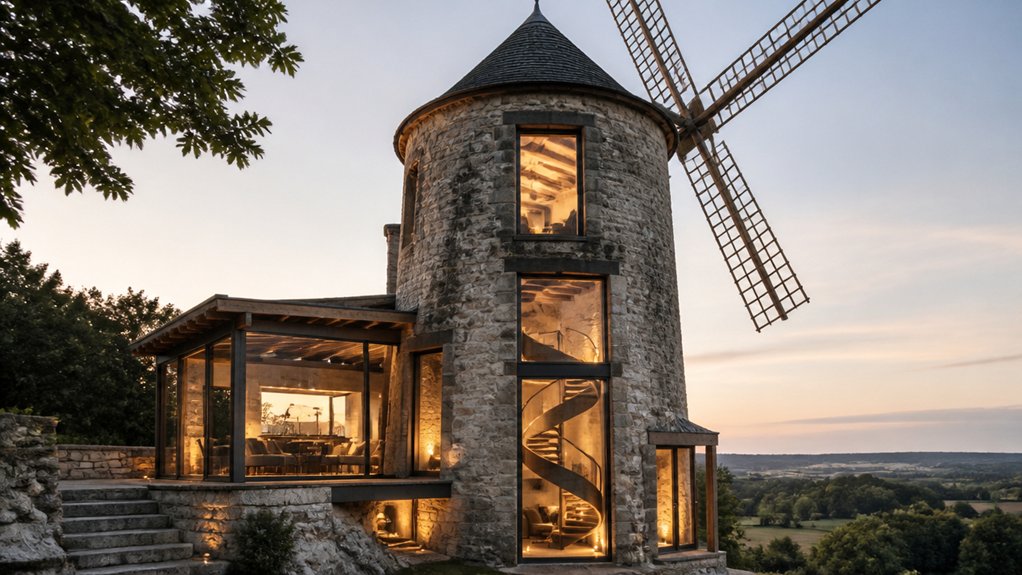
You can step inside a 1700s windmill transformed into a striking, multi-level retreat, where historic stone, timber, iron, and mill machinery meet modern comfort. Careful restoration preserves worn surfaces and the mill’s distinctive circular form, while structural reinforcement makes the unusual building safe and stable. Compact living areas, discreet lighting, tailored storage, and contemporary heating and plumbing make daily life practical. As you climb between levels, natural light and landscape views reveal how thoughtful design gives this historic landmark a welcoming new purpose. Discover how each detail brings its past and present together.
Key Takeaways
- The 1700s windmill was transformed into a multi-level retreat while preserving its circular stone structure, original openings, and historic silhouette.
- Careful restoration stabilized the masonry and timber while retaining worn surfaces, irregular textures, ironwork, and mechanical remnants.
- Each level serves a practical purpose, from living and dining spaces to bedrooms and a study with landscape views.
- Stairs and landings connect the compact rooms, while structural reinforcement supports safe, comfortable modern living.
- Heating, plumbing, insulation, discreet lighting, and custom storage add convenience without diminishing the windmill’s historic character.
How Did the 1700s Windmill Become a Retreat?
Long before it welcomed overnight guests, the 1700s windmill ground grain for its community. To transform this working landmark into a retreat, you need more than a fresh coat of paint; you need a clear vision that respects its history while meeting modern expectations.
Windmill restoration begins with understanding how the building worked and what guests need today. Designers can introduce comfortable sleeping areas, practical amenities, and thoughtful circulation without making the mill feel like an ordinary hotel.
Architectural preservation guides each decision, helping you balance contemporary comfort with the character of an industrial structure. The result invites you to experience history firsthand, not simply observe it.
What Parts of the Historic Mill Were Preserved?
Modern comfort works best when the mill’s defining features remain visible. You can still read the building’s history in its sturdy stone walls, circular footprint, and original openings. These elements anchor the retreat in its working past, giving each level a clear connection to the structure that once harnessed wind.
Careful Restoration techniques protect the mill’s character rather than disguise it. You’ll notice preserved masonry, timber details, and the distinctive silhouette that marks the tower against the landscape. Where age left damage, skilled repairs stabilize historic fabric while retaining its texture and irregularities.
Preservation challenges demanded restraint: centuries-old materials can’t simply be replaced without erasing evidence of craftsmanship. By keeping authentic features in view, you gain more than a picturesque setting. You experience the mill as a genuine historic landmark, thoughtfully renewed yet unmistakably itself.
How Did Designers Fit Comfort Into the Mill?
You’ll find compact living zones that make every curve and corner work harder without sacrificing ease. Modern comforts and clever storage bring everyday convenience.
While historic details keep the mill’s character alive. The result proves you can enjoy a restful retreat without crowding its past.
Compact Living Zones
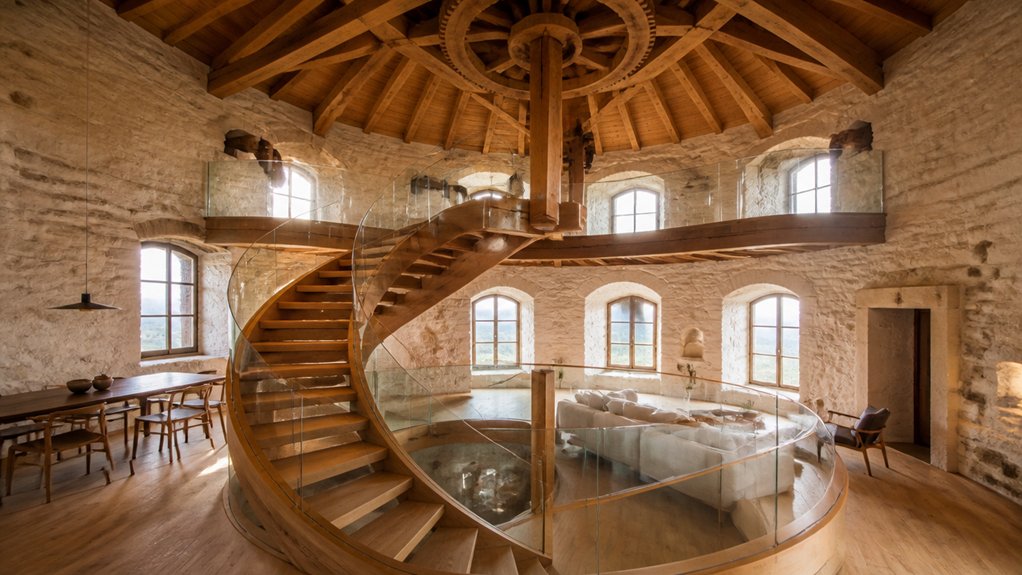
Because the mill’s curved stone walls leave little room for wasted space, designers treat every level as a carefully planned living zone. You move through a compact sequence where each floor serves a clear purpose, from cooking and dining to resting and unwinding.
Rather than forcing standard furniture into awkward corners, designers use built-ins, slim furnishings, and storage tucked beneath stairs to preserve open pathways. The central stair links these distinct zones while making the mill’s height part of daily life.
Carefully placed windows draw daylight through the narrow footprint, helping each room feel more spacious. You’ll notice how original stone and timber lend rustic charm, while eco-friendly upgrades support efficient use of space.
This thoughtful layout proves you don’t need a broad floor plan to feel at home.
Modern Comforts, Historic Character
While the mill’s thick stone walls preserve its historic character, discreet upgrades make daily life comfortable. You can enjoy the building’s rustic charm without sacrificing warmth or convenience.
Designers tucked modern heating and plumbing into the existing structure, keeping pipes and equipment unobtrusive while ensuring reliable performance. Carefully placed insulation and efficient glazing help regulate indoor temperatures, improving energy efficiency without masking the original masonry.
Thoughtful lighting brightens the mill’s unusual contours, while contemporary fixtures provide the ease you expect in a modern retreat. You’ll notice how natural materials and restrained finishes complement the old stone rather than compete with it.
Clever Storage Solutions
Comfort in a windmill depends on making every inch work harder. You can preserve the tower’s open character by choosing storage that follows its curves instead of crowding the floor. Custom cabinets tuck neatly beneath stairs, while innovative shelving turns narrow wall sections into useful displays for books, dishes, and everyday essentials.
Built-in benches offer a comfortable place to pause and lift to reveal concealed compartments for blankets or seasonal gear. In the kitchen, drawers fitted into awkward corners keep cookware close without interrupting the room’s flow.
Even a sleeping loft can gain discreet storage beneath its platform. These tailored solutions let you enjoy modern convenience while respecting the mill’s historic structure.
How Does the Windmill’s Vertical Layout Work?
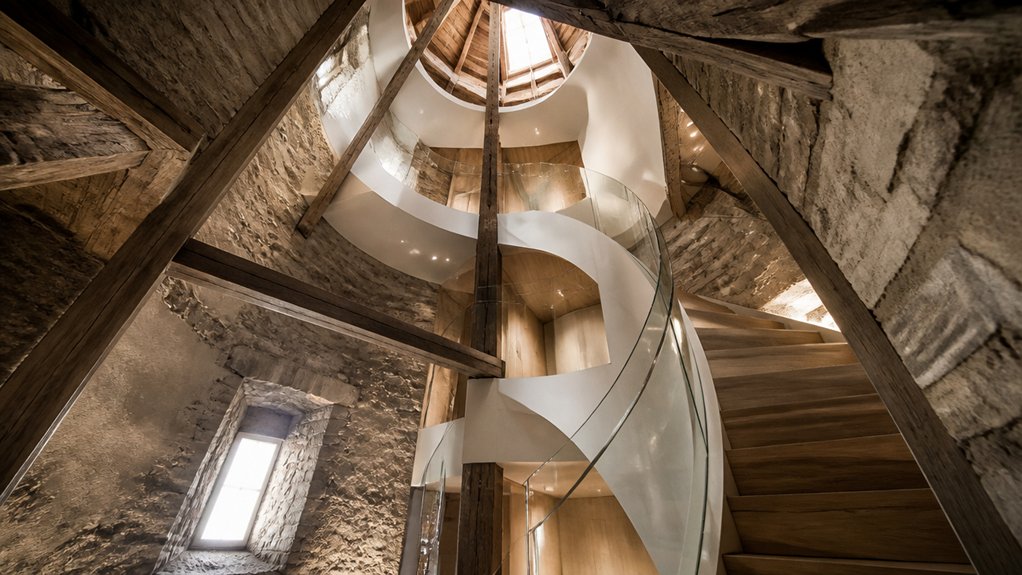
You’ll find each level serves a distinct purpose, with rooms stacked to make the most of the mill’s compact footprint.
Stairs connect these spaces vertically, guiding you through the retreat while preserving its striking sense of height.
Stacking Rooms by Level
A windmill’s narrow footprint makes every floor count, so the retreat stacks distinct functions from level to level rather than spreading them out. You enter on the ground floor, where a welcoming living area makes the most of the broadest, easiest-to-access space.
Above, the kitchen and dining room claim a compact level, giving daily routines a practical center without crowding the historic shell. Higher up, bedrooms offer quieter, more private places to rest, while the uppermost floor can serve as a study or lookout, framing views through the mill’s original openings.
This deliberate arrangement lets you experience the building’s changing proportions as you climb from social rooms to secluded ones. Windmill preservation shapes each choice; modern renovation adds comfort while respecting the structure’s character and making every level earn its place.
Connecting Spaces Vertically
As you climb the windmill, a compact stair or ladder links each level while turning the building’s narrow shaft into a continuous route. You experience vertical circulation as more than a means of getting upstairs: it organizes daily life within the tower’s tight footprint.
Each landing opens onto a distinct room, while carefully placed openings let you glimpse the levels above and below. This visual connection strengthens spatial integration without sacrificing privacy or the character of each floor.
A handrail, well-lit treads, and a clear path make the ascent feel secure, even where the original structure narrows. By following the tower’s central axis, you move naturally from shared living areas to quieter retreats.
The result feels coherent, not cramped: every step connects function, light, and the windmill’s remarkable vertical form.
Which Historic Details Shape the Modern Interior?
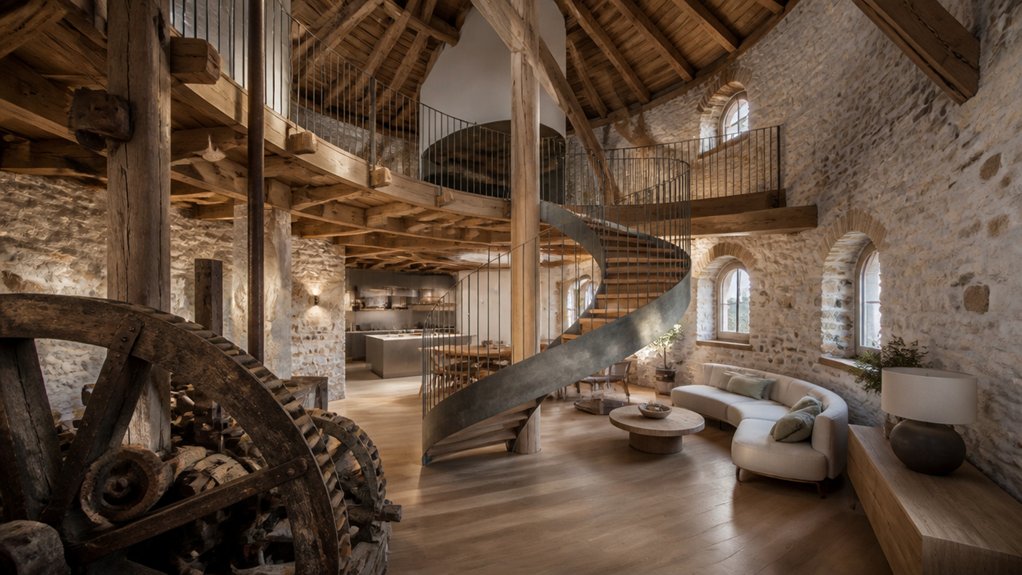
The mill’s past remains visible in the details that give its modern interior character: original stone walls, exposed timber beams, and the machinery that once harnessed the wind. As you move through the rooms, you can read the building’s working history in worn surfaces, sturdy joints, and the millstones’ enduring presence.
Rather than conceal these traces, the design lets them anchor each space, giving contemporary finishes a meaningful contrast. Material authenticity matters: stone, timber, and iron retain their natural textures, while careful restoration protects their age and character.
Artistic influences appear in the considered balance of old and new, where sculptural machinery and simple furnishings complement the mill’s rugged structure. You don’t just see historic features; you experience how they shape the interior’s atmosphere and identity.
What Does the Finished Windmill Retreat Offer?
Beyond preserving its working heritage, the finished windmill offers a distinctive place to slow down and stay awhile. You can move through its multi-level rooms, where curved walls and original machinery create an intimate sense of place.
The windmill’s curved rooms and original machinery invite you to slow down and settle into a place shaped by history.
Thoughtful modern comforts make the historic structure practical for a relaxing stay, while carefully preserved materials bring Rustic charm to every floor.
You’ll find the conversion balances atmosphere with Structural integrity. Expert reinforcement supports the windmill’s unusual form, allowing you to enjoy its character without compromising safety or comfort.
Natural light, considered furnishings, and views across the surrounding landscape make each level feel welcoming rather than cramped.
Whether you’re seeking a quiet escape or an inspiring architectural experience, this retreat lets you inhabit history—not just admire it. You leave with a deeper appreciation for how conservation can shape a memorable, comfortable stay.
Frequently Asked Questions
Where Is the Historic Windmill Located?
The historic windmill is located in the Netherlands, where you can see it rise above the surrounding landscape as a striking reminder of the country’s milling heritage.
Its transformation demonstrates how Historic preservation can protect a working landmark while adapting it for contemporary life.
Through careful Architectural restoration, you’re invited to appreciate the mill’s original character alongside its modern retreat design—a compelling example of how heritage and thoughtful innovation can coexist.
Can Guests Book an Overnight Stay at the Retreat?
Yes, you can book an overnight stay at the retreat, where historic windmill character meets luxury accommodations. You’ll enjoy a distinctive multi-level setting, thoughtfully adapted for a comfortable modern visit.
Before you reserve, check the property’s current availability, rates, minimum-stay requirements, and booking policies, since these details can change. Contact the retreat or use its official booking channel to confirm what’s included and secure your preferred dates.
A stay offers a memorable way to experience this remarkable conversion.
What Is the Best Time of Year to Visit?
You’ll find late spring and early autumn among the best visiting times, when mild temperatures and softer light make exploring especially enjoyable. Check seasonal weather before booking, since wind and rain can affect your plans around this historic retreat.
Summer brings longer days and lush scenery, while winter offers a quieter, atmospheric stay. Choose the season that suits your preferred pace, and reserve early if you’re planning a popular weekend getaway.
How Can Visitors Reach the Windmill?
You can reach the windmill by car, then follow local signs to its entrance. Check your booking details for the exact address and parking instructions.
For Windmill accessibility, contact the property ahead of time to confirm the approach, entry, and any mobility accommodations, since historic structures may have steps or uneven paths.
Visitor transportation options can include a rental car, taxi, or rideshare, depending on local availability. Plan your route before departure, especially in rural areas.
Is the Retreat Suitable for Families With Children?
Yes, you can enjoy this retreat with children, provided you’re comfortable with its distinctive multi-level layout and stairs.
You’ll find the historic windmill’s unusual spaces memorable, but supervise younger kids around steps and any original machinery.
Ask the host about Child friendly activities, safety features, and Family accommodation options before booking.
If your family needs ground-floor sleeping or dedicated play areas, confirm availability first so you can plan a comfortable, rewarding stay together.